
Loading...
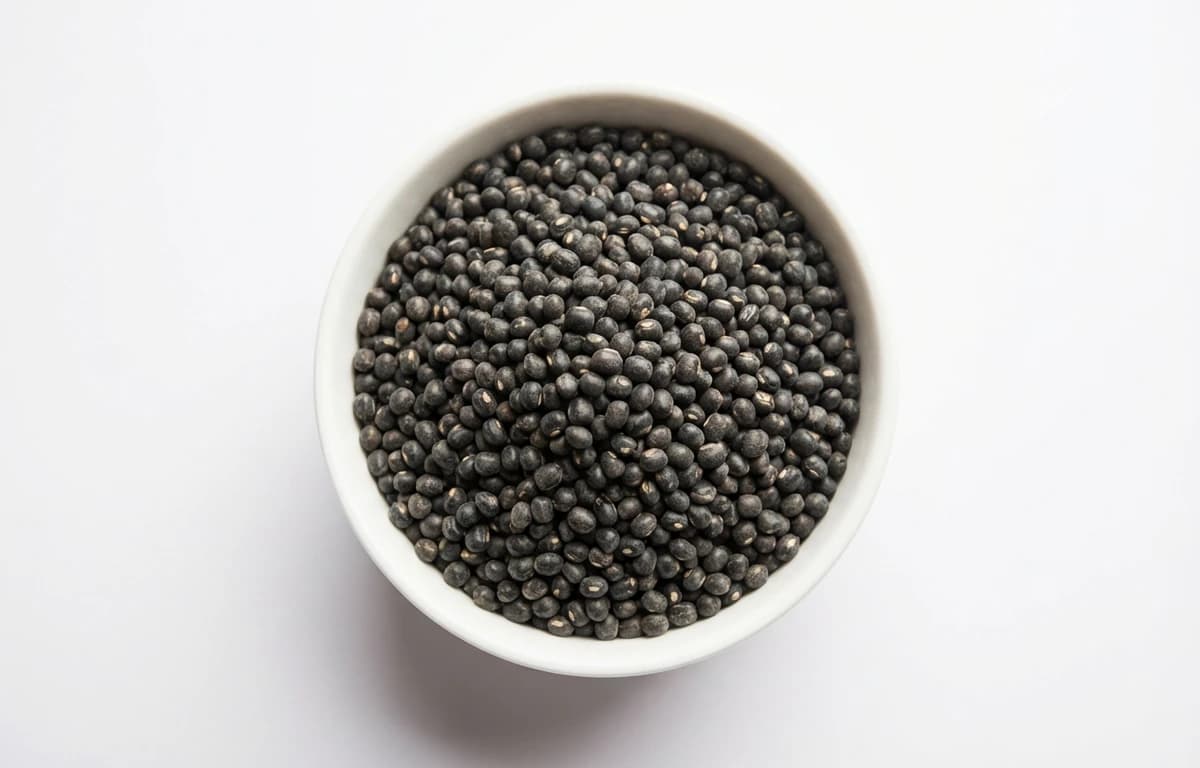
Also known as: Black Gram, Urad Sabut, Whole Black Lentils, Vigna mungo, Kali Dal, Masha, Minapa Pappu, Urad Dal Whole, Sabut Urad
Per 100g
Nutrition data source: USDA FoodData Central
Common measurement equivalents in grams
When stored in an airtight container in a cool, dry place, it can last for up to one year.
Yes, soaking for 6-8 hours is highly recommended as it softens the tough outer skin and improves digestibility.
Black beluga lentils or split urad dal are the best substitutes, though the texture and cooking time will vary.
Yes, it is naturally gluten-free and safe for those with celiac disease or gluten sensitivity.
It is the primary ingredient in Dal Makhani and is also ground to make batters for Vada, Dosa, and Idli.
Look for signs of mold, a musty odor, or the presence of small insects (weevils) in the container.
Yes, it is one of the richest sources of plant-based protein, providing about 25g per 100g of raw dal.
Yes, cooked urad dal freezes very well. Store it in an airtight container for up to 3 months.
Choose dal that is uniform in size, has a shiny black skin, and is free from stones or debris.
Whole Urad Dal is a versatile ingredient found in cuisines around the world. With 341 calories per 100g and 25.2 grams of protein, it's a nutritious addition to many dishes.
Explore more ingredients in the legume category with complete nutrition information.
View all legume →Discover 4 recipes featuring whole urad dal with step-by-step instructions.
Browse recipes →Explore more ingredients similar to Whole Urad Dal.
The most-searched ingredients on CraftMyMeals.