
Loading...
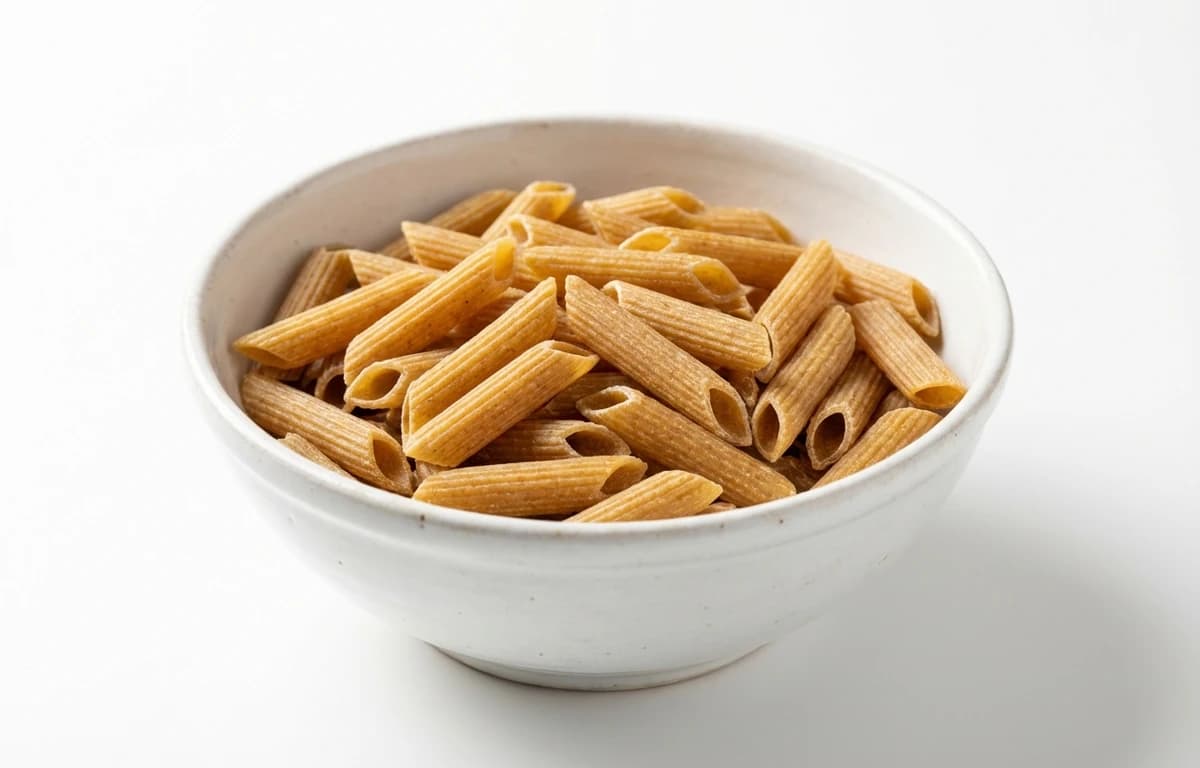
Also known as: wholemeal penne pasta, whole grain penne pasta
Per 100g
Nutrition data source: USDA FoodData Central
Common measurement equivalents in grams
When stored in a cool, dry place in an airtight container, it can last for 1 to 2 years.
No, it is made from wheat and contains gluten. It is not suitable for those with celiac disease or gluten sensitivity.
Yes, you can freeze cooked pasta for up to 3 months. Thaw in the refrigerator and reheat gently.
It should be 'al dente,' meaning firm to the bite. It usually takes 9-12 minutes of boiling.
Brown rice penne or chickpea penne are great gluten-free alternatives. Regular white penne can be used if whole grain is not required.
This is due to the presence of the bran and germ. Choosing high-quality brands and not overcooking can improve the texture.
Most dry whole wheat penne is vegan as it is made from just flour and water, but always check the label for egg ingredients.
Approximately 1/2 cup (about 45-50g) of dry penne will yield roughly 1 cup of cooked pasta.
whole wheat penne pasta is a versatile ingredient found in cuisines around the world. With 348 calories per 100g and 14.6 grams of protein, it's a nutritious addition to many dishes.
Explore more ingredients in the grain category with complete nutrition information.
View all grain →Discover 10 recipes featuring whole wheat penne pasta with step-by-step instructions.
Browse recipes →Explore more ingredients similar to whole wheat penne pasta.
The most-searched ingredients on CraftMyMeals.