
Other1 recipes
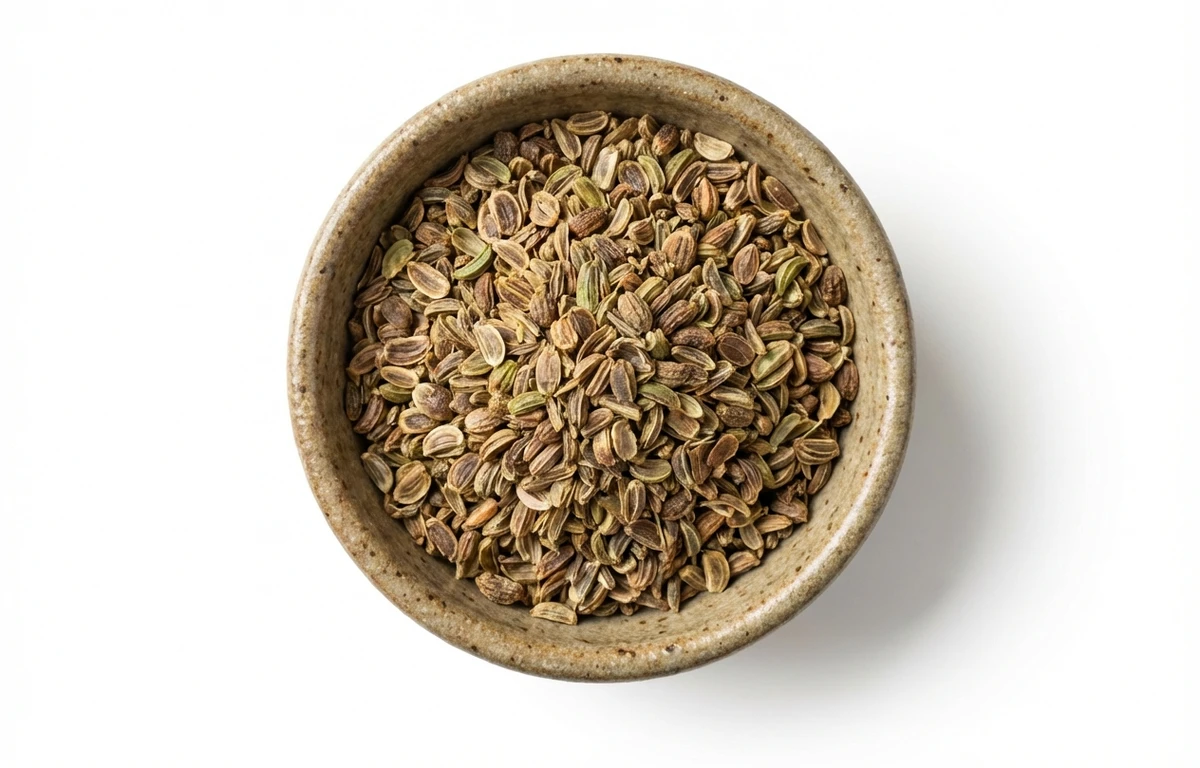
wild celery seeds.
VegetarianVeganGluten-freeDairy-freeNut-freePeanut-freeSoy-freeEgg-freeShellfish-freeHoney-freeAlcohol-free
ALSO KNOWN AS
ajmodradhunidried wild celery seedsajmodawild celery spice
SERVING
CALORIES
392
PROTEIN
18.1g
CARBS
41.3g
FAT
25.3g
FIBER
11.8g
This ingredient is flagged as naturally gluten-free. Per 100 g, it provides 0 µg of vitamin K.
NUTRITION PROFILE · per 100 g
Everything in this ingredient.
MACRONUTRIENTS
Calories392kcal—
Protein18.1g36%
Carbohydrates41.3g15%
Fiber11.8g42%
Sugar0.70g1%
Total fat25.3g32%
Saturated fat2.2g11%
Trans fat0g—
Cholesterol0mg0%
Water6.2g—
MINERALS
Sodium160mg7%
Potassium1400mg30%
Calcium1767mg136%
Iron44.9mg249%
Magnesium440mg105%
Phosphorus547mg44%
Zinc6.9mg63%
Copper1.6mg178%
Manganese7.6mg330%
Selenium12.5µg23%
VITAMINS
Vitamin A58µg6%
Vitamin C0.70mg1%
Vitamin D0µg0%
Vitamin E0.50mg3%
Vitamin K0µg0%
Thiamin (B1)0.35mg29%
Riboflavin (B2)0.35mg27%
Niacin (B3)3.2mg20%
Pantothenic acid (B5)0.50mg10%
Vitamin B60.70mg41%
Folate (B9)10µg3%
Vitamin B120µg0%
%DV based on a 2,000 cal diet. Source: USDA FoodData Central. A dash in the %DV column means there’s no established Daily Value for that nutrient.
MEASUREMENT CONVERSIONS
How much is what.
1 cup105g
1 tablespoon6.5g
1 teaspoon2g
1 oz28.4g
1 lb453.6g
1 ml0.5g
1 liter450g
HEALTH BENEFITS
Why eat it.
- ✓Rich source of calcium and iron for bone and blood health
- ✓Acts as a natural diuretic to help reduce water retention
- ✓Aids in digestion and may relieve bloating
- ✓Contains manganese which supports metabolic function
COOKING TIPS
In the kitchen.
- 1Temper in hot oil (tadka) to release the full aroma and flavor
- 2Use sparingly as the flavor is very potent and can become bitter
- 3Commonly used in Bengali 'Panch Phoron' spice mix for authentic flavor
STORAGE
Keep it fresh.
- Store in an airtight glass container to preserve volatile oils
- Keep in a cool, dark, and dry place away from direct sunlight
- Whole seeds stay fresh for up to 1 year; ground seeds for 6 months
FAQ
Frequently asked questions.
What is the difference between celery seeds and wild celery seeds (Radhuni)?
While they look similar, wild celery seeds (Radhuni) have a much stronger, more pungent aroma reminiscent of parsley and celery, whereas standard celery seeds are milder.
How long do wild celery seeds last?
When stored in an airtight container in a cool, dark place, whole wild celery seeds can last for about 12 months before losing their potency.
Can I substitute ajwain for wild celery seeds?
Ajwain is a common substitute due to its similar appearance, but it has a distinct thyme-like flavor. Use it in smaller quantities if substituting.
What is the best way to use wild celery seeds in cooking?
They are best used tempered in hot oil at the beginning of cooking or ground into spice pastes for fish curries and pickles.
How do I identify high-quality wild celery seeds?
Look for seeds that are small, dark brown, and have a very strong, sharp aroma. Avoid seeds that look dusty or have a faint smell.
Can wild celery seeds be frozen?
It is not recommended to freeze them as the moisture can degrade the essential oils; a cool, dry pantry is better.
What are the primary nutrients in wild celery seeds?
They are exceptionally high in calcium, iron, and manganese, making them a nutrient-dense spice even in small quantities.
Are there any religious restrictions for wild celery seeds?
They are considered Sattvic and are acceptable in Jain diets as they are seeds, not root vegetables.



















