
Fruit
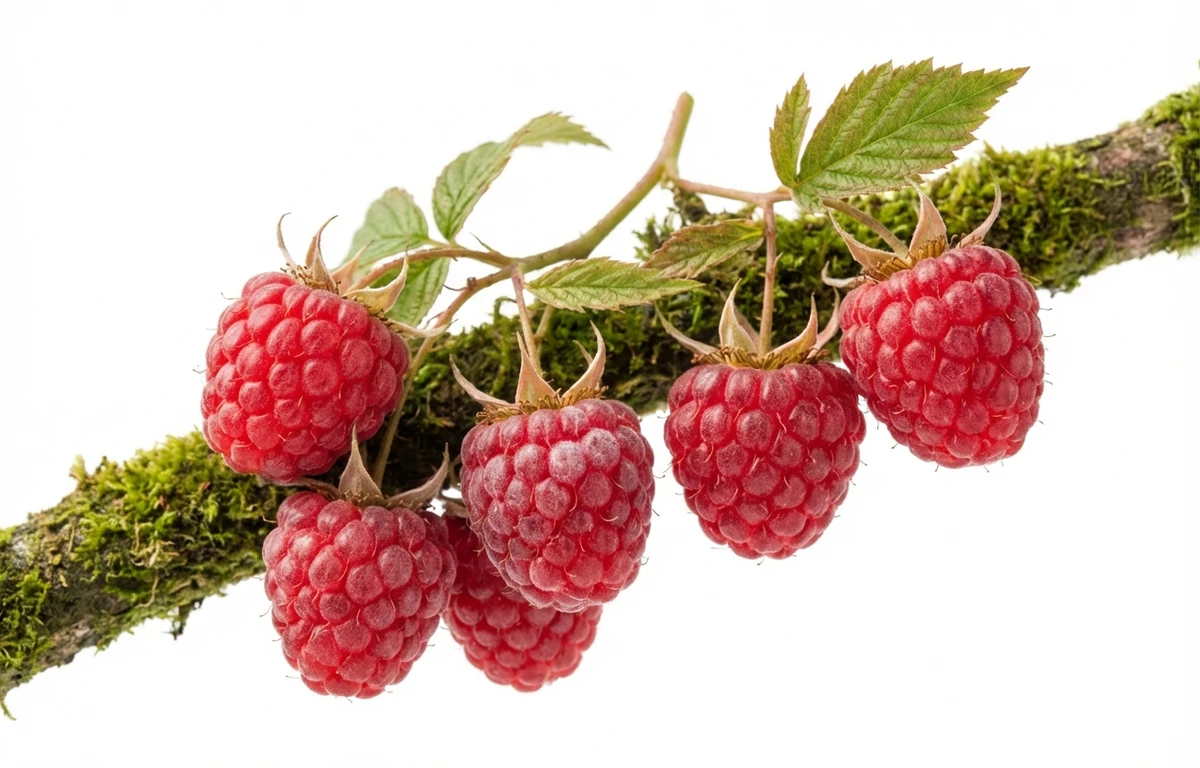
wild raspberry.
VegetarianVeganGluten-freeDairy-freeNut-freePeanut-freeSoy-freeEgg-freeShellfish-freeHoney-freeAlcohol-freeHalalKosher
ALSO KNOWN AS
rubus idaeusforest raspberrywild red raspberrymountain raspberry
SERVING
CALORIES
52
PROTEIN
1.2g
CARBS
11.9g
FAT
0.65g
FIBER
6.5g
This ingredient is flagged as naturally gluten-free. Per 100 g, it provides 7.8 µg of vitamin K.
NUTRITION PROFILE · per 100 g
Everything in this ingredient.
MACRONUTRIENTS
Calories52kcal—
Protein1.2g2%
Carbohydrates11.9g4%
Fiber6.5g23%
Sugar4.4g9%
Total fat0.65g1%
Saturated fat0.02g0%
Trans fat0g—
Cholesterol0mg0%
Water85.7g—
MINERALS
Sodium1.0mg0%
Potassium151mg3%
Calcium25mg2%
Iron0.69mg4%
Magnesium22mg5%
Phosphorus29mg2%
Zinc0.42mg4%
Copper0.09mg10%
Manganese0.67mg29%
Selenium0.20µg0%
VITAMINS
Vitamin A2.0µg0%
Vitamin C26.2mg29%
Vitamin D0µg0%
Vitamin E0.87mg6%
Vitamin K7.8µg7%
Thiamin (B1)0.03mg3%
Riboflavin (B2)0.04mg3%
Niacin (B3)0.60mg4%
Pantothenic acid (B5)0.33mg7%
Vitamin B60.06mg4%
Folate (B9)21µg5%
Vitamin B120µg0%
%DV based on a 2,000 cal diet. Source: USDA FoodData Central. A dash in the %DV column means there’s no established Daily Value for that nutrient.
MEASUREMENT CONVERSIONS
How much is what.
1 cup125g
1 tablespoon12g
1 teaspoon4g
1 oz28.4g
1 lb453.6g
1 ml0.5g
1 liter530g
1 piece1.5g
HEALTH BENEFITS
Why eat it.
- ✓High in dietary fiber which aids digestion
COOKING TIPS
In the kitchen.
- 1Rinse gently under cold water just before consumption
- 2Add to salads or desserts raw to preserve delicate texture
- 3Simmer with a little sugar to create a natural wild berry coulis
STORAGE
Keep it fresh.
- Store unwashed in the refrigerator for 2-3 days
- Keep in a shallow container to prevent crushing
- Freeze in a single layer on a tray before transferring to a bag
FAQ
Frequently asked questions.
How long do wild raspberries last?
Wild raspberries are very delicate and typically last only 2 to 3 days in the refrigerator.
Can wild raspberries be frozen?
Yes, they freeze well. Spread them on a baking sheet first so they don't stick together, then move to a freezer bag.
How do I identify a ripe wild raspberry?
Look for a deep, consistent red color. The berry should pull away easily from the central core (receptacle) when picked.
What is the difference between wild and cultivated raspberries?
Wild raspberries are usually smaller, have a more intense tart-sweet flavor, and are often more fragile than store-bought varieties.
What can I substitute for wild raspberries?
Cultivated raspberries, blackberries, or loganberries are the best substitutes.
Are wild raspberries high in sugar?
No, they are relatively low in sugar compared to many other fruits, containing about 4.4g per 100g.
What are common uses for wild raspberries?
They are excellent in jams, tarts, smoothies, yogurt toppings, or eaten fresh by themselves.
When is wild raspberry season?
Depending on the region, they typically ripen from mid-summer through early autumn.



















