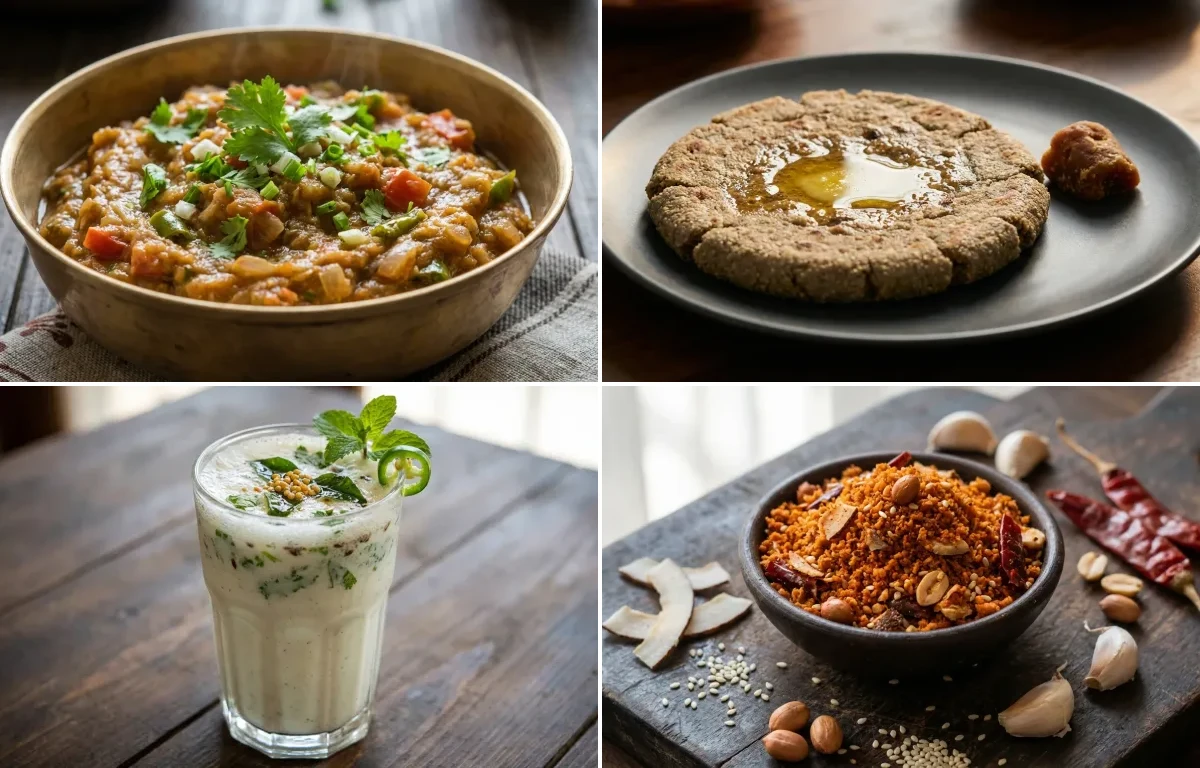
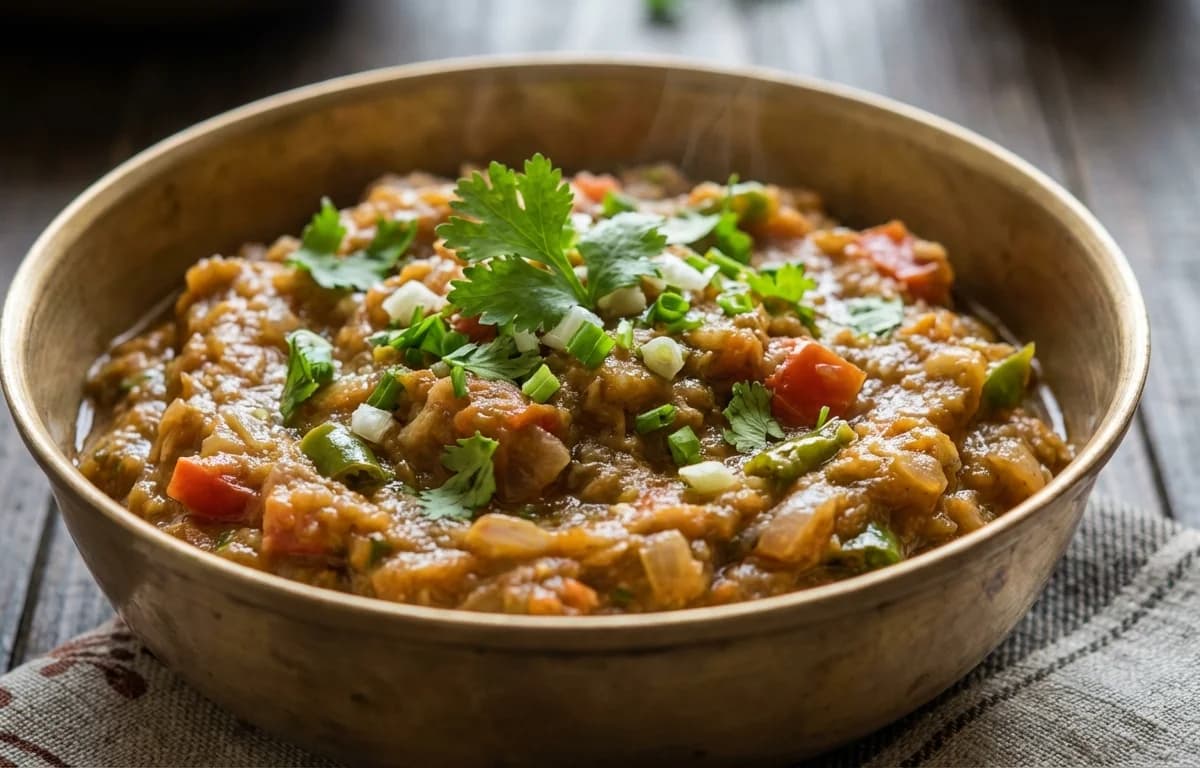
A classic Gujarati winter delicacy, this smoky roasted eggplant mash is cooked with fresh green garlic and spices. It's the perfect comfort food to enjoy with bajra rotla or phulka.
Prep15 min
Cook30 min
Servings4
Serving size: 1 serving
170cal
3gprotein
17gcarbs
11gfat
Ingredients
500 g Brinjal (one large, round variety)
3 tbsp Peanut Oil
0.5 tsp Mustard Seeds
0.5 tsp Cumin Seeds
0.25 tsp Hing
1 medium Onion (finely chopped)
2 pcs Green Chili (finely chopped, adjust to taste)
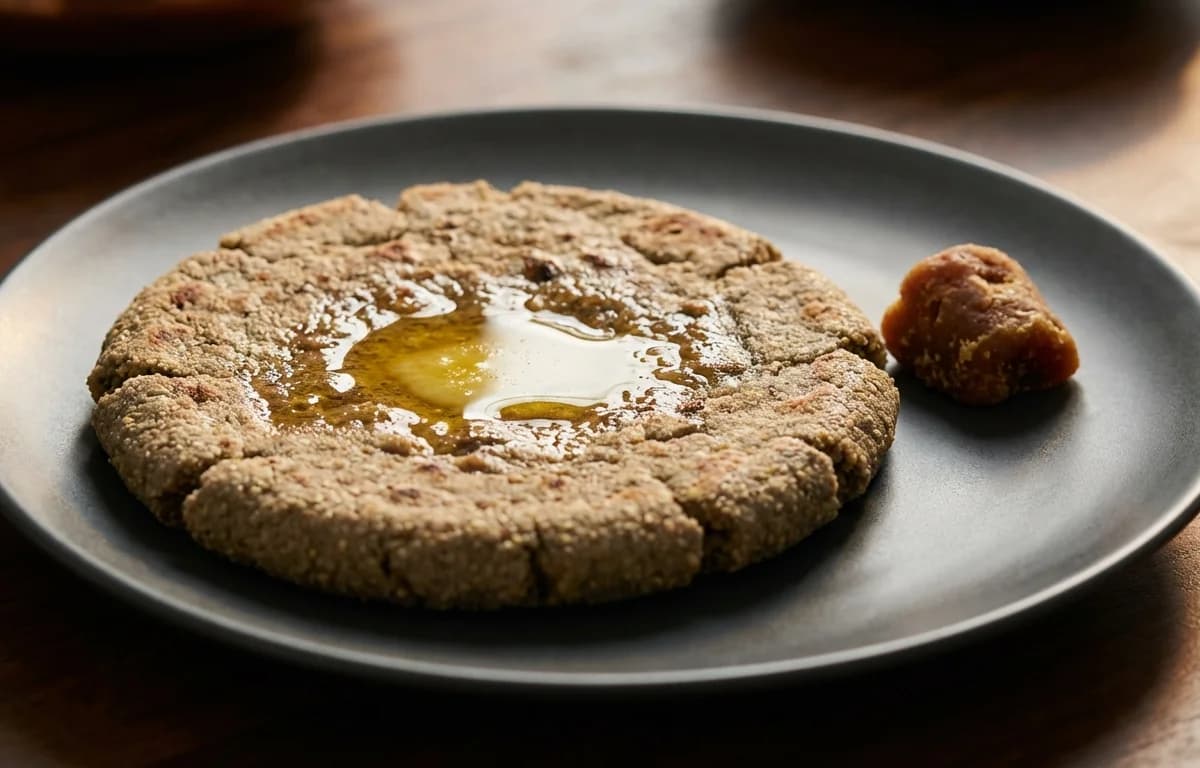
A rustic, gluten-free flatbread from Gujarat made with pearl millet flour. Traditionally patted by hand, its earthy, nutty flavor pairs wonderfully with a dollop of white butter, jaggery, or spicy vegetable curries.
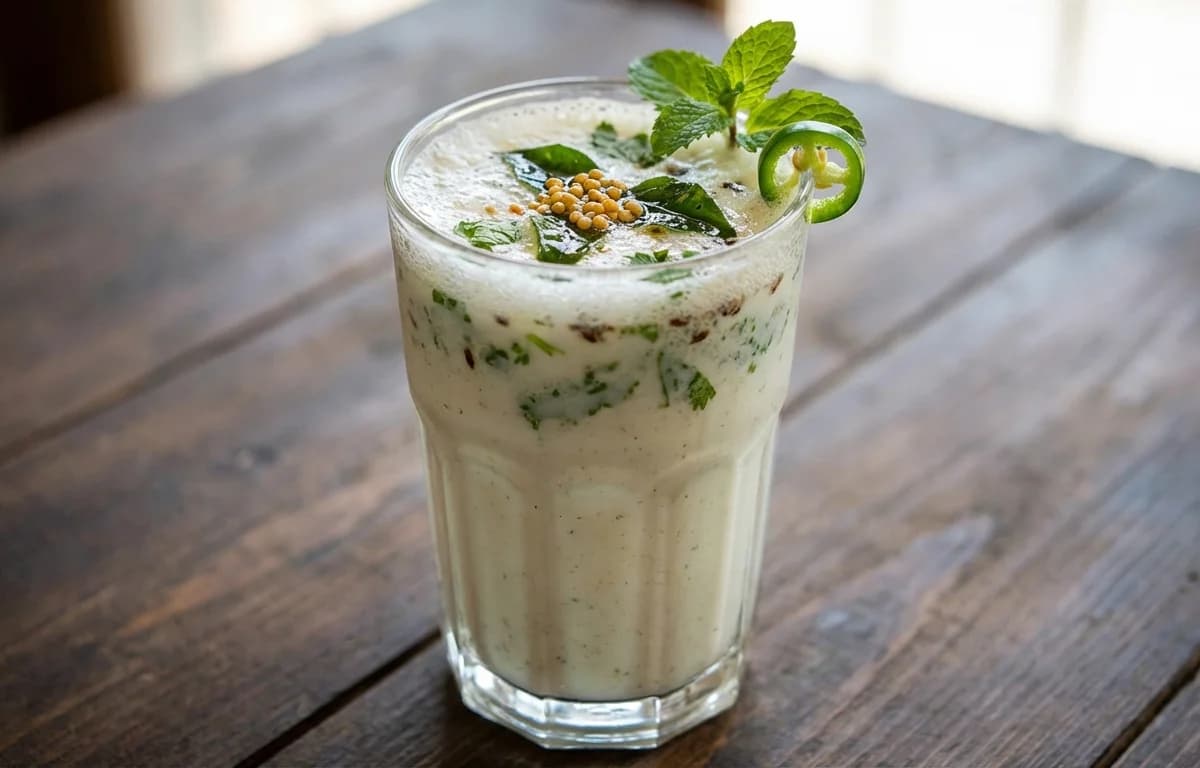
A refreshing and savory yogurt-based drink, spiced with roasted cumin, fresh herbs, and a hint of ginger. This traditional Indian buttermilk is the perfect cooling beverage to aid digestion and beat the summer heat.
A fiery and pungent Maharashtrian dry chutney made with garlic, coconut, and red chilies. It's the perfect zesty accompaniment for vada pav, bhajis, or simply sprinkled over rice and dal.
Prep10 min
Cook10 min
Servings16
Serving size: 1 serving
About Ringan no Oro, Bajra Rotla, Masala Chaas and Dry Garlic Chutney
Smoky Ringan no Oro with fiber-rich Bajra rotla and gut-friendly chaas – a perfectly spiced comfort food!
This gujarati dish is perfect for lunch. With 464.34 calories and 11.71g of protein per serving, it's a nutritious choice for your meal plan.
Other Cuisines to Explore
Discover authentic meals from cuisines around the world.
(finely chopped, if unavailable use spring onion greens)
0.5 tsp Turmeric Powder
1 tsp Red Chili Powder (adjust to taste)
1.5 tsp Coriander Cumin Powder (also known as Dhana Jiru)
1 tsp Salt (or to taste)
0.5 tsp Garam Masala
0.5 tsp Sugar (optional, to balance flavors)
2 tbsp Coriander Leaves (chopped, for garnish)
Instructions
1
Roast and Prepare the Brinjal (15-20 minutes)
Wash and pat dry the brinjal. Make 3-4 deep slits into it with a knife.
Brush the entire surface of the brinjal with about 1 teaspoon of peanut oil.
Place it directly on a gas flame over a roasting rack (jali). Roast for 15-20 minutes, turning it every few minutes with tongs, until the skin is completely charred and the flesh is soft. A knife inserted should go through easily.
Remove from heat and let it cool for 5-10 minutes. Carefully peel off the charred skin.
Place the roasted flesh in a bowl and mash it thoroughly with a fork or potato masher. Set aside.
2
Prepare the Masala Base (8-10 minutes)
Heat the remaining peanut oil in a kadai or pan over medium heat.
Add the mustard seeds and let them splutter. Then add cumin seeds and hing, and sauté for 30 seconds.
Add the finely chopped onion and sauté for 3-4 minutes until it becomes soft and translucent.
Add the ginger-garlic paste and green chilies. Cook for 1 minute until the raw aroma disappears.
Add the finely chopped tomatoes and cook for 4-5 minutes, stirring occasionally, until they turn soft and mushy and oil begins to separate from the masala.
3
Combine and Cook the Oro (8-10 minutes)
Add the turmeric powder, red chili powder, coriander-cumin powder, and salt to the pan. Mix well and cook the spices for 1 minute.
Add the mashed brinjal to the masala. Stir everything together until well combined.
Cover the pan and cook on low heat for 5-7 minutes, allowing the brinjal to absorb all the flavors. Stir once or twice in between.
4
Garnish and Serve (2 minutes)
Uncover the pan and stir in the chopped green garlic and garam masala. If using, add the sugar. Cook for another 2 minutes.
Turn off the heat and garnish with fresh chopped coriander leaves.
Let it rest for 5 minutes before serving hot with Bajra Rotla, Phulka, or Paratha.
167cal
3gprotein
21gcarbs
8gfat
Ingredients
2 cup Bajra Flour (Also known as pearl millet flour)
0.5 tsp Salt
1 cup Warm Water (Adjust as needed for kneading)
4 tbsp Ghee (For serving, can be substituted with white butter (makhan))
Instructions
1
Prepare the Dough
In a wide bowl or parat, combine 2 cups of bajra flour and salt. Mix well.
Gradually add warm water, a little at a time, and mix with your fingers. The water should be warm to the touch, not boiling hot.
Gather the flour to form a shaggy dough. Do not knead the entire dough at once. It should be soft and pliable, but not sticky. This initial mixing should take about 3-4 minutes.
2
Knead and Shape the Rotla
Divide the dough into 8 equal portions. Keep the remaining dough covered with a damp cloth.
Take one portion and add a few drops of water. Knead it with the heel of your palm for 1-2 minutes until it becomes very smooth, soft, and crack-free. This individual kneading is the most crucial step for a soft rotla.
Roll the kneaded portion into a smooth ball. Dust your work surface and palms with a little dry bajra flour.
Gently flatten the ball and begin patting it between your palms, rotating it continuously to form an even circle about 5-6 inches in diameter and 1/4 inch thick. Alternatively, place the dough ball between two sheets of parchment paper and roll gently with a rolling pin.
3
Cook the Rotla
Heat a tawa (a traditional clay tavdi or a cast-iron skillet works best) over medium-high heat. The tawa should be hot but not smoking.
Carefully lift the shaped rotla and place it on the hot tawa.
Cook the first side for about 45-60 seconds, or until you see small bubbles appear and the color changes slightly.
Using a spatula, flip the rotla. Cook the second side for 1-2 minutes, until light brown spots appear all over.
4
Puff and Serve
Flip the rotla one more time. Gently press down on the edges with a folded kitchen towel or a flat spatula. This helps trap steam and encourages the rotla to puff up.
For a fully puffed rotla, carefully lift it with tongs and hold it directly over a medium flame for 10-15 seconds, turning it quickly, until it inflates like a balloon.
Remove the rotla from the heat and immediately smear a generous amount of ghee on top.
Repeat the kneading, shaping, and cooking process for the remaining dough portions. Serve immediately while hot.
0.25 tsp Hing (Asafoetida, for optional tempering)
5 pc Curry Leaves (For optional tempering)
Instructions
1
Blend the Chaas Base
In a large blender jar, combine the curd, chilled water, chopped coriander leaves, mint leaves, ginger, and green chili (if using).
Add the roasted cumin powder, kala namak, chaat masala, and salt.
Blend on high for 45-60 seconds until the mixture is completely smooth and slightly frothy on top.
2
Prepare the Tempering (Tadka - Optional)
Heat ghee in a small tadka pan over medium heat. The ghee is ready when a mustard seed sizzles upon contact.
Add the mustard seeds and allow them to splutter completely, which takes about 30 seconds.
Turn off the heat and immediately add the hing and curry leaves. Be cautious as the leaves will crackle. Swirl the pan for 10 seconds until the leaves are crisp.
3
Combine and Chill
Pour the hot tempering directly into the blended chaas. You will hear a satisfying sizzle. Stir well to incorporate the aromatic flavors.
For the best taste, cover and refrigerate the chaas for at least 30 minutes. This allows the flavors to meld together beautifully.
0.5 tsp red chili powder (optional, for extra heat)
Instructions
1
Roast Ingredients Separately
Heat a heavy-bottomed pan over low-medium heat. Add the peeled garlic cloves and dry roast for 4-5 minutes, stirring occasionally, until they are fragrant and have light brown spots. Remove and set aside on a large plate.
In the same pan, roast the dry coconut for 2-3 minutes, stirring continuously until it turns a light golden brown. Be careful as it can burn quickly. Transfer to the plate.
Next, roast the peanuts for 4-5 minutes until they are crunchy and the skins begin to crack. Add them to the plate.
Roast the Kashmiri red chilies for about 1 minute until they become crisp, slightly darker, and aromatic. Add to the plate.
Finally, add the sesame seeds, cumin seeds, and coriander seeds to the pan. Roast for 1 minute, stirring constantly, until they release their aroma and the sesame seeds start to pop. Add to the plate.
2
Cool Completely
Spread all the roasted ingredients on the plate in a single layer. Allow them to cool down to room temperature completely. This step is crucial to prevent the chutney from becoming oily and pasty when ground.
3
Grind the Chutney
Once completely cool, transfer all the roasted ingredients, salt, and optional red chili powder to a grinder jar or food processor.
Use the 'pulse' function to grind in short bursts of 2-3 seconds each. Scrape down the sides of the jar between pulses.
Continue pulsing until you achieve a coarse, sand-like texture. Avoid over-grinding, which will release oils from the coconut and peanuts, turning it into a paste.
4
Store
Transfer the prepared dry garlic chutney to a clean, dry, and airtight container. It can be stored at room temperature for up to a month. For longer shelf life, especially in humid climates, store it in the refrigerator.