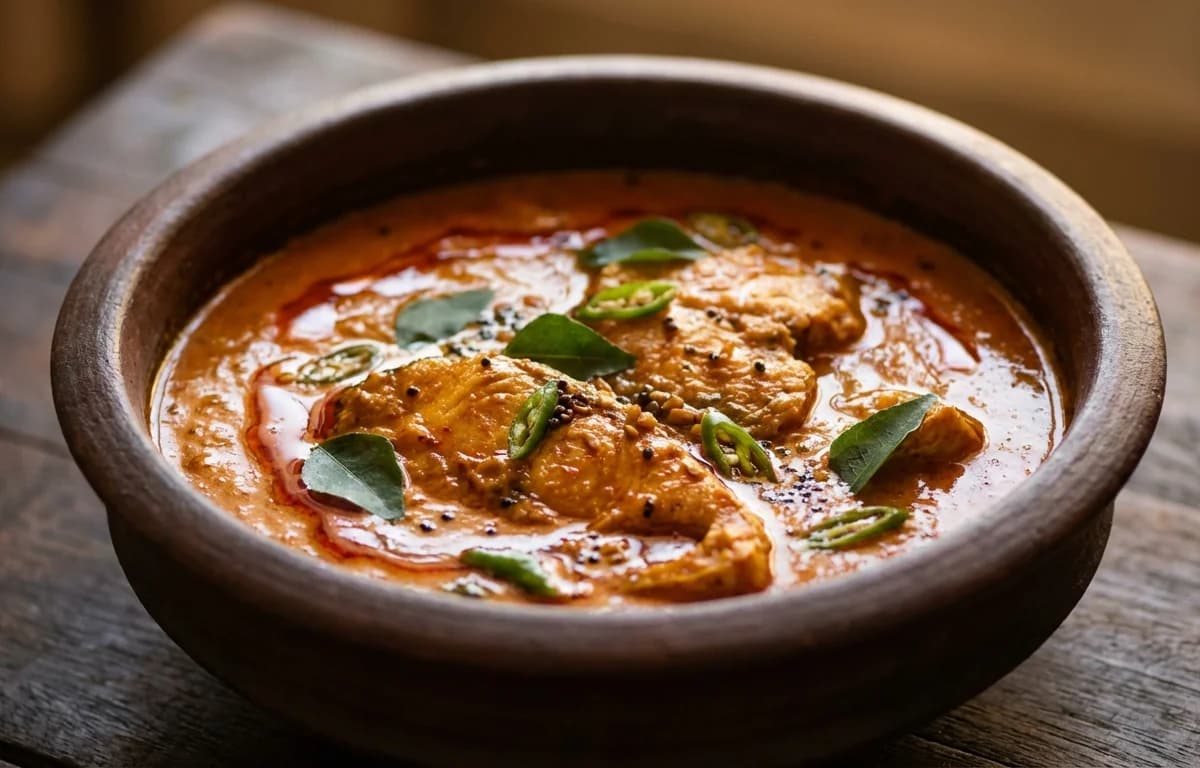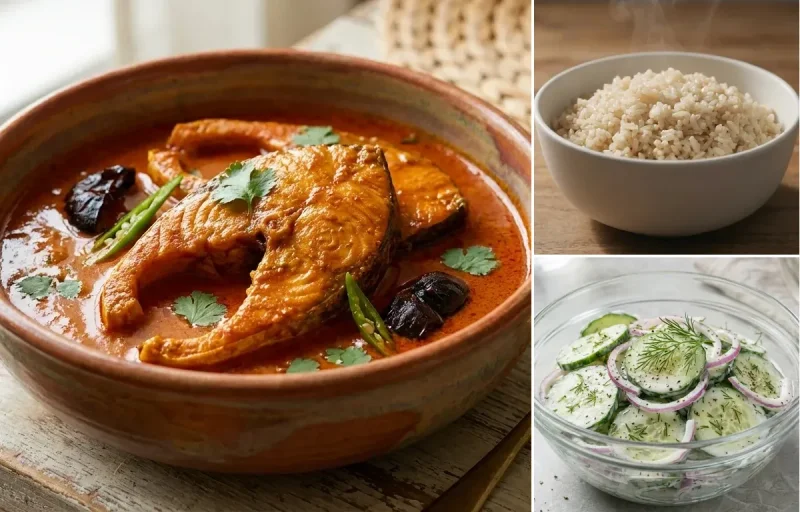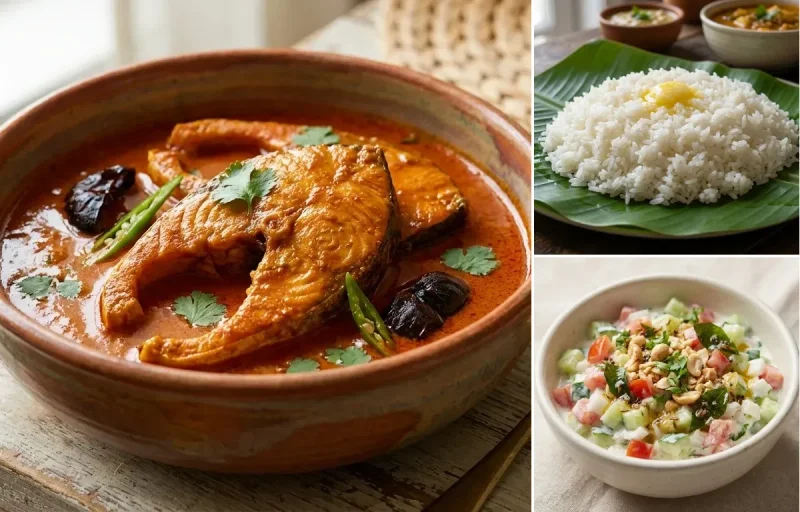
Crispy on the outside, tender on the inside! This classic Goan seafood dish features squid rings marinated in tangy spices, coated with semolina, and shallow-fried to golden perfection. A quintessential appetizer that brings the taste of the Goan coast to your kitchen.
Prep20 min
Cook15 min
Servings4
Serving size: 6 rings
338cal
25gprotein
40gcarbs
8g
Ingredients
500 g Squid (Cleaned and cut into 1/2-inch rings)
1 tbsp Ginger Garlic Paste
0.5 tsp Turmeric Powder
1.5 tsp Red Chilli Powder (Adjust to your spice preference)
1 tbsp Kokum Agal (Unsweetened kokum extract. Can substitute with 1.5 tbsp lemon juice.)
Aromatic Basmati rice cooked in creamy coconut milk with whole spices and a hint of sweetness from cashews and raisins. This classic Goan dish is a fragrant and flavorful side that pairs perfectly with spicy curries.
A tangy and spicy South Indian fish curry made with coconut milk, tamarind, and aromatic spices. Tender fish pieces simmered in a fragrant gravy, this dish is a coastal classic that pairs perfectly with steamed rice.
About Squid Rava Fry, Goan Coconut Rice and Fish Curry
Crispy Squid Rava Fry with fragrant Goan rice & tangy fish curry – a protein-packed meal for seafood lovers!
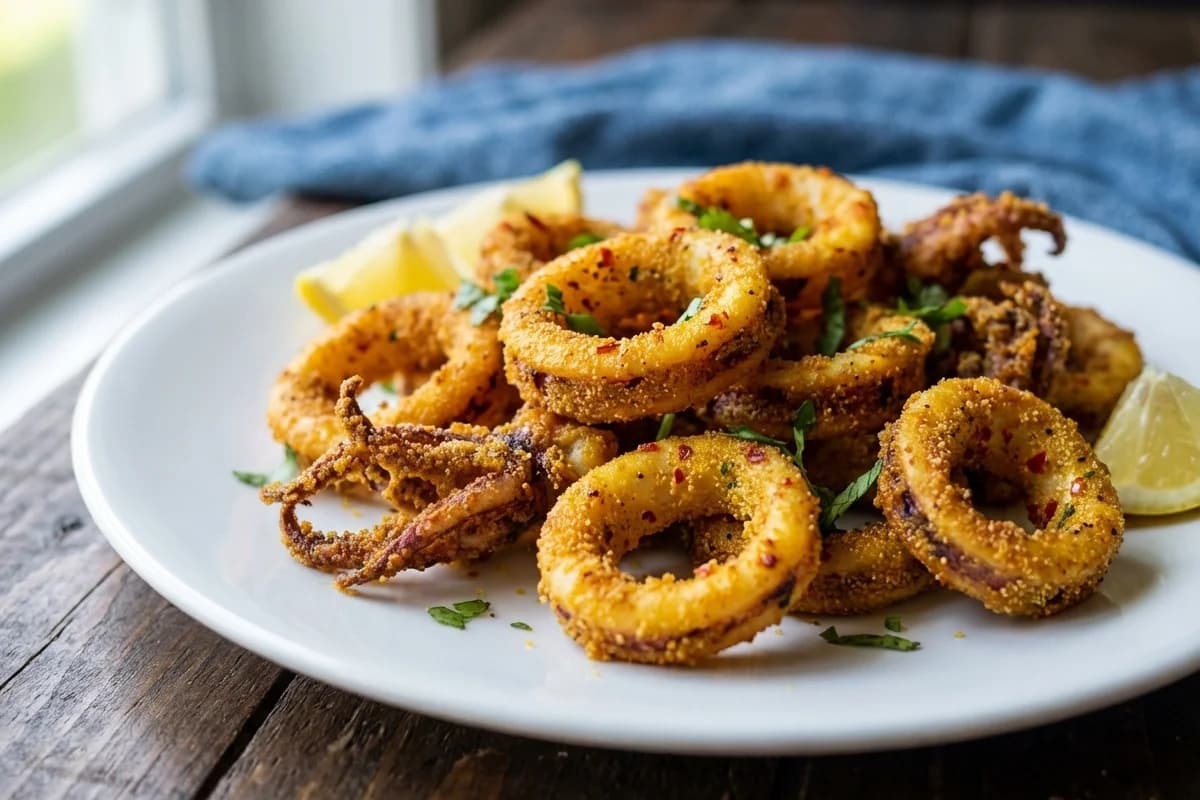
This goan dish is perfect for dinner. With 1289.84 calories and 61.44g of protein per serving, it's a nutritious choice for your meal plan.
fat
1 medium Onion (Sliced into rings for garnish)
1 fruit Lemon (Cut into wedges for serving)
Instructions
1
Marinate the Squid (15 minutes)
Thoroughly wash the squid rings and pat them completely dry with paper towels. This is crucial for a crispy coating.
In a mixing bowl, combine the dry squid rings with ginger-garlic paste, turmeric powder, red chilli powder, kokum agal, and salt.
Mix well until every ring is evenly coated with the spice marinade.
Set aside to marinate for at least 15 minutes at room temperature.
2
Prepare the Coating (2 minutes)
On a wide plate or tray, combine the rava (semolina) and rice flour.
Mix them together thoroughly and spread the mixture into an even layer.
3
Coat the Squid Rings (5 minutes)
Take each marinated squid ring, one by one, and dredge it in the rava-rice flour mixture.
Press gently to ensure the coating adheres well on all sides.
Shake off any excess coating and place the coated rings on a separate plate. Let them rest for a minute to help the coating set.
4
Shallow Fry the Squid (8-10 minutes)
Heat the vegetable oil in a wide, heavy-bottomed pan or skillet over medium-high heat. The oil should be hot but not smoking (about 180°C / 350°F).
Carefully place the coated squid rings in a single layer in the hot oil. Do not overcrowd the pan; fry in 2-3 batches if necessary.
Fry for 2-3 minutes on the first side until golden brown and crisp.
Flip the rings and fry for another 2 minutes on the other side. Do not overcook, as squid becomes tough and rubbery very quickly.
5
Drain and Serve (2 minutes)
Using a slotted spoon, remove the fried squid from the pan and transfer them to a plate lined with paper towels to absorb any excess oil.
Serve immediately while hot and crispy, garnished with onion rings and lemon wedges on the side.
Servings
4
Serving size: 1 cup
525cal
8gprotein
71gcarbs
24gfat
Ingredients
1.5 cup Basmati Rice
1 cup Coconut Milk (full-fat, for best results)
2 cup Water
2 tbsp Coconut Oil
1 pcs Onion (medium, thinly sliced)
1 tsp Ginger-Garlic Paste
2 pcs Green Chilli (slit lengthwise)
1 pcs Cinnamon Stick (1-inch piece)
4 pcs Cloves
3 pcs Green Cardamom (pods, lightly crushed)
1 pcs Star Anise
2 tbsp Cashews (whole or halved)
2 tbsp Raisins
0.25 tsp Turmeric Powder
1 tsp Salt (or to taste)
2 tbsp Coriander Leaves (freshly chopped, for garnish)
Instructions
1
Prepare the Rice: Rinse the basmati rice under cold running water until the water is clear. Soak the rice in ample water for 20-30 minutes. Drain it completely using a fine-mesh sieve and set aside.
2
Fry Garnish: Heat coconut oil in a heavy-bottomed pot or Dutch oven over medium heat. Add the cashews and sauté for 1-2 minutes until they turn a light golden brown. Add the raisins and cook for another 30 seconds until they puff up. Remove both with a slotted spoon and reserve for garnish.
3
Temper Spices: In the same pot with the remaining oil, add the whole spices: cinnamon stick, cloves, crushed green cardamom, and star anise. Sauté for about 30-45 seconds until they release their aroma.
4
Sauté Aromatics: Add the thinly sliced onions and cook for 3-4 minutes until they become soft and translucent. Add the ginger-garlic paste and slit green chillies, and sauté for another minute until the raw smell disappears.
5
Toast the Rice: Add the turmeric powder and stir for a few seconds. Add the drained rice to the pot. Gently sauté for 1-2 minutes, being careful not to break the grains. This step helps make the rice fluffy and non-sticky.
6
Cook the Rice: Pour in the coconut milk and water. Add the salt and stir gently to combine. Increase the heat and bring the mixture to a rolling boil.
1 cup Thin Coconut Milk (Second press, or use 1 cup water)
0.5 tsp Turmeric Powder
1.5 tsp Kashmiri Red Chilli Powder (Adjust to taste)
2 tsp Coriander Powder
0.25 tsp Fenugreek Seeds
0.5 tsp Mustard Seeds
10 pcs Curry Leaves (Divided)
3 tbsp Coconut Oil
1.25 tsp Salt (To taste)
Instructions
1
Marinate Fish & Prepare Tamarind
Clean the fish pieces and pat them dry. In a bowl, combine the fish with 1/4 tsp of the turmeric powder, 1/2 tsp of the red chili powder, and 1/2 tsp of the salt. Mix gently to coat and set aside to marinate for 15 minutes.
While the fish marinates, soak the tamarind in 1 cup of warm water for 15 minutes. Squeeze the pulp thoroughly to extract its flavor, then strain the liquid through a fine-mesh sieve, discarding the solids. Set the tamarind extract aside.
2
Prepare the Curry Base (Tadka)
Heat coconut oil in a wide, heavy-bottomed pan or a traditional earthen pot (manchatti) over medium heat.
Once the oil is hot, add the mustard seeds. When they begin to splutter, add the fenugreek seeds and sauté for 10-15 seconds until fragrant, being careful not to burn them.
Add the chopped onion, slit green chilies, and a sprig of curry leaves. Sauté for 4-5 minutes until the onions become soft and translucent.
Stir in the ginger-garlic paste and cook for about 1 minute until its raw aroma disappears.
3
Cook the Masala and Gravy
Add the chopped tomatoes and a pinch of salt. Cook for 3-4 minutes, stirring occasionally, until the tomatoes break down and become soft and mushy.
Simmer and Steam: Once boiling, immediately reduce the heat to the lowest possible setting. Cover the pot with a tight-fitting lid and let it simmer for 15-18 minutes, or until all the liquid has been absorbed and the rice is cooked through. Do not open the lid during this time.
8
Rest and Serve: Turn off the heat and let the rice rest, covered and undisturbed, for at least 5-10 minutes. This allows the grains to firm up. Open the lid, gently fluff the rice with a fork, and garnish with the fried cashews, raisins, and chopped coriander leaves. Serve hot.
Reduce the heat to low. Add the remaining turmeric powder, red chili powder, and coriander powder. Stir continuously for 1 minute until the spices are aromatic and release their oil.
Pour in the prepared tamarind extract and the thin coconut milk. Add the remaining salt, stir well, and bring the gravy to a gentle simmer. Let it cook for 5-7 minutes for the flavors to meld.
4
Cook the Fish
Gently slide the marinated fish pieces into the simmering gravy one by one, ensuring they are mostly submerged.
Cover the pan and cook on a medium-low heat for 8-10 minutes. Do not stir with a spoon, as this can break the delicate fish. Instead, gently swirl the pan occasionally to prevent sticking.
The fish is cooked when it turns opaque and flakes easily.
5
Finish and Rest the Curry
Once the fish is cooked, reduce the heat to the lowest setting. Pour in the thick coconut milk and add the remaining curry leaves. Gently swirl the pan to combine.
Warm the curry for 1-2 minutes. It is crucial not to let it boil after adding the thick coconut milk, as this can cause it to curdle.
Turn off the heat, cover the pan, and let the curry rest for at least 20-30 minutes before serving. This allows the flavors to deepen and mature.