
food additive1 recipes
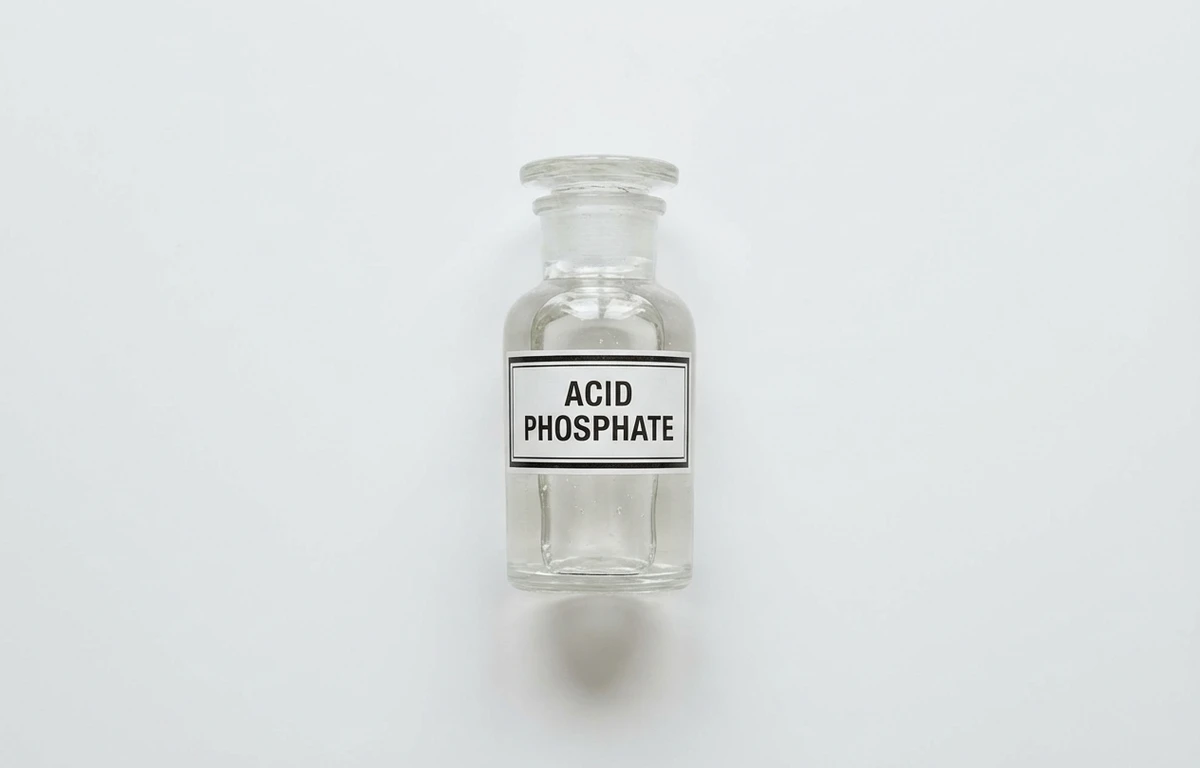
Acid Phosphate.
VegetarianVeganGluten-freeDairy-freeNut-freePeanut-freeSoy-freeEgg-freeShellfish-freeHoney-freeAlcohol-free
ALSO KNOWN AS
Extinct Chemical Acid PhosphateSoda Fountain AcidPhosphate SolutionLiquid Acid Phosphate
SERVING
CALORIES
0
PROTEIN
0g
CARBS
0g
FAT
0g
FIBER
0g
NUTRITION PROFILE · per 100 g
Everything in this ingredient.
MACRONUTRIENTS
Calories0kcal—
Protein0g0%
Carbohydrates0g0%
Fiber0g0%
Sugar0g0%
Total fat0g0%
Saturated fat0g0%
Trans fat0g—
Cholesterol0mg0%
Water85g—
MINERALS
Sodium50mg2%
Potassium150mg3%
Calcium100mg8%
Iron0mg0%
Magnesium50mg12%
Phosphorus2500mg200%
Zinc0mg0%
Copper0mg0%
Manganese0mg0%
Selenium0µg0%
VITAMINS
Vitamin A0µg0%
Vitamin C0mg0%
Vitamin D0µg0%
Vitamin E0mg0%
Vitamin K0µg0%
Thiamin (B1)0mg0%
Riboflavin (B2)0mg0%
Niacin (B3)0mg0%
Pantothenic acid (B5)0mg0%
Vitamin B60mg0%
Folate (B9)0µg0%
Vitamin B120µg0%
%DV based on a 2,000 cal diet. Source: USDA FoodData Central. A dash in the %DV column means there’s no established Daily Value for that nutrient.
MEASUREMENT CONVERSIONS
How much is what.
1 cup288g
1 tablespoon18g
1 teaspoon6g
1 oz34g
1 lb453.6g
1 ml1.2g
1 liter1200g
HEALTH BENEFITS
Why eat it.
- ✓Provides essential minerals like phosphorus and calcium
- ✓Citrus-free alternative for those with citrus allergies
- ✓Zero-calorie way to add tartness to beverages
- ✓Helps balance pH in specific culinary applications
- ✓Sugar-free acidifier suitable for diabetic diets
COOKING TIPS
In the kitchen.
- 1Use sparingly; usually 1/2 to 1 teaspoon is enough for a standard drink
- 2Add to cocktails to provide a 'dry' tartness without the flavor of lemon or lime
- 3Mix into homemade soda syrups to replicate authentic 19th-century soda fountain flavors
STORAGE
Keep it fresh.
- Store in a cool, dark place away from direct sunlight
- Keep the bottle tightly sealed to prevent evaporation and concentration
- Do not refrigerate unless specified by the manufacturer as it may crystallize
FAQ
Frequently asked questions.
What exactly is Acid Phosphate?
It is a liquid food additive made of phosphoric acid buffered with mineral salts like calcium, magnesium, and potassium, used to add tartness to drinks.
How long does Acid Phosphate last?
It has an almost indefinite shelf life if stored in a cool, dark place and kept tightly sealed.
Can I use lemon juice instead of Acid Phosphate?
While lemon juice provides acidity, it also adds a strong citrus flavor. Acid Phosphate provides pure tartness without the citrus taste.
Is Acid Phosphate safe to consume?
Yes, it is food-grade and safe when used in the small quantities typical for beverages and cooking.
Does it contain sugar or calories?
No, Acid Phosphate is calorie-free and sugar-free, making it a great option for low-calorie drinks.
Why was it called 'Extinct' for a while?
It was a staple of 19th-century soda fountains but fell out of fashion in the mid-20th century until it was recently revived by cocktail enthusiasts.
How do I pick a high-quality Acid Phosphate?
Look for products specifically labeled as food-grade and intended for beverage use, typically sold by specialty cocktail supply companies.
Can it be used in baking?
It is rarely used in baking; its primary use is in liquids where a clean, sharp acidity is desired without extra moisture or flavor.
Is it vegan and vegetarian friendly?
Yes, it is composed entirely of minerals and phosphoric acid, containing no animal-derived ingredients.
What are the most common drinks made with it?
The most famous is the 'Phosphate' soda (like a Cherry Phosphate) and various classic pre-Prohibition cocktails.
RECIPES
Cook with acid phosphate.
1 recipes · sorted by what’s quick



















