vegetable
baigana.
VegetarianVeganGluten-freeDairy-freeNut-freePeanut-freeSoy-freeEgg-freeShellfish-freeHoney-freeAlcohol-freeHalalKosher
SERVING
CALORIES
25
PROTEIN
0.98g
CARBS
5.9g
FAT
0.18g
FIBER
3.0g
NUTRITION PROFILE · per 100 g
Everything in this ingredient.
MACRONUTRIENTS
Calories25kcal—
Protein0.98g2%
Carbohydrates5.9g2%
Fiber3.0g11%
Sugar3.5g7%
Total fat0.18g0%
Saturated fat0.03g0%
Trans fat0g—
Cholesterol0mg0%
Water92.3g—
MINERALS
Sodium2.0mg0%
Potassium229mg5%
Calcium9.0mg1%
Iron0.23mg1%
Magnesium14mg3%
Phosphorus24mg2%
Zinc0.16mg1%
Copper0.08mg9%
Manganese0.23mg10%
Selenium0.30µg1%
VITAMINS
Vitamin A1.0µg0%
Vitamin C2.2mg2%
Vitamin D0µg0%
Vitamin E0.30mg2%
Vitamin K3.5µg3%
Thiamin (B1)0.04mg3%
Riboflavin (B2)0.04mg3%
Niacin (B3)0.65mg4%
Pantothenic acid (B5)0.28mg6%
Vitamin B60.08mg5%
Folate (B9)22µg6%
Vitamin B120µg0%
%DV based on a 2,000 cal diet. Source: USDA FoodData Central. A dash in the %DV column means there’s no established Daily Value for that nutrient.
MEASUREMENT CONVERSIONS
How much is what.
1 cup110g
HEALTH BENEFITS
Why eat it.
- ✓Rich in antioxidants, particularly nasunin found in the skin, which may protect brain cells from free radical damage.
- ✓High in fiber and low in calories, aiding in weight management and promoting digestive health.
- ✓Contains polyphenols that can help with blood sugar control by reducing sugar absorption.
- ✓Good source of manganese, a mineral essential for bone health and metabolism.
COOKING TIPS
In the kitchen.
- 1To reduce bitterness and prevent sogginess, salt sliced or cubed eggplant and let it sit for 30 minutes to draw out moisture, then rinse and pat dry before cooking.
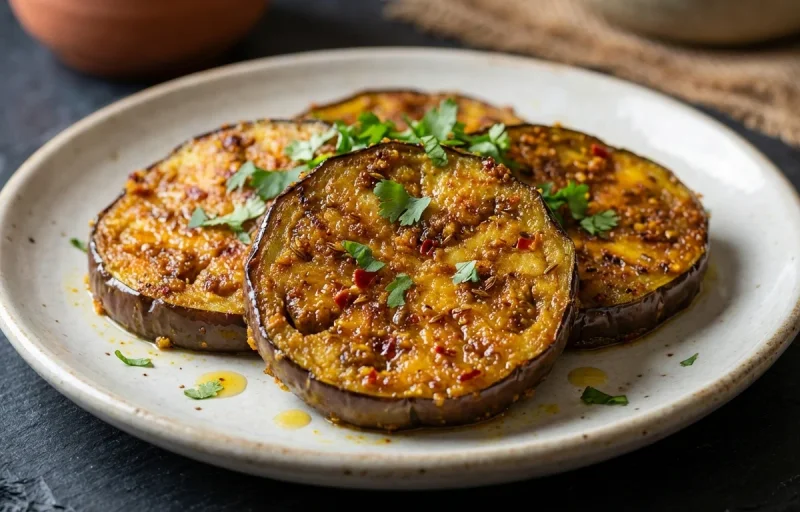
- 2Eggplant absorbs oil readily. To minimize oil absorption when frying, you can microwave it for a few minutes first or use high-heat methods like roasting or grilling.
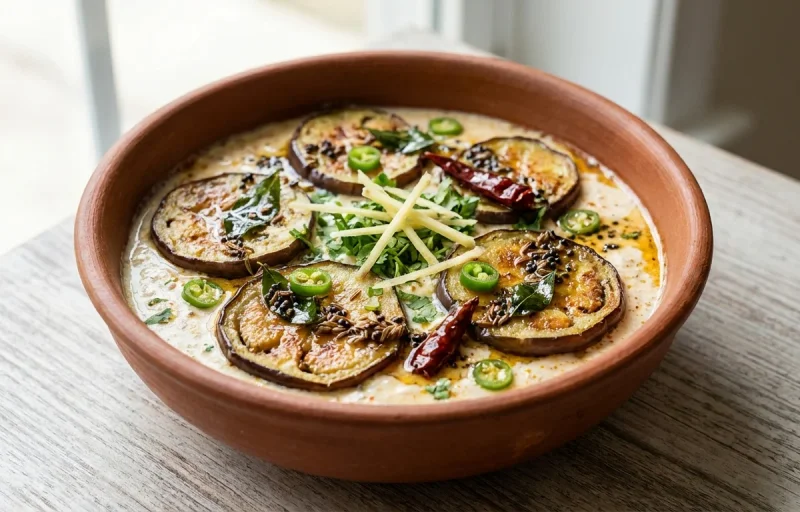
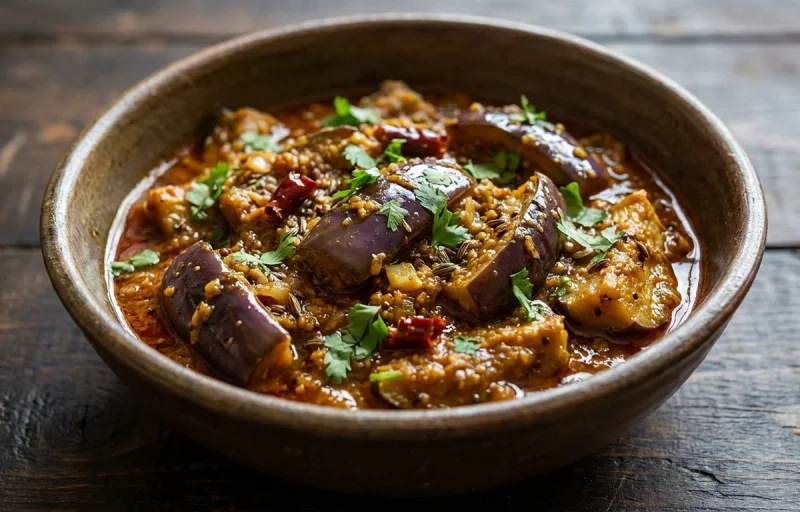
- 3The skin is edible and nutritious; leaving it on adds fiber and texture to dishes like stews, curries, and ratatouille.
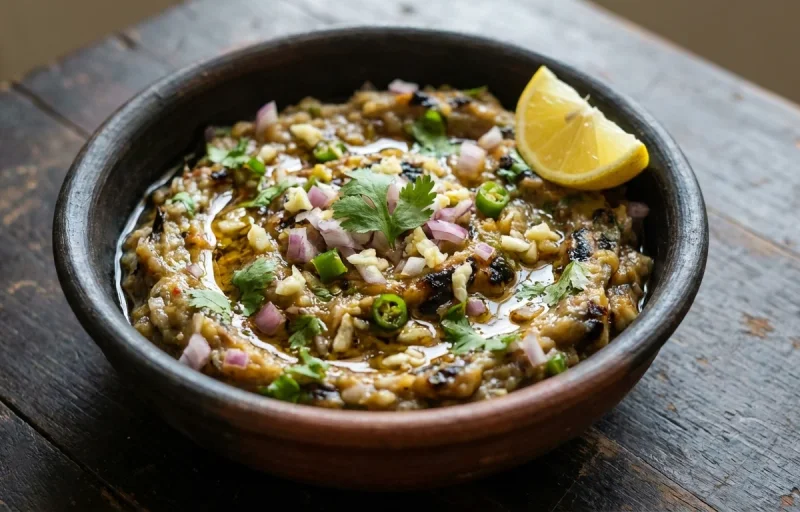
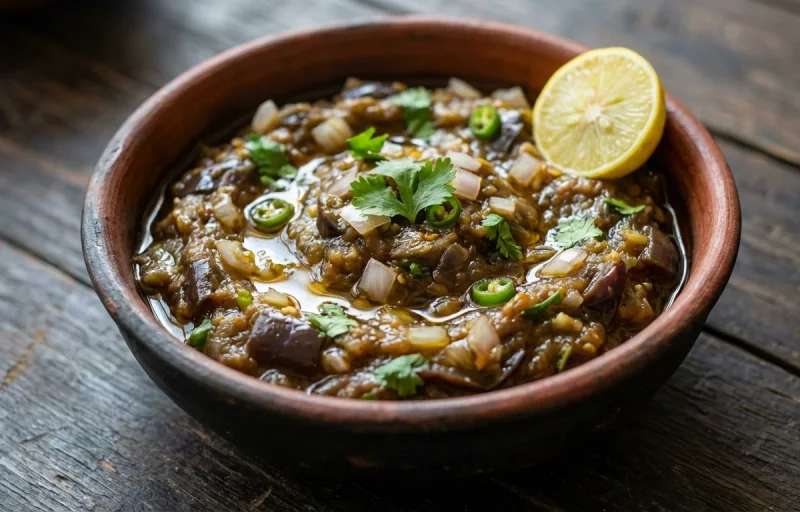
- 4Roasting eggplant whole until the skin is charred and the flesh is soft is an easy way to prepare it for dips like baba ghanoush.
STORAGE
Keep it fresh.
- Store whole, unwashed eggplant in the crisper drawer of the refrigerator for up to one week.
- Avoid storing near ethylene-producing fruits like apples and bananas, as this can accelerate spoilage.
- Once cut, wrap tightly or place in an airtight container and use within two days to prevent browning and drying out.
FAQ
Frequently asked questions.
Is baigana healthy?
Yes, baigana is highly nutritious as it is low in calories and rich in fiber. It contains essential minerals like manganese for bone health and potent antioxidants like nasunin, which helps protect brain cell membranes from damage.
How many calories and carbs are in baigana?
Baigana is a low-calorie vegetable, providing approximately 25 calories per 100g. It contains about 5.88g of carbohydrates, 0.98g of protein, and a negligible 0.18g of fat, making it an excellent choice for light meals.
Is baigana good for weight loss?
Yes, baigana is very effective for weight management. Its high fiber content promotes satiety and digestive health, while its low calorie density allows you to eat satisfying portions without consuming excessive calories.
Is baigana keto-friendly?
Baigana is considered keto-friendly because it is relatively low in net carbohydrates. With roughly 3-4g of net carbs per 100g, it can be easily incorporated into a ketogenic or low-carb diet when prepared with healthy fats.
Can diabetics eat baigana?
Baigana is an excellent choice for diabetics due to its high fiber and polyphenol content. These components can help slow the absorption of sugar and improve insulin sensitivity, aiding in more stable blood sugar levels.
Do I need to peel baigana before cooking?
It is generally better not to peel baigana, as the skin contains the highest concentration of antioxidants, specifically nasunin. While the skin of very large or old eggplants can be tough, the skin of smaller, fresh baigana is tender and edible.
How do you cook baigana?
Baigana is versatile and can be roasted, grilled, sautéed, or steamed. It is famous in dishes like Baigan Bharta, where it is roasted over an open flame for a smoky flavor, then mashed with spices and vegetables.
What does baigana taste like?
Raw baigana has a slightly bitter taste and a spongy texture. When cooked, it develops a mild, earthy flavor and a creamy, tender consistency that excels at absorbing the flavors of the oils, spices, and sauces it is cooked with.
How do you store baigana and how long does it last?
Store whole baigana in the refrigerator's crisper drawer in a breathable bag. It typically stays fresh for 5 to 7 days. Avoid cutting it in advance, as the flesh oxidizes and turns brown quickly when exposed to air.
How do you know if baigana is spoiled?
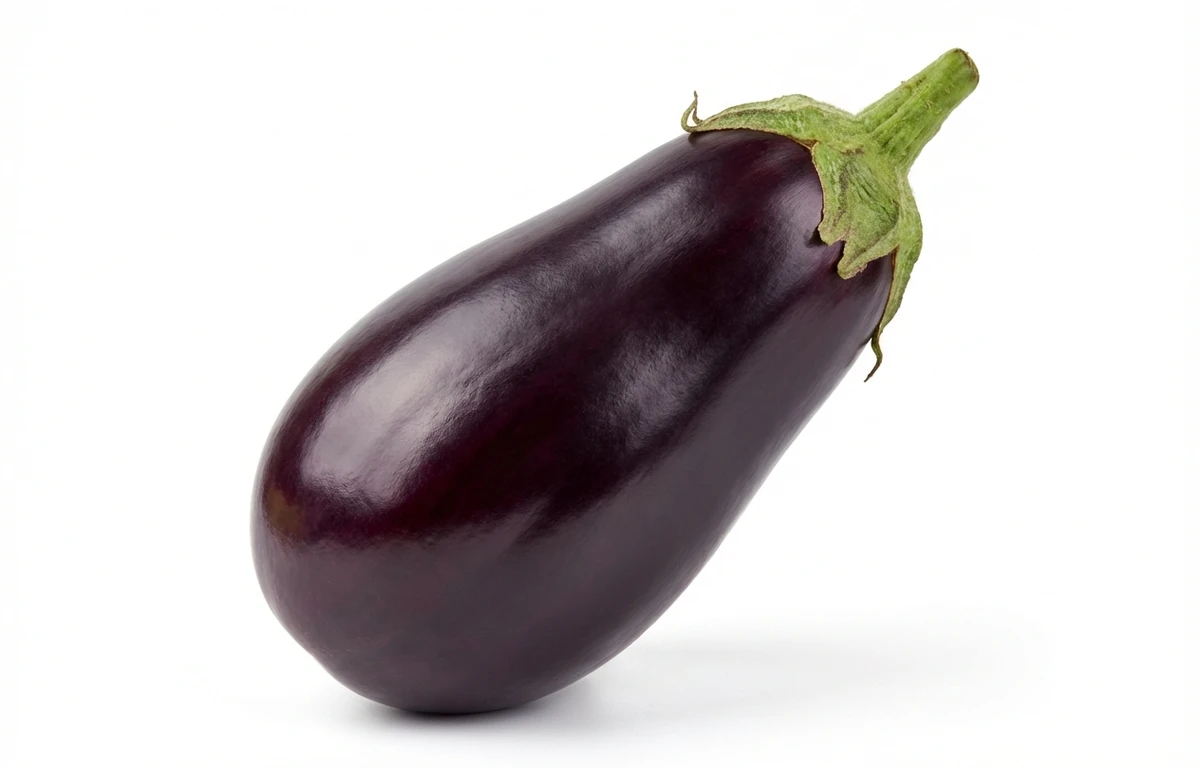
A fresh baigana should have smooth, shiny skin and a firm feel. If the skin appears wrinkled, the stem is mushy or brown, or if there are soft, dark, or sunken spots on the surface, the vegetable is likely past its prime.
RECIPES
Cook with baigana.
0 recipes · sorted by what’s quick