
Grain4 recipes
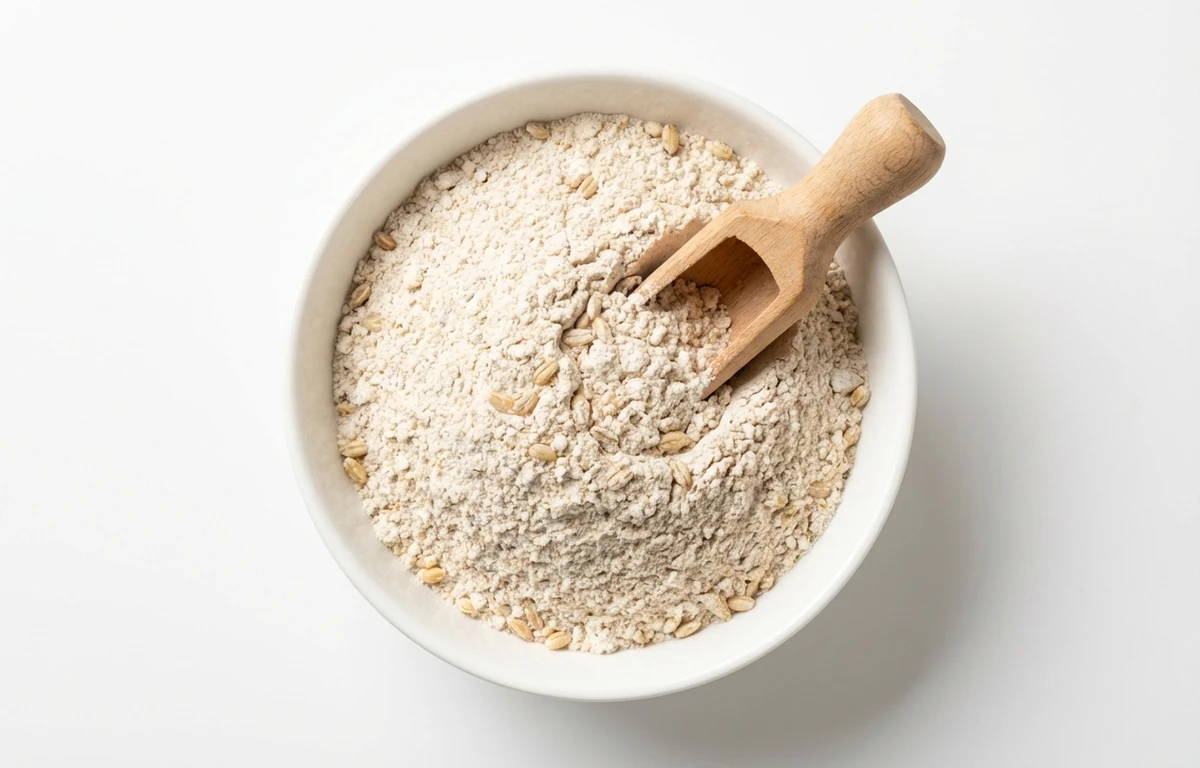
barley flour.
VegetarianVeganGluten-freeDairy-freeNut-freePeanut-freeSoy-freeEgg-freeShellfish-freeHoney-freeAlcohol-freeWhole grain
ALSO KNOWN AS
jau ka attabarli flour
SERVING
CALORIES
345
PROTEIN
10.5g
CARBS
74.5g
FAT
1.6g
FIBER
10.1g
NUTRITION PROFILE · per 100 g
Everything in this ingredient.
MACRONUTRIENTS
Calories345kcal—
Protein10.5g21%
Carbohydrates74.5g27%
Fiber10.1g36%
Sugar0.80g2%
Total fat1.6g2%
Saturated fat0.30g2%
Trans fat0g—
Cholesterol0mg0%
Water12.1g—
MINERALS
Sodium4.0mg0%
Potassium298mg6%
Calcium32mg2%
Iron2.5mg14%
Magnesium91mg22%
Phosphorus296mg24%
Zinc2.0mg18%
Copper0.34mg38%
Manganese1.0mg45%
Selenium37.7µg69%
VITAMINS
Vitamin A0µg0%
Vitamin C0mg0%
Vitamin D0µg0%
Vitamin E0.57mg4%
Vitamin K2.2µg2%
Thiamin (B1)0.37mg31%
Riboflavin (B2)0.11mg8%
Niacin (B3)4.6mg29%
Pantothenic acid (B5)0.40mg8%
Vitamin B60.40mg24%
Folate (B9)8.0µg2%
Vitamin B120µg0%
%DV based on a 2,000 cal diet. Source: USDA FoodData Central. A dash in the %DV column means there’s no established Daily Value for that nutrient.
MEASUREMENT CONVERSIONS
How much is what.
1 cup128g
1 tablespoon8g
1 teaspoon2.7g
1 ml0.5g
1 liter533.3g
HEALTH BENEFITS
Why eat it.
- ✓Rich in beta-glucan, a soluble fiber that can help lower cholesterol and improve heart health.
- ✓Helps manage blood sugar levels by slowing down glucose absorption, making it beneficial for glycemic control.
- ✓Promotes satiety and aids in weight management due to its high fiber content.
- ✓Good source of essential minerals such as selenium, manganese, and magnesium.
COOKING TIPS
In the kitchen.
- 1Substitute up to 25-50% of all-purpose flour with barley flour in recipes for muffins, pancakes, and quick breads to add a nutty flavor and boost fiber.
- 2Due to its lower gluten content, it creates denser baked goods. For lighter textures in yeast breads, combine it with a high-gluten flour like bread flour.
- 3Use as a nutritious thickener for soups, stews, and gravies, imparting a creamy consistency.
- 4Barley flour can absorb more liquid than wheat flour, so you may need to slightly increase the liquid content in your recipe for optimal results.
STORAGE
Keep it fresh.
- Store in an airtight container in a cool, dark, and dry place like a pantry for up to 3 months.
- For longer-term storage, place the flour in the refrigerator or freezer to prevent the natural oils from going rancid.
FAQ
Frequently asked questions.
Is barley flour healthy?
Yes, barley flour is highly nutritious and rich in beta-glucan, a soluble fiber known to lower cholesterol and improve heart health. It also contains essential minerals like selenium, manganese, and magnesium, which support metabolic function and immune health.
How many calories and carbs are in barley flour?
Per 100g, barley flour contains approximately 345 calories and 74.5g of carbohydrates. While high in carbs, most of these are complex carbohydrates and fiber, which provide sustained energy rather than a quick sugar spike.
Is barley flour gluten-free?
No, barley flour is not gluten-free. It contains a type of gluten protein called hordein, making it unsafe for individuals with celiac disease or non-celiac gluten sensitivity.
Is barley flour good for weight loss?
Barley flour can aid in weight management due to its high fiber content, which promotes satiety and helps you feel full for longer. This can lead to a natural reduction in overall calorie intake throughout the day.
Can diabetics eat barley flour?
Yes, barley flour is often recommended for diabetics because it has a lower glycemic index than refined wheat flour. Its high fiber content slows down glucose absorption, helping to manage and stabilize blood sugar levels.
How do you use barley flour in baking?
Barley flour can be used to replace about 25% to 50% of all-purpose flour in most recipes like muffins, pancakes, and breads. Because it has less gluten than wheat, using it at 100% may result in a denser, more fragile texture.
What does barley flour taste like?
Barley flour has a mild, slightly nutty, and earthy flavor. It is less sweet than wheat flour and adds a pleasant, wholesome depth to baked goods without being as heavy as whole wheat flour.
Is barley flour keto-friendly?
No, barley flour is not keto-friendly. With 74.5g of carbohydrates per 100g, it is too high in carbs for a standard ketogenic diet, which typically limits daily carb intake to under 50g.
How should I store barley flour?
Store barley flour in an airtight container in a cool, dry place to prevent it from absorbing moisture or odors. For a longer shelf life, it can be kept in the refrigerator or freezer to prevent the natural oils from going rancid.
Can I use barley flour as a thickener?
Yes, barley flour is an excellent thickener for soups, stews, and gravies. It provides a smooth consistency and a subtle nutty flavor while offering more fiber and minerals than traditional white flour or cornstarch.
RECIPES
Cook with barley flour.
4 recipes · sorted by what’s quick



















