
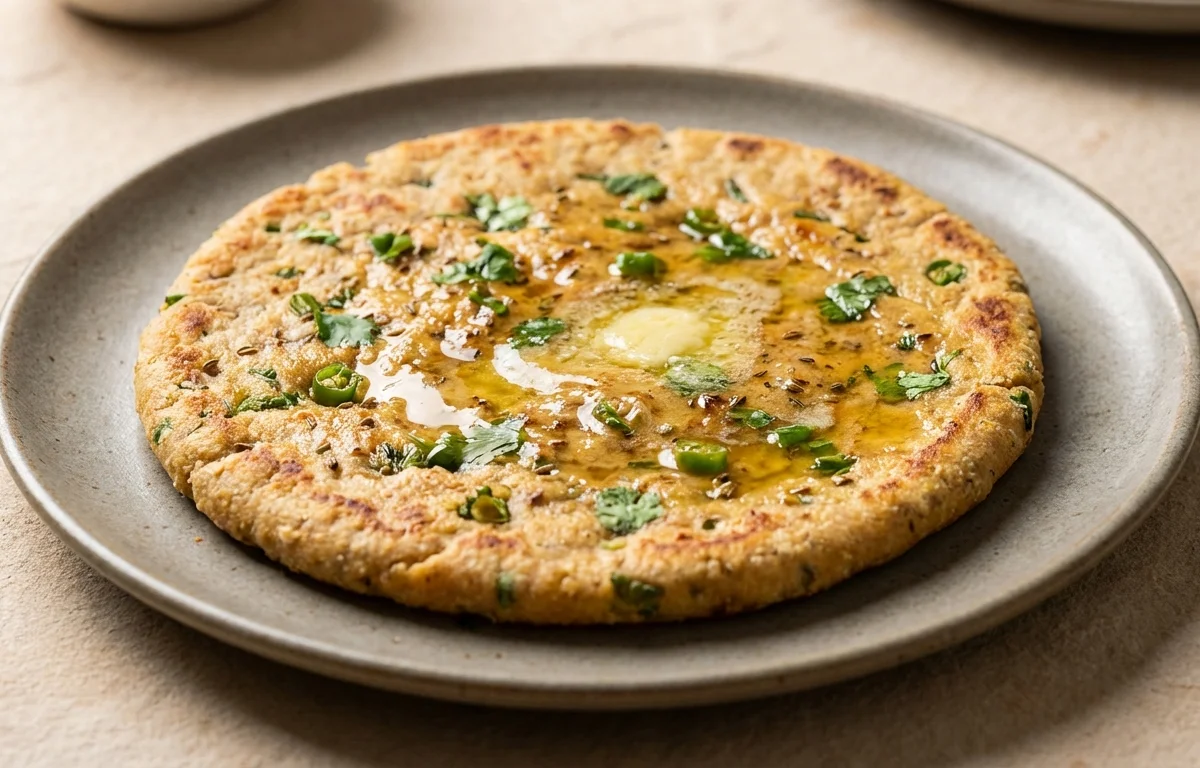
Bejad ki Roti
A rustic Rajasthani flatbread made with a mix of flours, Bejad ki Roti cooks up earthy, nutty, and satisfying. It is soft in the center with lightly crisp spots, and tastes wonderful with ghee, garlic chutney, or a simple sabzi.
For 4 servings
- mix · ~3 min
Mix the flours and seasonings.
1.Add whole wheat flour, chickpea flour, and barley flour to a wide bowl.2.Add salt and carom seeds.3.Mix well so the flours are evenly combined. - knead · ~8 min
Rub in the ghee and knead the dough.
1.Add 1 tbsp ghee and rub it into the flour mixture with your fingers until it looks crumbly.2.Pour in water little by little and bring everything together.3.Knead into a medium-soft dough, smooth but not sticky.TIPA slightly soft dough helps mixed-flour rotis stay supple instead of cracking at the edges. - rest · ~10 min
Cover and rest the dough.
Cover the dough and let it rest for 10 minutes so the flours hydrate well and the rotis roll more easily.
- prep · ~7 min
Divide and roll the rotis.
1.Divide the dough into 4 equal balls.2.Flatten one ball lightly with your fingers.3.Roll it into a medium-thick roti, about 5 to 6 inches wide.4.Repeat with the remaining dough balls.TIPIf the dough feels dry while rolling, press the edges together gently rather than dusting with too much extra flour. - fry · ~12 min
Cook the rotis on a hot tawa.
1.Heat a tawa over medium heat.2.Place one roti on the hot tawa and cook until small bubbles appear and the underside has light brown spots.3.Flip and cook the second side until partly done.4.Spread a little ghee on both sides and cook, pressing lightly, until both sides are golden with darker spots.5.Cook the remaining rotis the same way.TIPKeep the heat medium. High heat browns the outside too fast while the thicker center stays undercooked. - serve
Serve the Bejad ki Roti hot.
What to keep in mind.
7 tips from the recipe — small details that make a real difference to the final dish.
- 1Rub the moyan ghee in well until the flour holds shape when pressed; this keeps the roti tender instead of dense.
- 2Because besan and barley absorb water differently, add water gradually and stop at a medium-soft dough, not a sticky one.
- 3Resting is important here: mixed flours hydrate slowly, so even 10 minutes makes rolling easier and reduces edge cracking.
- 4Roll these slightly thicker than plain chapati so they stay soft inside while developing crisp brown spots on the tawa.
- 5If cracks appear while rolling, dab the dough ball with a few drops of water and knead briefly instead of adding lots of dry flour.
- 6Cook on steady medium heat and press the edges lightly after flipping so the thicker rim cooks through evenly.
- 7To store, stack hot rotis in a cloth-lined container; the trapped steam keeps Bejad ki Roti soft for serving.
Adapt it for your goals.
Vegan
Replace ghee with neutral oil in the dough and for cooking; you keep the rustic texture while making the roti fully dairy-free.
spicedSpiced
Add crushed coriander seeds, red chili powder, or a pinch of cumin for a more robust Rajasthani-style flavor profile.
jainJain
Serve with plain ghee and a non-root vegetable sabzi instead of garlic chutney to keep the meal Jain-friendly.
high fiberHigh-fiber
Increase barley flour slightly and roll gently; the roti becomes more rustic and wholesome, ideal if you enjoy a heartier bite.
Why this is on our healthy list.
Mixed-Grain Goodness
Using whole wheat, chickpea flour, and barley provides a broader mix of grains and legumes than a standard single-flour roti.
Plant Protein Support
Chickpea flour adds plant-based protein, making this flatbread more sustaining than plain wheat roti.
Fiber-Rich Ingredients
Whole wheat, barley, and besan all contribute fiber, which helps make the roti filling and satisfying.
Digestive Spice Benefit
Ajwain is traditionally used in Indian breads for its warm aroma and digestive-friendly character.
Frequently asked questions
The dough is likely too dry or under-rested. Add a few drops of water, knead briefly, and let it rest again before rolling.


