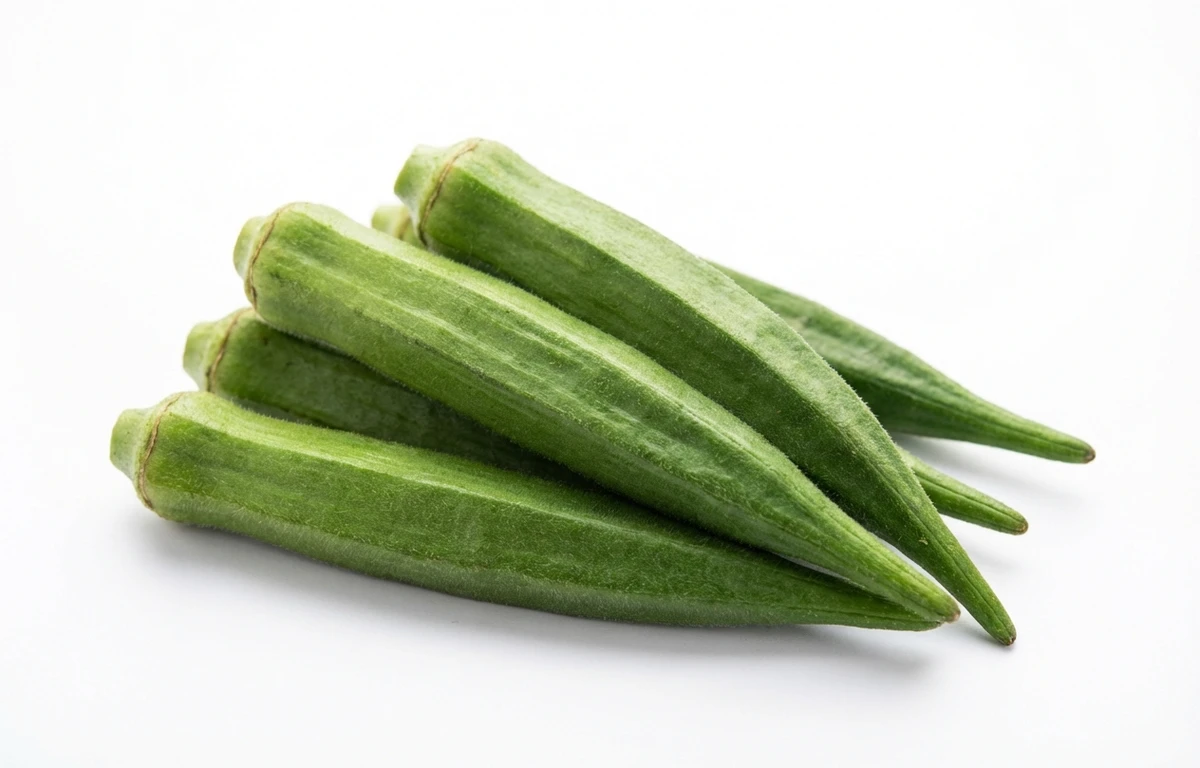
vegetable
bendekai.
VegetarianVeganGluten-freeDairy-freeNut-freePeanut-freeSoy-freeEgg-freeShellfish-freeHoney-freeAlcohol-freeHalalKosher
SERVING
CALORIES
33
PROTEIN
1.9g
CARBS
7.5g
FAT
0.19g
FIBER
3.2g
This ingredient is flagged as naturally gluten-free. Per 100 g, it provides 31.3 µg of vitamin K.
NUTRITION PROFILE · per 100 g
Everything in this ingredient.
MACRONUTRIENTS
Calories33kcal—
Protein1.9g4%
Carbohydrates7.5g3%
Fiber3.2g11%
Sugar1.5g3%
Total fat0.19g0%
Saturated fat0.03g0%
Trans fat0g—
Cholesterol0mg0%
Water89.6g—
MINERALS
Sodium7.0mg0%
Potassium299mg6%
Calcium82mg6%
Iron0.62mg3%
Magnesium57mg14%
Phosphorus61mg5%
Zinc0.58mg5%
Copper0.11mg12%
Manganese0.94mg41%
Selenium0.70µg1%
VITAMINS
Vitamin A36µg4%
Vitamin C23mg26%
Vitamin D0µg0%
Vitamin E0.27mg2%
Vitamin K31.3µg26%
Thiamin (B1)0.20mg17%
Riboflavin (B2)0.06mg5%
Niacin (B3)1.0mg6%
Pantothenic acid (B5)0.25mg5%
Vitamin B60.22mg13%
Folate (B9)60µg15%
Vitamin B120µg0%
%DV based on a 2,000 cal diet. Source: USDA FoodData Central. A dash in the %DV column means there’s no established Daily Value for that nutrient.
MEASUREMENT CONVERSIONS
How much is what.
1 cup110g
1 piece10g
HEALTH BENEFITS
Why eat it.
- ✓The soluble fiber can bind with cholesterol in the digestive tract, helping to lower overall cholesterol levels.
COOKING TIPS
In the kitchen.
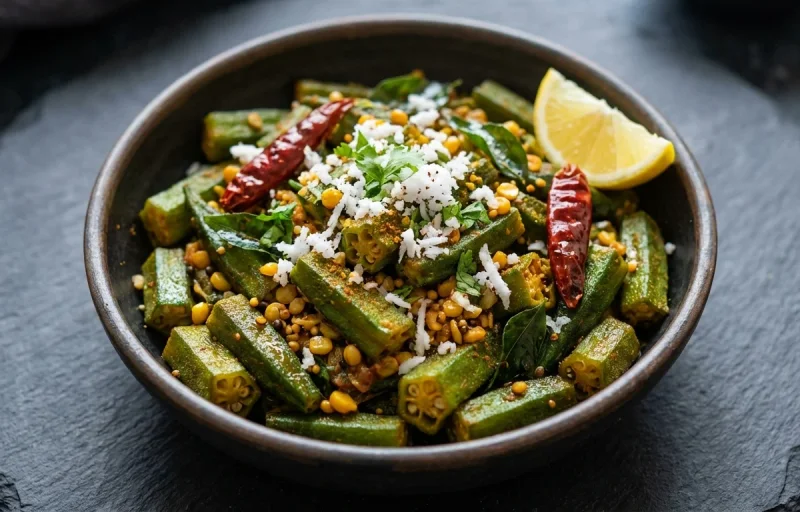
- 1To minimize sliminess, ensure the pods are completely dry before cutting and cook them quickly over high heat, such as stir-frying, roasting, or grilling.
- 2Adding acidic ingredients like tomatoes, lemon juice, or vinegar during cooking can help break down the mucilage.
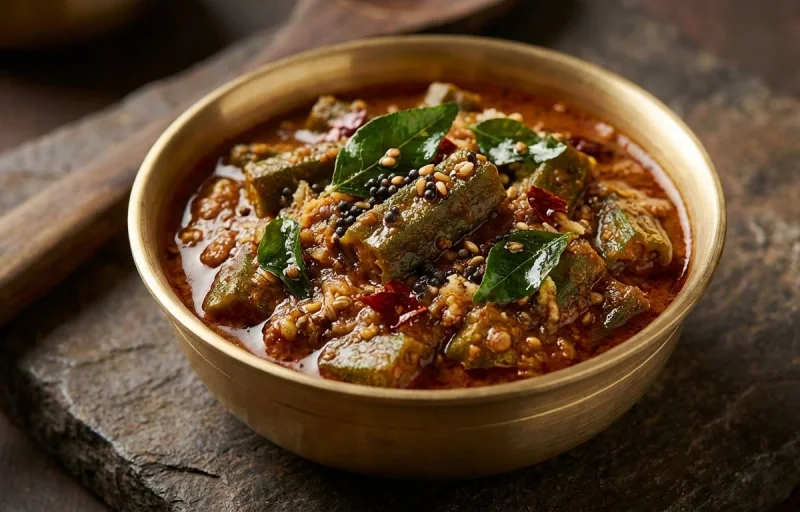
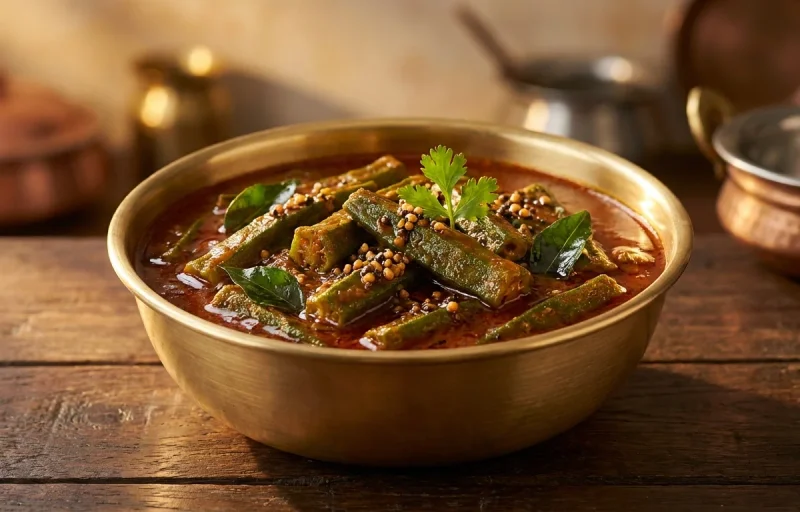
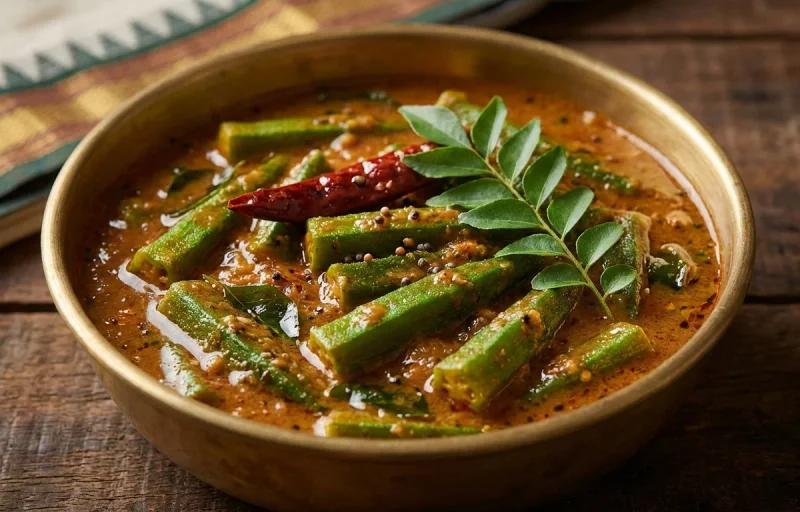
- 3The mucilage is a natural thickener, making it an excellent addition to gumbos, stews, and curries like Sambar.
- 4For a popular crispy snack (Kurkuri Bhindi), slice thinly, coat with spices and chickpea flour, and deep-fry or air-fry until golden brown.
STORAGE
Keep it fresh.
- Store fresh, unwashed bendekai in a paper bag or a perforated plastic bag in the refrigerator's vegetable crisper for up to 3-4 days.
- Avoid washing until just before use, as moisture can promote sliminess and mold growth.
- For longer storage, blanch whole or sliced pods for 2-3 minutes, cool in an ice bath, drain well, and freeze in airtight containers.
FAQ
Frequently asked questions.
How much protein and calories are in bendekai?
Bendekai is a low-calorie vegetable, providing approximately 33 calories per 100g. It contains about 1.93g of protein and is virtually fat-free, making it an excellent choice for nutrient-dense meals.
Is bendekai keto-friendly?
Yes, bendekai is keto-friendly. With only about 7.45g of total carbohydrates per 100g and a significant portion of that being fiber, the net carb count is low enough for most low-carb diets.
How do you stop bendekai from becoming slimy when cooking?
To minimize sliminess, ensure the pods are completely dry before cutting and avoid over-stirring during cooking. Adding acidic ingredients like lemon juice, tamarind, or dry mango powder (amchur) also helps neutralize the mucilage.
What does bendekai taste like?
Bendekai has a mild, slightly earthy, and grassy flavor. Its texture is its most defining characteristic, being crunchy when flash-fried or soft and silky when simmered in stews and curries.
How do you know if bendekai is fresh?
Fresh bendekai should be bright green, firm, and free of dark blemishes. A common test is to snap the tip of the pod; if it snaps off easily and cleanly, the vegetable is fresh and tender.
How do you store bendekai?
Store unwashed bendekai in a paper bag or wrapped in paper towels inside a plastic bag in the refrigerator's crisper drawer. It is best used within 2 to 3 days, as it can become tough or wilted if stored longer.
Can I eat bendekai raw?
Yes, bendekai can be eaten raw in salads or as a crunchy snack. While the texture is slightly fuzzy and the mucilage is more apparent, eating it raw preserves the maximum amount of heat-sensitive Vitamin C.
RECIPES
Cook with bendekai.
0 recipes · sorted by what’s quick