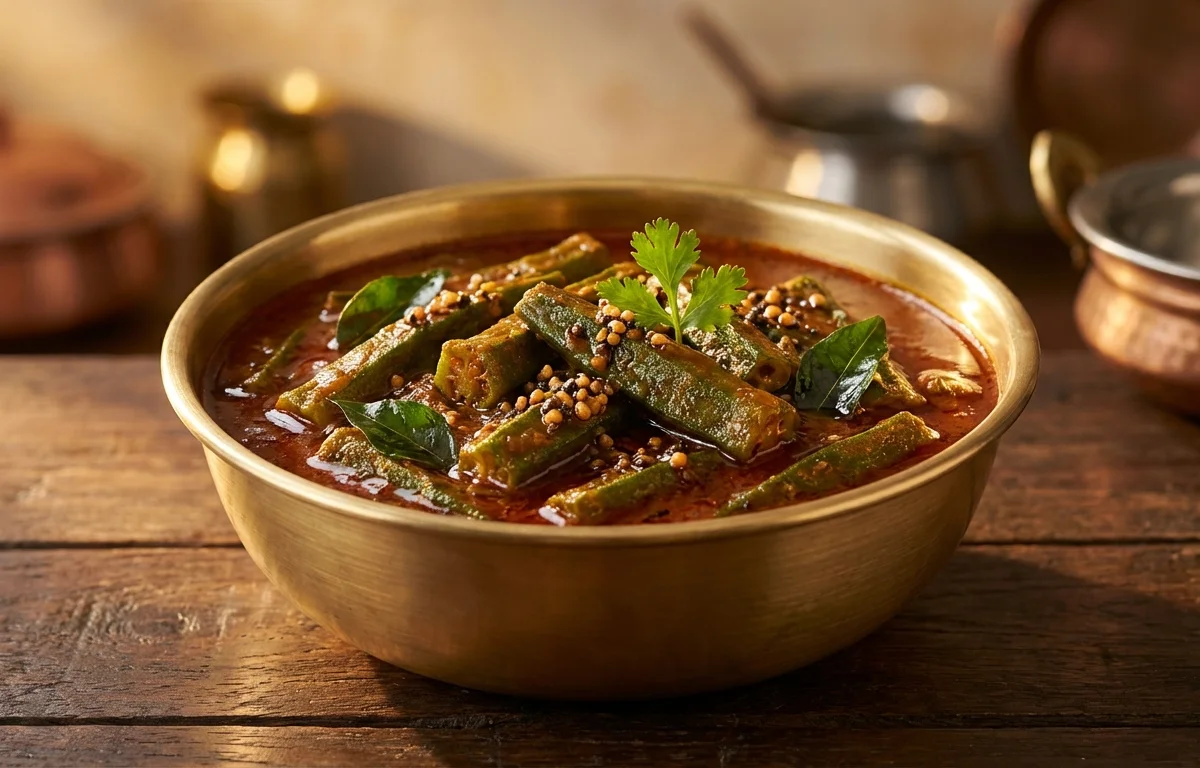
Bendekai Puli Koddel
A tangy, coconutty Mangalorean-style okra curry with a tamarind base and subtle sweetness. Tender okra simmered gently in a freshly ground coconut-spice paste, finished with a fragrant coconut oil tempering. A soulful South Indian side that pairs beautifully with steamed rice.
For 4 servings
- prep · ~15 min
Soak the tamarind and prep the okra.
1.Soak tamarind in 1/2 cup warm water for 15 minutes. Squeeze and extract thick pulp; discard solids.2.Wash okra, pat completely dry, and chop into 1-inch pieces.TIPEnsure okra is bone-dry before cutting to prevent sliminess. - roast · ~4 min
Roast the masala spices.
1.Heat a small pan over medium heat. Dry roast coriander seeds, cumin seeds, fenugreek seeds, and urad dal until aromatic and golden (2-3 min).2.Add dried red chilies and roast for another 30 seconds until fragrant. Transfer to a plate to cool.TIPRoast on medium-low heat — fenugreek turns bitter if burnt. - mix · ~2 min
Grind the coconut-masala paste.
1.In a mixer jar, add fresh grated coconut, roasted spices, and turmeric powder.2.Add 1/2 cup water and grind to a smooth, thick paste. Set aside. - saute · ~6 min
Saute the okra.
1.Heat 2 tsp oil in a heavy-bottomed pot over medium heat.2.Add chopped okra and saute for 5-6 minutes until lightly browned and the sliminess reduces.3.Remove okra and set aside.TIPDon't crowd the pan — okra needs space to brown properly. - boil · ~10 min
Simmer the curry base.
1.In the same pot, add the tamarind extract, ground masala paste, salt, and jaggery.2.Add 1/2 cup water to rinse the mixer jar and pour into the pot. Stir well.3.Bring to a gentle boil, then reduce heat and simmer for 8-10 minutes until the raw smell disappears and the gravy thickens slightly.TIPSimmer on low heat — coconut-based curries can split on high heat. - simmer · ~5 min
Add okra and finish cooking.
1.Add the sauteed okra to the simmering gravy.2.Cook together for 5 minutes until okra is tender but still holds its shape.3.Check consistency — it should be a thick, clinging gravy. Adjust salt and switch off. - temper · ~2 min
Make the coconut oil tempering.
1.Heat coconut oil in a small tadka pan over medium heat.2.Add mustard seeds and let them pop vigorously.3.Add broken dried red chili, curry leaves, and asafoetida. Fry for 10 seconds until fragrant.4.Pour sizzling tempering immediately over the cooked curry.TIPThe tempering must be sizzling hot when you pour it — the hissing sound adds aroma. - rest · ~5 min
Rest the curry for 5 minutes before serving.
Let the curry rest covered so the flavors meld together. Serve warm with steamed rice.
TIPThis curry tastes even better after a few hours as the tangy-spicy notes deepen.
What to keep in mind.
7 tips from the recipe — small details that make a real difference to the final dish.
- 1Pat okra bone-dry after washing to avoid sticky sliminess when sautéing.
- 2Roast fenugreek seeds on medium-low heat; they turn bitter quickly if burnt.
- 3Don't crowd the pan when sautéing okra—give each piece space to brown.
- 4Simmer the coconut-based gravy on low heat to prevent it from splitting.
- 5Pour the tempering while sizzling hot so it releases its full aroma into the curry.
- 6Let the curry rest for 5 minutes after cooking; the flavours meld and deepen.
- 7Make this curry a few hours ahead—it tastes even better as the tangy notes develop.
Adapt it for your goals.
Vegan
This recipe is already naturally vegan as written—no changes needed. The coconut oil tempering and fresh coconut base keep it fully plant-based.
gluten freeGluten-free
Bendekai Puli Koddel is inherently gluten-free (no wheat or soy ingredients). Just ensure your asafoetida brand is labeled gluten-free, as some blends contain wheat flour.
low oilLow-oil
For a lighter version, steam the okra pieces for 4-5 minutes instead of sautéing them in oil. Use just 1 teaspoon of coconut oil for the tempering.
nut freeNut-free
Replace fresh coconut with unsweetened coconut milk (about 1 cup thick milk) and skip the grated coconut. The gravy will be slightly thinner but still delicious.
Why this is on our healthy list.
Rich in Dietary Fiber
Okra is packed with soluble and insoluble fibre, which aids digestion, promotes gut health, and helps maintain steady blood sugar levels.
Good Source of Vitamin C
Okra provides vitamin C, supporting immune function and collagen production. Tamarind also contributes a modest amount.
Heart-Healthy Fats from Coconut
Fresh coconut and coconut oil contain medium-chain triglycerides (MCTs), which are metabolised differently and may support heart health in moderation.
Iron from Coriander and Fenugreek
Coriander seeds and fenugreek seeds contain iron, along with other minerals like magnesium and copper, contributing to blood health.
Low in Calorie Density
This curry is predominantly composed of vegetables and spices, with minimal oil, making it a nutrient-dense, low-calorie accompaniment to a balanced meal.
Frequently asked questions
Fresh okra is strongly recommended because frozen okra releases a lot of moisture when thawed, making the curry watery and often slimy. If using frozen, thaw, pat very dry, and sauté longer.