
Vegetable10 recipes
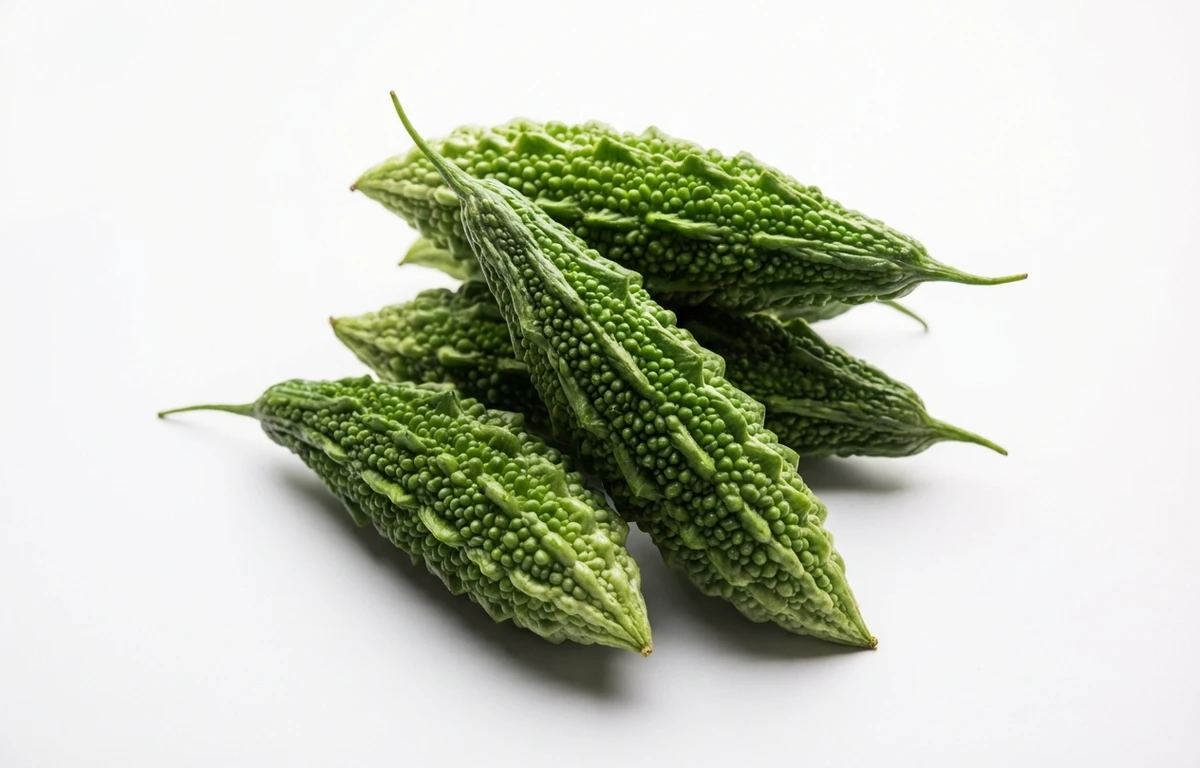
bitter gourd.
VegetarianVeganGluten-freeDairy-freeNut-freePeanut-freeSoy-freeEgg-freeShellfish-freeHoney-freeAlcohol-free
ALSO KNOWN AS
bitter melonkarelabalsam peargoya
SERVING
CALORIES
17
PROTEIN
1.0g
CARBS
3.7g
FAT
0.17g
FIBER
2.8g
This ingredient is flagged as naturally gluten-free. Per 100 g, it provides 4.8 µg of vitamin K.
NUTRITION PROFILE · per 100 g
Everything in this ingredient.
MACRONUTRIENTS
Calories17kcal—
Protein1.0g2%
Carbohydrates3.7g1%
Fiber2.8g10%
Sugar1.0g2%
Total fat0.17g0%
Saturated fat0.01g0%
Trans fat0g—
Cholesterol0mg0%
Water94g—
MINERALS
Sodium5.0mg0%
Potassium296mg6%
Calcium19mg1%
Iron0.43mg2%
Magnesium17mg4%
Phosphorus31mg2%
Zinc0.80mg7%
Copper0.03mg3%
Manganese0.09mg4%
Selenium0.20µg0%
VITAMINS
Vitamin A24µg3%
Vitamin C84mg93%
Vitamin D0µg0%
Vitamin E0.14mg1%
Vitamin K4.8µg4%
Thiamin (B1)0.04mg3%
Riboflavin (B2)0.04mg3%
Niacin (B3)0.40mg3%
Pantothenic acid (B5)0.21mg4%
Vitamin B60.04mg2%
Folate (B9)72µg18%
Vitamin B120µg0%
%DV based on a 2,000 cal diet. Source: USDA FoodData Central. A dash in the %DV column means there’s no established Daily Value for that nutrient.
MEASUREMENT CONVERSIONS
How much is what.
1 cup94g
1 tablespoon12g
1 teaspoon4g
1 oz28.4g
1 lb453.6g
1 ml0.4g
1 liter400g
1 piece120g
HEALTH BENEFITS
Why eat it.
- ✓Contains polypeptide-p which helps naturally lower blood glucose levels
COOKING TIPS
In the kitchen.
- 1Rub sliced pieces with salt and let sit for 20 minutes to draw out bitter juices
- 2Remove the white pith and large seeds to significantly reduce the intensity of bitterness
- 3Balance the flavor by pairing with strong ingredients like tamarind, jaggery, or coconut
STORAGE
Keep it fresh.
- Store in a paper bag or perforated plastic bag in the refrigerator crisper drawer
- Keep the gourd dry as moisture leads to rapid mold growth and spoilage
- Best consumed within 4 to 5 days of purchase for optimal freshness
FAQ
Frequently asked questions.
How do I reduce the bitterness of bitter gourd?
Slice the gourd, sprinkle with salt, and let it sit for 20-30 minutes. Squeeze out the liquid and rinse with water before cooking. Soaking in diluted yogurt or tamarind water also helps.
Can you eat the seeds of a bitter gourd?
Yes, if the seeds are white and tender, they are edible. If the seeds are hard and red, they should be removed as they can be tough and overly bitter.
How do I pick a good bitter gourd?
Look for firm gourds that are bright green. Smaller, younger gourds tend to be less bitter than very large, overripe ones that have started to turn yellow.
Can bitter gourd be frozen?
Yes. Slice the gourd, blanch the pieces in boiling water for 2-3 minutes, cool them in ice water, dry thoroughly, and store in airtight freezer bags for up to 6 months.
Is bitter gourd safe to eat raw?
While it can be juiced or eaten raw in small amounts, it is very bitter and can cause digestive upset in some people. Most prefer it cooked or blanched.
What are the best substitutes for bitter gourd?
There is no exact match for its unique bitterness, but Chinese broccoli (Gai Lan), kale, or green peppers can provide a similar texture or mild bitterness in stir-fries.
How long does bitter gourd last in the fridge?
When stored properly in a dry, breathable bag, it typically stays fresh for 4 to 7 days.
Can pregnant women eat bitter gourd?
It is generally advised to consume it in very moderate amounts during pregnancy, as excessive intake may cause uterine contractions. Consult a doctor for specific advice.
What are common ways to cook bitter gourd?
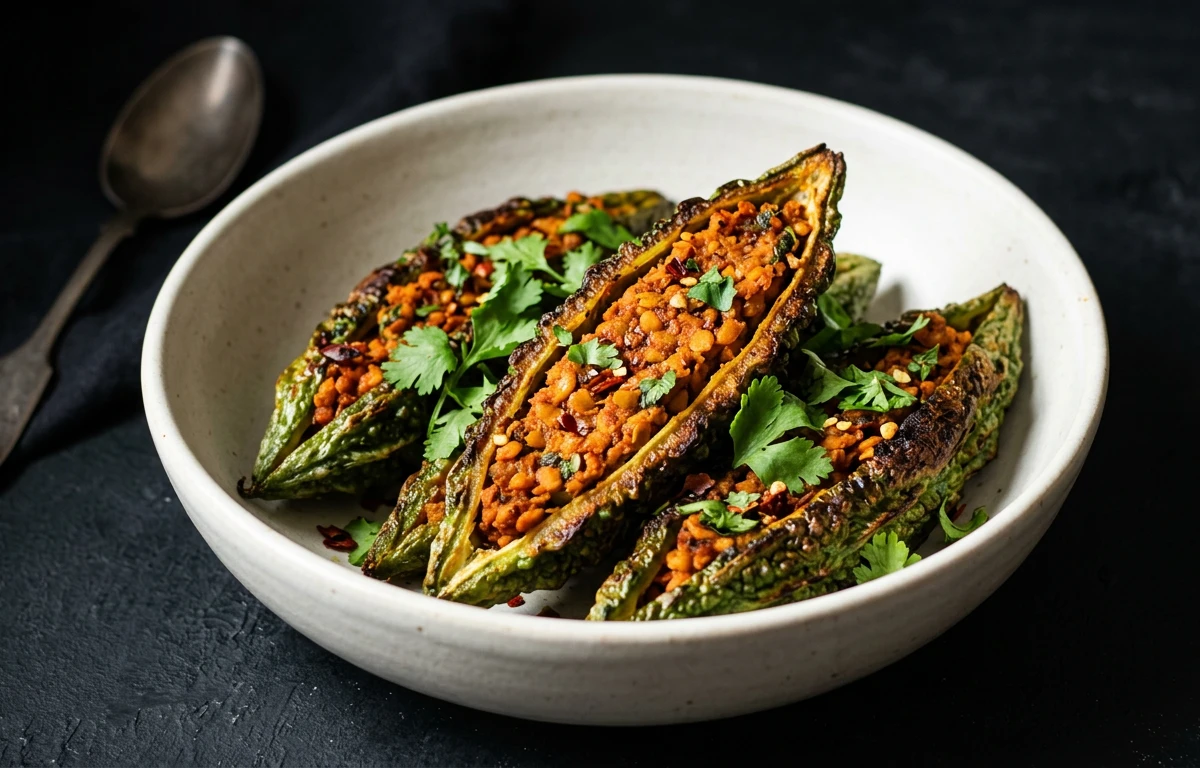
Common methods include stir-frying with spices, stuffing with meat or lentils (Bharwa Karela), deep-frying into chips, or blending into health juices.
RECIPES
Cook with bitter gourd.
10 recipes · sorted by what’s quick


.webp)
RELATED GUIDES



















