seafood2 recipes
Bombay Duck Fish.
VegetarianVeganGluten-freeDairy-freeNut-freePeanut-freeSoy-freeEgg-freeShellfish-freeHoney-freeAlcohol-free
ALSO KNOWN AS
BummaloeLoteHarpadon nehereusBombilBummaloBamalohLotte
SERVING
CALORIES
78
PROTEIN
11.2g
CARBS
0g
FAT
3.1g
FIBER
0g
This ingredient is flagged as naturally gluten-free. Per 100 g, it provides 0.10 µg of vitamin K.
NUTRITION PROFILE · per 100 g
Everything in this ingredient.
MACRONUTRIENTS
Calories78kcal—
Protein11.2g22%
Carbohydrates0g0%
Fiber0g0%
Sugar0g0%
Total fat3.1g4%
Saturated fat0.80g4%
Trans fat0g—
Cholesterol55mg18%
Water84.5g—
MINERALS
Sodium80mg3%
Potassium240mg5%
Calcium180mg14%
Iron1.2mg7%
Magnesium35mg8%
Phosphorus190mg15%
Zinc0.80mg7%
Copper0.05mg6%
Manganese0.02mg1%
Selenium25.4µg46%
VITAMINS
Vitamin A15µg2%
Vitamin C0mg0%
Vitamin D4.5µg23%
Vitamin E0.60mg4%
Vitamin K0.10µg0%
Thiamin (B1)0.03mg3%
Riboflavin (B2)0.06mg5%
Niacin (B3)1.8mg11%
Pantothenic acid (B5)0.30mg6%
Vitamin B60.15mg9%
Folate (B9)5.0µg1%
Vitamin B121.2µg50%
%DV based on a 2,000 cal diet. Source: USDA FoodData Central. A dash in the %DV column means there’s no established Daily Value for that nutrient.
MEASUREMENT CONVERSIONS
How much is what.
1 oz28.4g
1 lb453.6g
1 piece150g
HEALTH BENEFITS
Why eat it.
- ✓Excellent source of high-quality lean protein
- ✓Contains Omega-3 fatty acids for heart health
- ✓Good source of Vitamin D which aids calcium absorption
COOKING TIPS
In the kitchen.
- 1The flesh is very delicate and watery; handle gently to prevent it from breaking
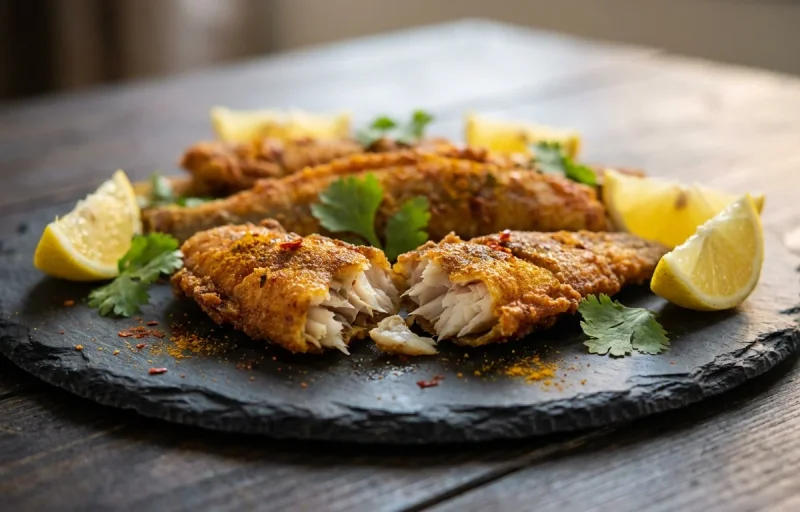
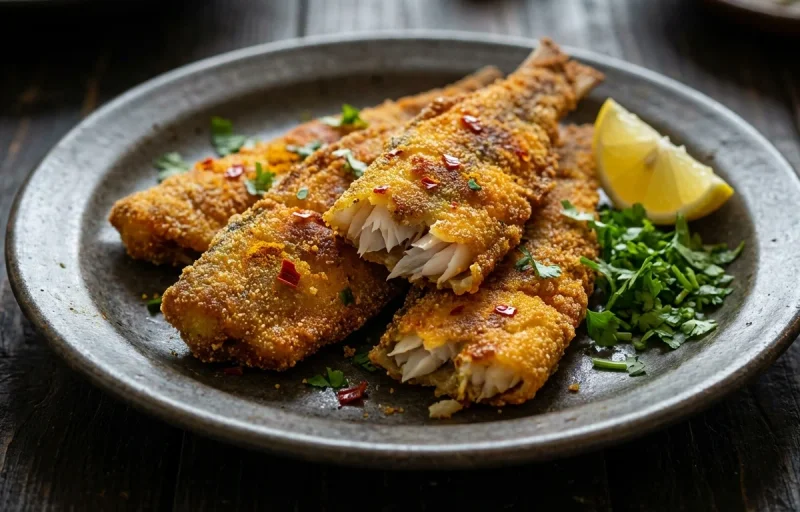
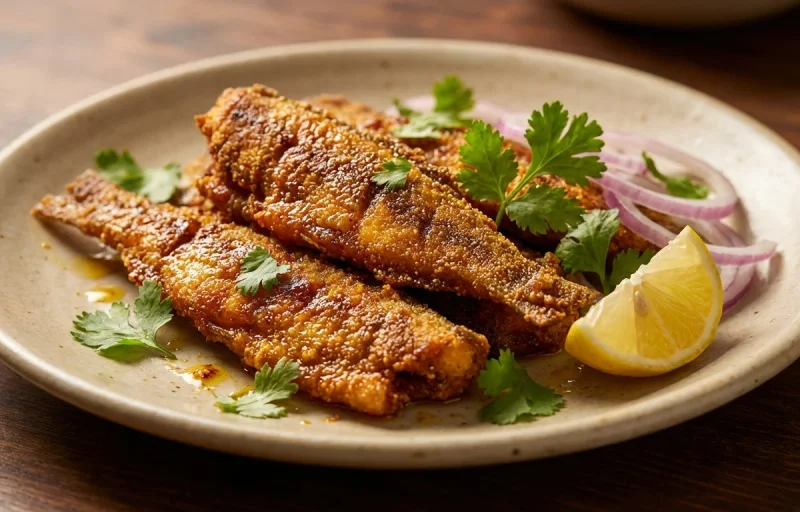
- 2Commonly coated in semolina (rava) or gram flour and deep-fried to achieve a crispy exterior
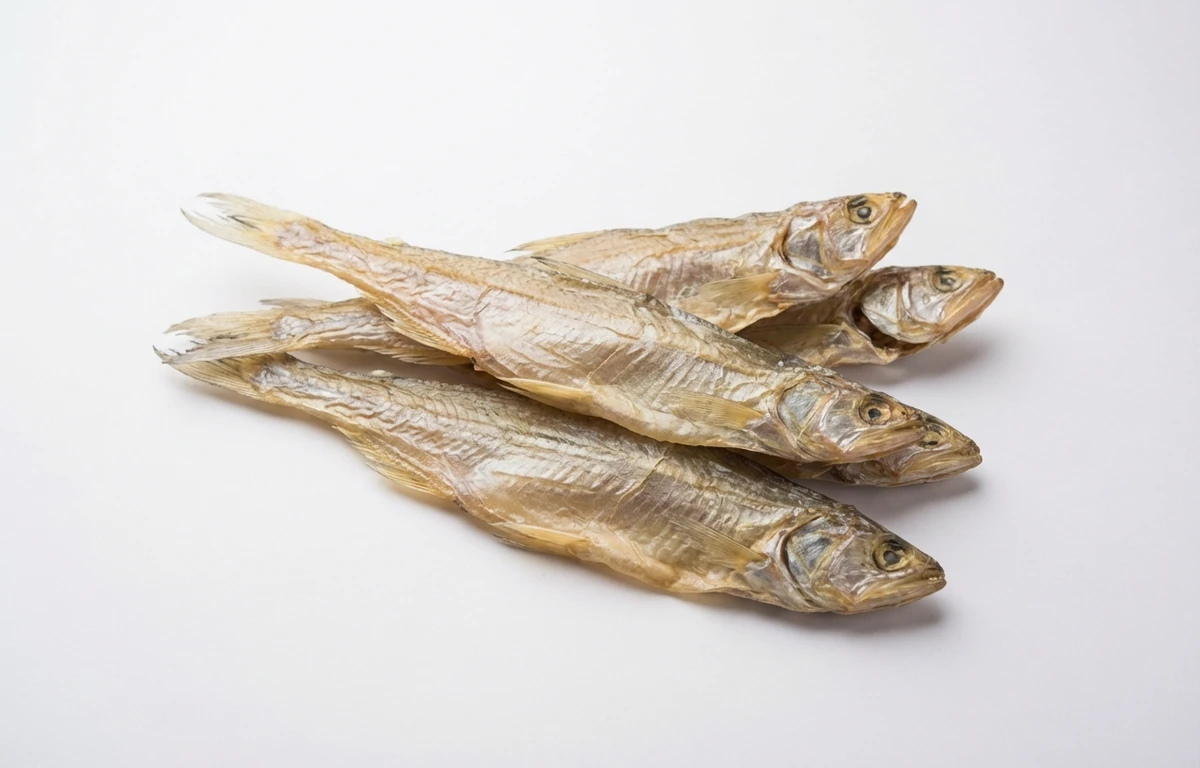
- 3If using dried versions, soak them briefly to reduce saltiness before cooking
STORAGE
Keep it fresh.
- Store fresh fish in the coldest part of the refrigerator for no more than 1-2 days
- For longer storage, wrap tightly in plastic and freeze for up to 3 months
- Dried Bombay duck should be kept in an airtight container in a cool, dry place
FAQ
Frequently asked questions.
Is Bombay Duck actually a duck?
No, it is a lizardfish. The name likely originated from the 'Bombay Daak' (Bombay Mail) trains that transported the pungent dried fish.
How do I select fresh Bombay Duck?
Look for fish with clear, bright eyes, firm flesh that isn't falling apart, and a fresh sea-like smell rather than a strong 'fishy' odor.
Can Bombay Duck be frozen?
Yes, it can be frozen for up to 3 months. Ensure it is cleaned and patted dry before being tightly sealed in freezer-safe bags.
What is the best substitute for Bombay Duck?
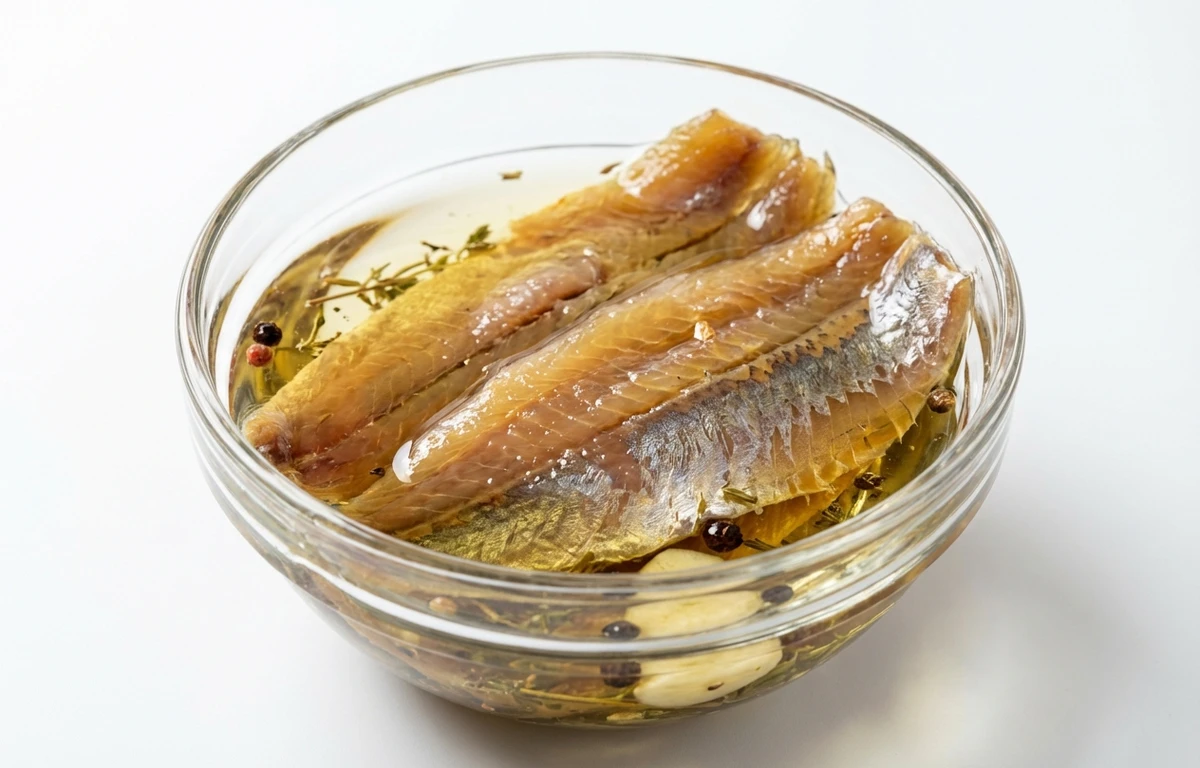
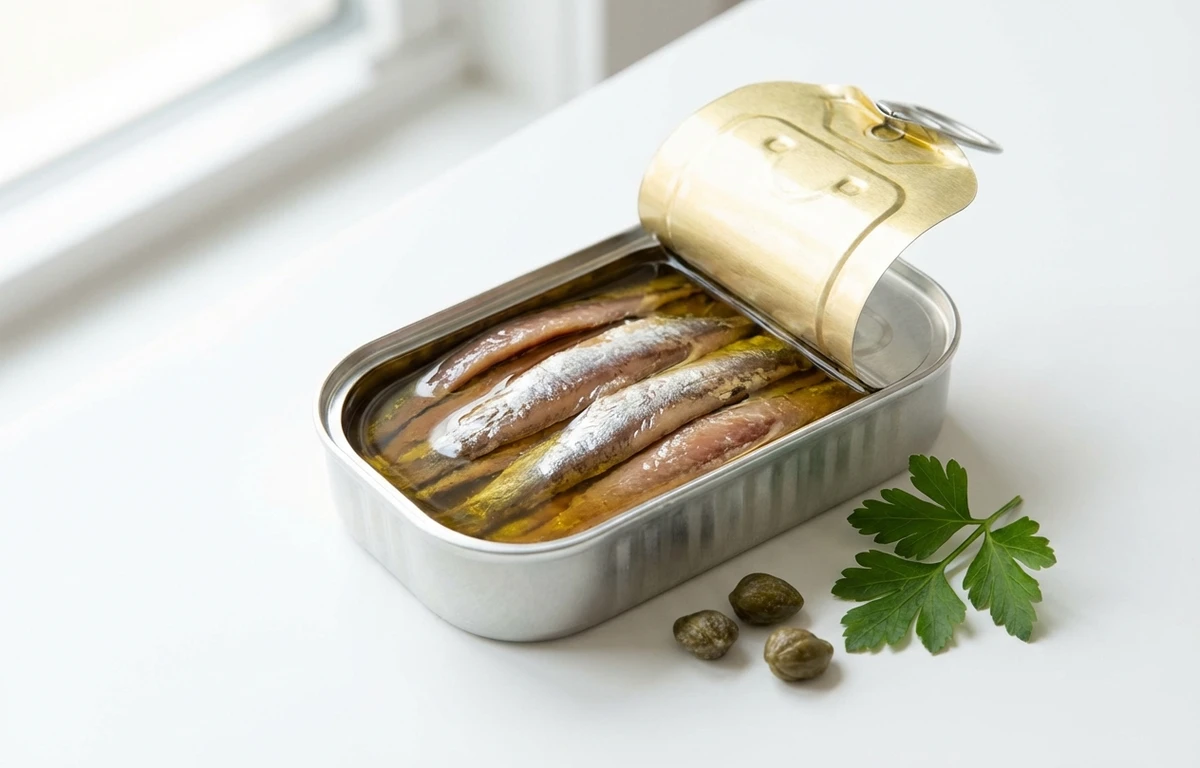
Smelt or small anchovies are the best substitutes due to their similar size and delicate texture.
Why is Bombay Duck so watery?
It has a naturally high water content (over 80%), which gives it its unique gelatinous texture when raw and soft texture when cooked.
How do you clean Bombay Duck?
Cut off the head, tail, and fins. Slit the belly to remove entrails, and wash thoroughly under cold running water.
Is Bombay Duck high in mercury?
No, as a smaller fish lower on the food chain, it generally has much lower mercury levels compared to larger predatory fish.
What are common dishes made with Bombay Duck?
Popular dishes include Bombil Fry (crispy fried fish), Bombil Curry, and various preparations using the dried, salted version.
Is it safe to eat the bones?
When deep-fried until crispy, the small, soft bones of the Bombay Duck are often consumed and are a good source of calcium.
How long does dried Bombay Duck last?
If kept in an airtight container in a cool, dry place, dried Bombay Duck can last for 6 to 12 months.
RECIPES
Cook with bombay duck fish.
2 recipes · sorted by what’s quick