
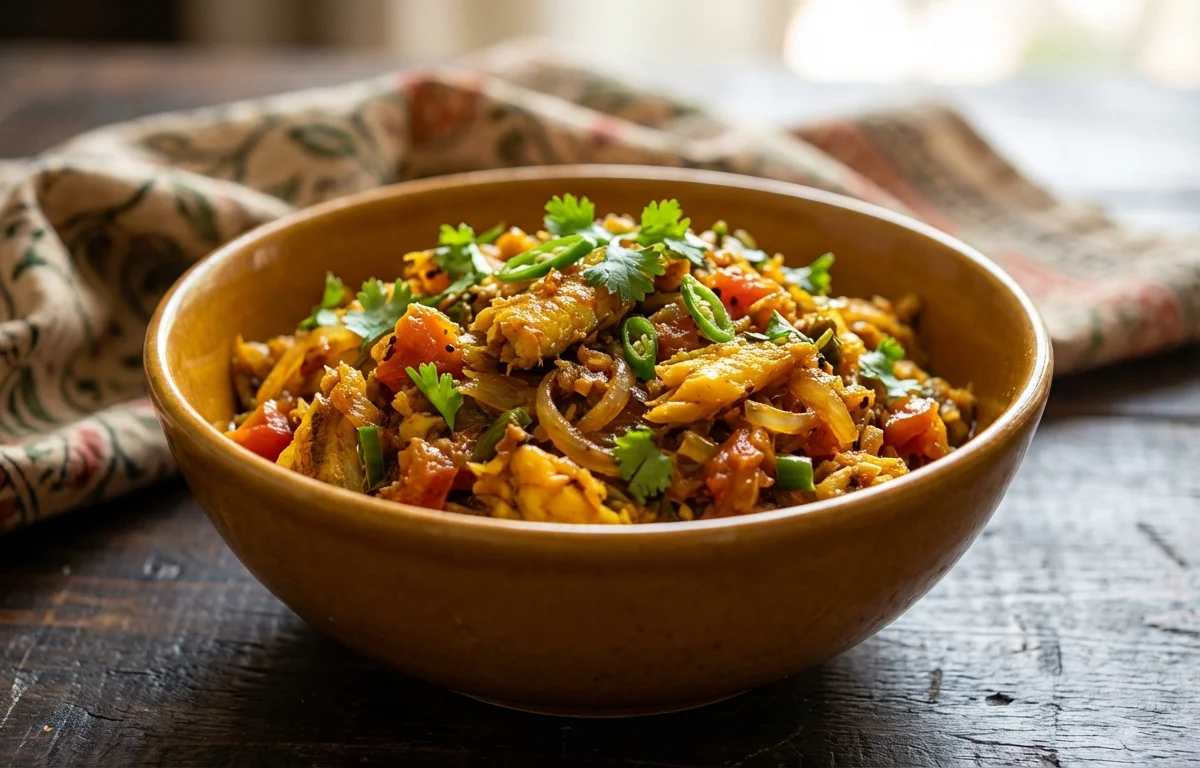
Loitta Maacher Jhuri
A rustic Bengali delicacy where delicate Bombay duck fish is flaked, then dry-roasted with fiery green chilies, pungent garlic, and fresh coriander until intensely aromatic. The fish nearly dissolves into spiced, savory strands that are crisp at the edges yet tender within. Best enjoyed with a bowl of hot steamed rice and a wedge of lime.
For 4 servings
- prep · ~10 min
Prepare and marinate the loitta fish.
1.Rinse the cleaned loitta pieces thoroughly under cold water and drain well in a colander for 5 minutes.2.Pat the fish completely dry with a kitchen towel — excess moisture will make it steam instead of fry.3.Toss the fish with turmeric powder and half the salt, coating evenly.4.Set aside for 10 minutes to let the salt and turmeric penetrate.TIPLoitta is a soft, bony fish. Handle it gently while mixing so the pieces don't break down before cooking. - fry · ~8 min
Shallow fry the fish until golden.
1.Heat 2 tablespoons mustard oil in a wide non-stick or well-seasoned kadai over medium heat until it reaches its smoking point, then cool slightly.2.Lay the fish pieces in a single layer — work in batches if needed, don't overcrowd.3.Fry 2 to 3 minutes per side until golden and lightly crisp. The fish will release easily when ready.4.Transfer the fried fish to a plate lined with paper towels.TIPMustard oil must smoke before cooking or it will taste raw and pungent. Let it just start to smoke, then reduce heat before adding the food. - prep · ~5 min
Shred the fried fish into flakes.
1.Once cool enough to handle, break each piece of fried fish into small flakes using your fingers.2.Pick out and discard any large bones and the central spine — the small bones are edible and add calcium.3.Set the flaked fish aside. - saute · ~9 min
Sauté the aromatics until golden.
1.Add the remaining 1 tablespoon mustard oil to the same kadai and heat over medium.2.Add the sliced onions and sauté for 5 to 7 minutes until deep golden brown.3.Stir in the chopped garlic and slit green chilies. Cook for 2 more minutes until raw garlic smell fades.TIPDon't rush the onions. Proper browning is what builds the deep, sweet-savoury base that balances the strong fish flavour. - saute · ~7 min
Scramble the fish with the aromatics.
1.Add the flaked fish, remaining salt, and red chili powder to the kadai.2.Stir to combine everything evenly, breaking up any large clumps.3.Cook on medium heat, stirring frequently, for 5 to 7 minutes.TIPUse a spatula with a flat edge to scrape the bottom of the pan continuously. You want the fish to dry-roast, not burn in patches. - saute · ~5 min
Dry-roast the mixture to crispy perfection.
1.Raise the heat slightly and continue to stir-fry. The fish should sizzle and visibly dry out.2.Cook until the mixture is deep brown, the onions are deeply caramelised, and the fish has separated into fluffy, slightly crisp strands — about 5 more minutes.3.A rich toasted aroma will fill the kitchen when it's ready.TIPThis is the 'jhuri' (scrambled/dry) stage. The fish should look like dry, browned threads with no visible moisture. Taste and adjust salt before turning off the heat. - garnish
Finish with fresh coriander and serve immediately.
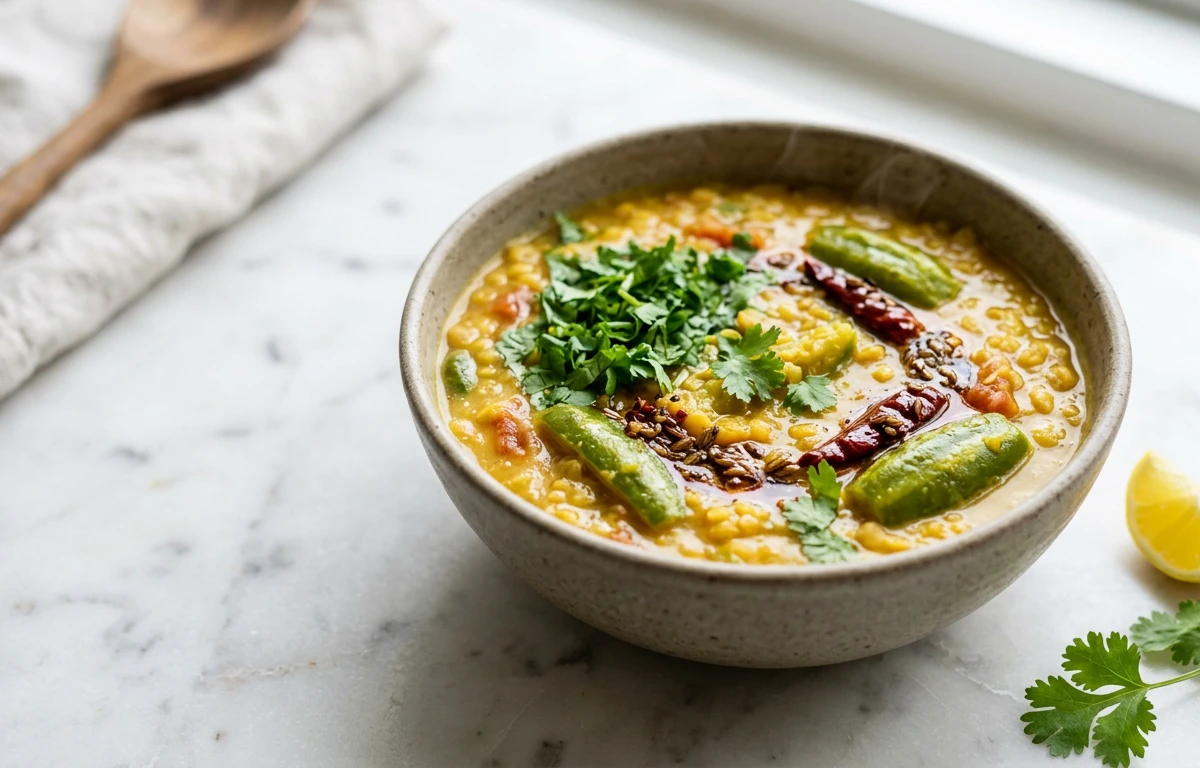
1.Turn off the heat and fold in the chopped coriander leaves.2.Transfer to a serving bowl and place lime wedges on the side.3.Serve hot with plain steamed rice or as a zesty side with dal-bhaat.
What to keep in mind.
6 tips from the recipe — small details that make a real difference to the final dish.
- 1Use a non-stick pan to prevent the delicate flaked fish from sticking and burning during the dry-roast stage.
- 2After marinating, pat the fish very dry with paper towels so it sears instead of steaming in the mustard oil.
- 3Remove the central spine after frying but leave the tiny bones—they soften during cooking and add calcium.
- 4Let the mustard oil come to its smoking point first, then cool slightly; this tames its pungent bite and deepens the nutty aroma.
- 5Stir constantly with a flat-edged spatula during the final dry-roast to achieve even browning without scorching.
- 6Taste for salt just before turning off the heat, as the fish and onion concentrate during dry-roasting and may need a final adjustment.
Adapt it for your goals.
Extra-crispy
After flaking the fried fish, press it dry with paper towels again before adding it to the pan, and increase the final dry-roast time by 3 minutes for crunchier, almost jerky-like strands.
mildMild
Reduce green chilies to 2 and omit the red chili powder for a version that lets the fish and caramelised onions shine without heat—great for serving with yogurt on the side.
herb forwardHerb-forward
Add 1 tablespoon of chopped fresh dill or curry leaves along with the coriander at the end for an aromatic twist that brightens the dish.
no fry oil swapNo-fry oil swap
Replace mustard oil with a neutral oil like sunflower or avocado for a milder flavour profile, though you'll lose some authenticity and pungent depth.
Why this is on our healthy list.
High in Calcium
The tiny, softened bones of Bombay duck fish are intentionally left in, providing a natural source of calcium without requiring dairy.
Low in Saturated Fat
Bombay duck is naturally lean, and the recipe uses moderate mustard oil (a heart-friendly fat rich in monounsaturated and polyunsaturated fatty acids).
Rich in Protein
Fish is a complete protein source, supporting muscle repair and satiety, especially when paired with rice as in this traditional meal.
Contains Anti-Inflammatory Spices
Turmeric and garlic provide natural anti-inflammatory and antioxidant compounds that may support immune health when consumed regularly.
Frequently asked questions
Yes, but choose a firm, low-moisture white fish like dried or fresh mackerel, sardines, or tilapia. Avoid oily or flimsy fish like basa—they will turn mushy instead of flaky.



-curry.webp)
.webp)