
Other2 recipes
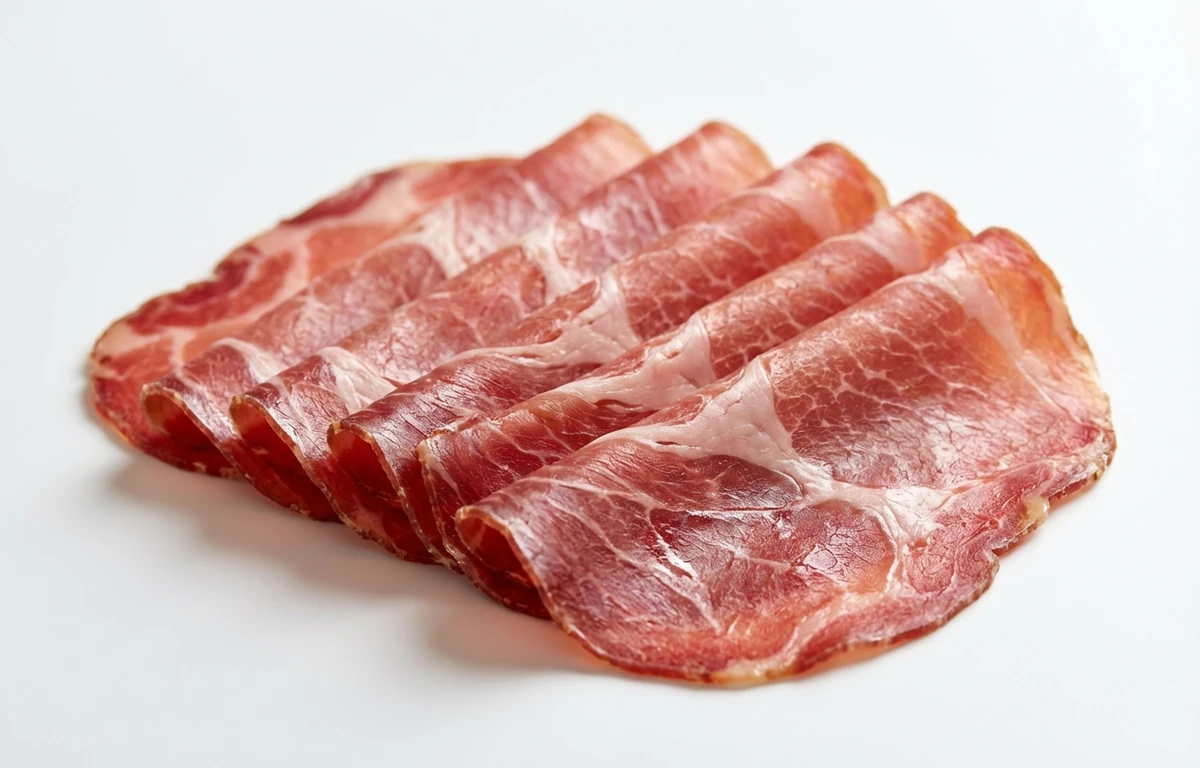
capicola.
VegetarianVeganGluten-freeDairy-freeNut-freePeanut-freeSoy-freeEgg-freeShellfish-freeHoney-freeAlcohol-freeHalalKosherFermented
ALSO KNOWN AS
gabagoolcoppacapocollo
SERVING
CALORIES
260
PROTEIN
22g
CARBS
1.0g
FAT
19g
FIBER
0g
NUTRITION PROFILE · per 100 g
Everything in this ingredient.
MACRONUTRIENTS
Calories260kcal—
Protein22g44%
Carbohydrates1.0g0%
Fiber0g0%
Sugar0g0%
Total fat19g24%
Saturated fat7.0g35%
Trans fat0g—
Cholesterol70mg23%
Water40g—
MINERALS
Sodium1600mg70%
Potassium350mg7%
Calcium12mg1%
Iron1.2mg7%
Magnesium23mg5%
Phosphorus180mg14%
Zinc2.1mg19%
Copper0.08mg9%
Manganese0.01mg0%
Selenium28.5µg52%
VITAMINS
Vitamin A0µg0%
Vitamin C0mg0%
Vitamin D0µg0%
Vitamin E0.10mg1%
Vitamin K0µg0%
Thiamin (B1)0.65mg54%
Riboflavin (B2)0.25mg19%
Niacin (B3)5.2mg33%
Pantothenic acid (B5)0.60mg12%
Vitamin B60.35mg21%
Folate (B9)2.0µg1%
Vitamin B120.70µg29%
%DV based on a 2,000 cal diet. Source: USDA FoodData Central. A dash in the %DV column means there’s no established Daily Value for that nutrient.
MEASUREMENT CONVERSIONS
How much is what.
1 cup140g
1 tablespoon15g
1 teaspoon5g
1 oz28.4g
1 lb453.6g
1 ml1g
1 liter1000g
HEALTH BENEFITS
Why eat it.
- ✓Rich source of complete protein, essential for muscle maintenance and repair.
- ✓Provides significant amounts of B vitamins, particularly B12 and niacin, which support energy metabolism and nervous system health.
- ✓Good source of minerals like selenium, a powerful antioxidant, and zinc, which is crucial for immune function.
- ✓Contains phosphorus, which is important for bone and tooth health.
COOKING TIPS
In the kitchen.
- 1Serve thinly sliced at room temperature as part of a charcuterie board to allow its complex flavors to fully develop.
- 2Crisp slices in a dry skillet over medium heat to use as a crunchy, savory topping for pizzas, pastas, salads, or soups.
- 3Layer into sandwiches, such as a classic Italian sub or a panini, to add a spicy and savory depth of flavor.
- 4Dice and render in a pan to use its flavorful fat and meat as a base for pasta sauces or to enrich sautéed vegetables like Brussels sprouts or asparagus.
STORAGE
Keep it fresh.
- Store unopened, vacuum-sealed capicola in the refrigerator (below 40°F or 4°C) for up to several months, following the manufacturer's date.
- Once opened or sliced, wrap it tightly in butcher paper or plastic wrap and consume within 5-7 days for optimal freshness and flavor.
- For longer storage, sliced capicola can be frozen for up to 3 months. Separate slices with parchment paper and store in an airtight container or freezer bag.
FAQ
Frequently asked questions.
Is capicola healthy?
Capicola is a rich source of complete protein and essential B vitamins like B12 and niacin. However, it is a cured meat that is high in sodium and saturated fat, so it should be consumed in moderation as part of a balanced diet.
How much protein is in capicola?
Capicola provides approximately 22g of protein per 100g serving. This high protein content is beneficial for muscle maintenance, repair, and overall metabolic health.
Is capicola keto-friendly?
Yes, capicola is excellent for keto and low-carb diets. It contains only about 1g of carbohydrates per 100g while providing 19g of fat and 22g of protein, fitting well within ketogenic macros.
Is capicola gluten-free?
Naturally, capicola is gluten-free as it is made from pork shoulder and spices. However, individuals with Celiac disease should check labels for potential cross-contamination or gluten-containing additives used during the curing process.
What does capicola taste like?
Capicola has a savory, salty, and slightly smoky flavor. Depending on the variety (sweet or hot), it may have notes of garlic, wine, and paprika, offering a more robust spice profile than traditional ham.
How do you cook or serve capicola?
Capicola is most often served thinly sliced and cold in Italian sandwiches or on charcuterie boards. It can also be lightly crisped in a pan to be used as a topping for pizzas, salads, or incorporated into pasta dishes.
How long does capicola last in the refrigerator?
Once opened, sliced capicola from the deli counter typically lasts 3 to 5 days in the refrigerator. Vacuum-sealed packages can last several weeks until opened, provided they are kept at or below 40°F (4°C).
Can you freeze capicola?
Yes, you can freeze capicola for up to 2-3 months. To maintain quality, wrap it tightly in plastic wrap and place it in a heavy-duty freezer bag to prevent freezer burn, though the texture may become slightly softer upon thawing.
What is the difference between capicola and prosciutto?
The main difference is the cut of meat; capicola is made from the pork shoulder or neck, while prosciutto is made from the hind leg. Capicola is also typically more heavily seasoned with spices compared to the simple salt-curing of prosciutto.
Is capicola high in sodium?
Yes, like most cured meats, capicola is very high in sodium due to the salting process used for preservation. Those with hypertension or heart health concerns should monitor their portion sizes carefully.
RECIPES
Cook with capicola.
2 recipes · sorted by what’s quick



















