vegetable10 recipes
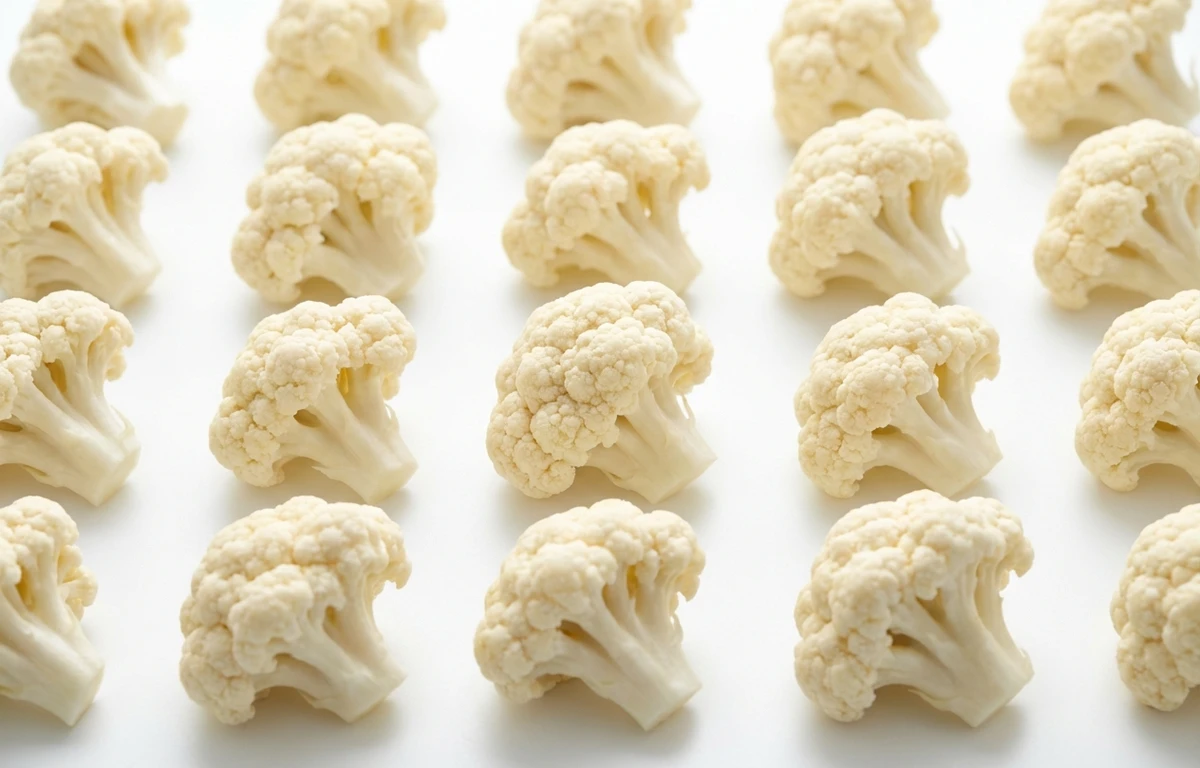
cauliflower florets.
VegetarianVeganGluten-freeDairy-freeNut-freePeanut-freeSoy-freeEgg-freeShellfish-freeHoney-freeAlcohol-free
ALSO KNOWN AS
phool gobhi floretsgobhi florets
SERVING
CALORIES
25
PROTEIN
1.9g
CARBS
5.0g
FAT
0.30g
FIBER
2.0g
NUTRITION PROFILE · per 100 g
Everything in this ingredient.
MACRONUTRIENTS
Calories25kcal—
Protein1.9g4%
Carbohydrates5.0g2%
Fiber2.0g7%
Sugar1.9g4%
Total fat0.30g0%
Saturated fat0.10g1%
Trans fat0g—
Cholesterol0mg0%
Water92.1g—
MINERALS
Sodium30mg1%
Potassium299mg6%
Calcium22mg2%
Iron0.40mg2%
Magnesium15mg4%
Phosphorus44mg4%
Zinc0.30mg3%
Copper0.04mg4%
Manganese0.15mg7%
Selenium0.60µg1%
VITAMINS
Vitamin A0µg0%
Vitamin C48.2mg54%
Vitamin D0µg0%
Vitamin E0.08mg1%
Vitamin K15.5µg13%
Thiamin (B1)0.05mg4%
Riboflavin (B2)0.06mg5%
Niacin (B3)0.50mg3%
Pantothenic acid (B5)0.67mg13%
Vitamin B60.18mg11%
Folate (B9)57µg14%
Vitamin B120µg0%
%DV based on a 2,000 cal diet. Source: USDA FoodData Central. A dash in the %DV column means there’s no established Daily Value for that nutrient.
MEASUREMENT CONVERSIONS
How much is what.
1 cup100g
1 oz28.4g
1 lb453.6g
1 piece15g
HEALTH BENEFITS
Why eat it.
- ✓High in fiber which supports digestive health
- ✓Excellent source of antioxidants like vitamin C and manganese
- ✓Contains choline, essential for brain development and metabolism
- ✓Low in calories and high in water, aiding in weight management
- ✓Rich in sulforaphane, which may have protective effects against certain cancers
COOKING TIPS
In the kitchen.
- 1Roast florets at high heat (400°F/200°C) with olive oil to bring out a nutty, sweet flavor
- 2Steam for 5-7 minutes to preserve the maximum amount of vitamin C and folate
- 3Avoid overboiling as it releases sulfur compounds that create an unpleasant odor and mushy texture
STORAGE
Keep it fresh.
- Store unwashed florets in a perforated plastic bag in the refrigerator crisper drawer
- Keep cauliflower away from ethylene-producing fruits like apples to prevent premature browning
- Use within 5 to 7 days for optimal freshness and crunch
FAQ
Frequently asked questions.
How long do cauliflower florets last in the fridge?
Pre-cut cauliflower florets typically last 3 to 5 days in the refrigerator, while a whole head can last up to a week.
Can you freeze cauliflower florets?
Yes, but it is best to blanch them in boiling water for 3 minutes first, then plunge into ice water before freezing to maintain texture.
What is the best way to clean cauliflower florets?
Soak the florets in a bowl of cool salted water for 10-15 minutes to remove any hidden insects or dirt, then rinse thoroughly.
What can I use as a substitute for cauliflower florets?
Broccoli florets are the best substitute. For low-carb rice alternatives, finely chopped cabbage or zucchini can work depending on the dish.
Why does cauliflower sometimes have brown spots?
Small brown spots (oxidation) are common and usually harmless; they can be shaved off with a knife. If the spots are soft or dark, the cauliflower is spoiling.
Is cauliflower keto-friendly?
Yes, cauliflower is a staple of the keto diet because it is very low in net carbs (approx 3g per 100g) and highly versatile.
How do I pick the best cauliflower?
Look for florets that are creamy white, tightly packed, and firm, with no signs of browning or wilting leaves.
Can you eat cauliflower florets raw?
Yes, raw cauliflower florets are safe to eat and are commonly served on crudité platters with dip.
RECIPES
Cook with cauliflower florets.
10 recipes · sorted by what’s quick