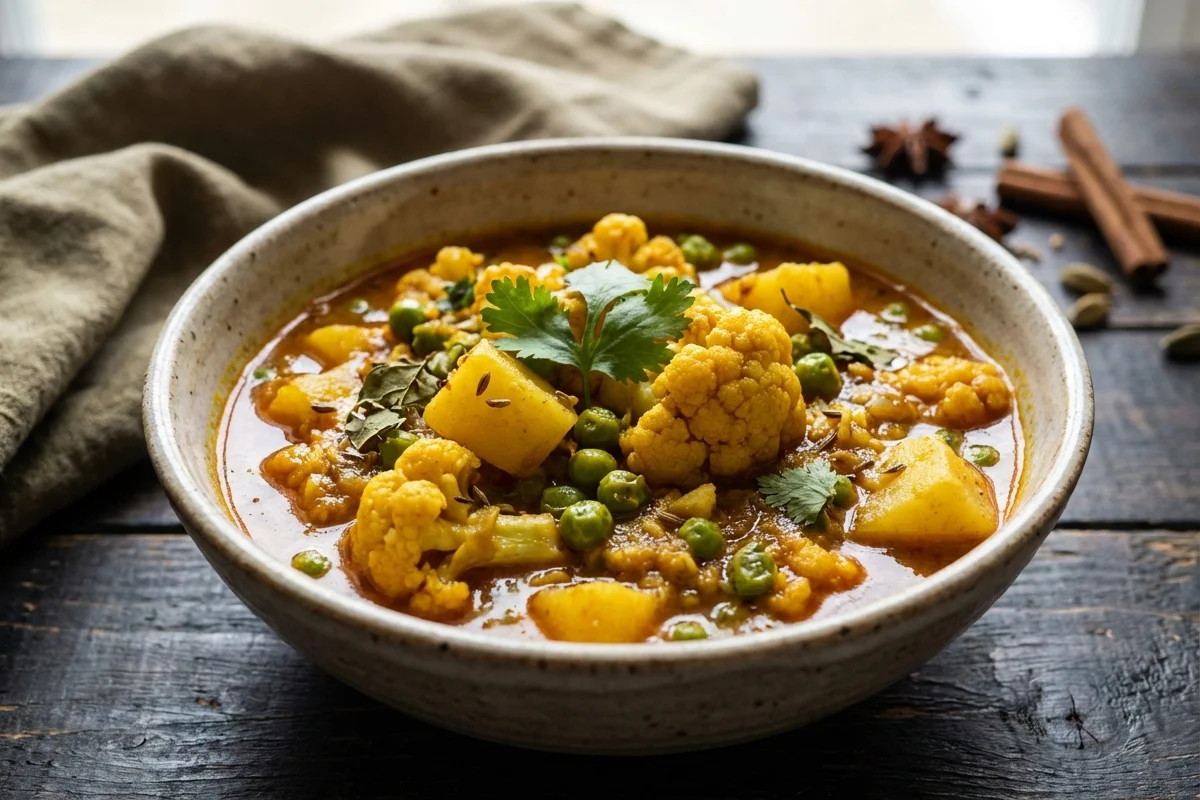
Aloo Gobi Matar
A classic North Indian dry curry where tender potatoes, crisp cauliflower florets, and sweet green peas come together with aromatic spices. This everyday sabzi is a staple in homes across the country — simple, deeply satisfying, and ready in under 40 minutes with basic pantry spices.
For 4 servings
- prep
Prep the vegetables.
1.Peel potatoes and cut into 1-inch cubes.2.Cut cauliflower into medium florets, rinse and drain.3.Finely chop onions, tomatoes, ginger, and mince garlic.4.Slit green chilies lengthwise. - fry · ~12 min
Fry the potatoes and cauliflower.
1.Heat 1 tbsp oil in a kadhai over medium heat.2.Add potato cubes and fry until golden spots appear (5-6 min).3.Remove potatoes with a slotted spoon and set aside.4.Add cauliflower florets to the same pan, fry until lightly browned (4-5 min).5.Remove cauliflower and set aside with the potatoes.TIPDon't crowd the pan — the vegetables should be in a single layer to brown properly. - temper · ~1 min
Make the tempering.
1.Add the remaining 1 tbsp oil to the same kadhai.2.Add cumin seeds and let them crackle (30 sec). - saute · ~14 min
Build the aromatic base.
1.Add chopped onions and sauté until golden brown (6-7 min).2.Add ginger, garlic, and green chilies — cook until raw smell disappears (1-2 min).3.Add chopped tomatoes, turmeric powder, red chili powder, coriander powder, cumin powder, and salt.4.Cook until tomatoes turn soft and oil separates from the masala (4-5 min).TIPScrape the bottom of the pan occasionally — the spices can catch and burn if left unattended. - simmer · ~11 min
Add vegetables and cook together.
1.Add the fried potatoes, cauliflower florets, and green peas to the masala.2.Mix gently so the vegetables are well coated with the masala.3.Sprinkle 3 tbsp water, cover with a lid, and cook on low heat for 8-10 minutes.4.Remove lid, check that potatoes and cauliflower are fork-tender.5.Sprinkle garam masala and dry mango powder, give a final stir.TIPKeep the heat low while covered — the trapped steam finishes cooking the vegetables without making them mushy. - garnish
Garnish with fresh coriander leaves and serve hot.
What to keep in mind.
6 tips from the recipe — small details that make a real difference to the final dish.
- 1Fry potatoes and cauliflower in a single layer for even browning and better texture.
- 2Use a heavy-bottomed pan or kadhai to prevent the masala from burning.
- 3Let the tomatoes cook until oil separates for a deeper, richer flavor base.
- 4Add frozen peas directly without thawing to keep them bright and firm.
- 5Sprinkle a pinch of sugar if your tomatoes are too tart to balance acidity.
- 6Store leftovers in an airtight container in the fridge for up to 3 days.
Adapt it for your goals.
Vegan
This recipe is already vegan — no modifications needed as it uses oil and plant-based ingredients.
low oilLow-oil
Skip the initial frying of vegetables: sauté the masala in 1 tbsp oil, add all vegetables with ½ cup water, and cook covered until tender for a lighter version.
jainJain
Omit onion and garlic, and add a pinch of asafoetida (hing) during tempering for a Jain-friendly version that still delivers depth.
high proteinHigh-protein
Add 100g of pan-fried paneer cubes after the vegetables are cooked for a protein boost that pairs perfectly with the spiced gravy.
Why this is on our healthy list.
Rich in Dietary Fiber
Potatoes with skin and cauliflower provide fiber that supports healthy digestion and helps maintain blood sugar levels.
High in Vitamin C
Cauliflower and tomatoes are excellent sources of vitamin C, which supports immune function and skin health.
Good Source of Plant-Based Iron
Green peas and potatoes contribute non-heme iron, while the vitamin C from tomatoes aids its absorption.
Anti-Inflammatory Spices
Turmeric, cumin, and ginger contain compounds like curcumin that have natural anti-inflammatory properties.
Frequently asked questions
Overcrowding the pan during frying or cooking too long covered can break down potatoes. Fry in a single layer and check doneness after 8 minutes of steaming.



.webp)