Spice3 recipes
celery salt.
VegetarianVeganGluten-freeDairy-freeNut-freePeanut-freeSoy-freeEgg-freeShellfish-freeHoney-freeAlcohol-free
SERVING
CALORIES
152
PROTEIN
6.0g
CARBS
14g
FAT
8.0g
FIBER
4.0g
NUTRITION PROFILE · per 100 g
Everything in this ingredient.
MACRONUTRIENTS
Calories152kcal—
Protein6.0g12%
Carbohydrates14g5%
Fiber4.0g14%
Sugar0.20g0%
Total fat8.0g10%
Saturated fat1.5g8%
Trans fat0g—
Cholesterol0mg0%
Water3.0g—
MINERALS
Sodium28000mg1217%
Potassium500mg11%
Calcium580mg45%
Iron15mg83%
Magnesium150mg36%
Phosphorus180mg14%
Zinc2.0mg18%
Copper0.30mg33%
Manganese1.5mg65%
Selenium2.0µg4%
VITAMINS
Vitamin A2.0µg0%
Vitamin C0mg0%
Vitamin D0µg0%
Vitamin E0.80mg5%
Vitamin K0µg0%
Thiamin (B1)0.10mg8%
Riboflavin (B2)0.10mg8%
Niacin (B3)1.0mg6%
Pantothenic acid (B5)0.20mg4%
Vitamin B60.20mg12%
Folate (B9)3.0µg1%
Vitamin B120µg0%
%DV based on a 2,000 cal diet. Source: USDA FoodData Central. A dash in the %DV column means there’s no established Daily Value for that nutrient.
MEASUREMENT CONVERSIONS
How much is what.
1 cup288g
1 tablespoon18g
1 teaspoon6g
1 oz28.4g
1 lb453.6g
1 ml1.2g
1 liter1200g
HEALTH BENEFITS
Why eat it.
- ✓Provides essential minerals like iron and calcium
- ✓Adds flavor without adding calories from fats
- ✓Contains antioxidants from celery seeds
- ✓Potent flavor allows for using less total seasoning in some dishes
- ✓Contains small amounts of dietary fiber from ground seeds
COOKING TIPS
In the kitchen.
- 1Use as a rimming salt for Bloody Mary cocktails
- 2Excellent for seasoning coleslaw and potato salads
- 3Add to dry rubs for meats or poultry for an earthy, savory undertone
STORAGE
Keep it fresh.
- Store in a cool, dry place away from direct sunlight
- Keep the container tightly sealed to prevent clumping from moisture
- Use within 1-2 years for optimal flavor potency
FAQ
Frequently asked questions.
How long does celery salt last?
When stored in an airtight container in a cool, dark place, celery salt will maintain its quality for 1 to 2 years. It doesn't spoil but loses its aromatic potency over time.
Can I freeze celery salt?
Freezing is not recommended as moisture can enter the container and cause the salt to clump. Room temperature storage in a dry pantry is best.
What is a good substitute for celery salt?
You can make your own by mixing 2 parts salt with 1 part ground celery seeds. If you don't have celery seeds, use dill seeds or a small amount of finely minced fresh celery leaves with salt.
Is celery salt high in sodium?
Yes, celery salt is primarily composed of table salt (usually a 2:1 ratio), making it very high in sodium. It should be used sparingly by those on low-sodium diets.
How do I identify high-quality celery salt?
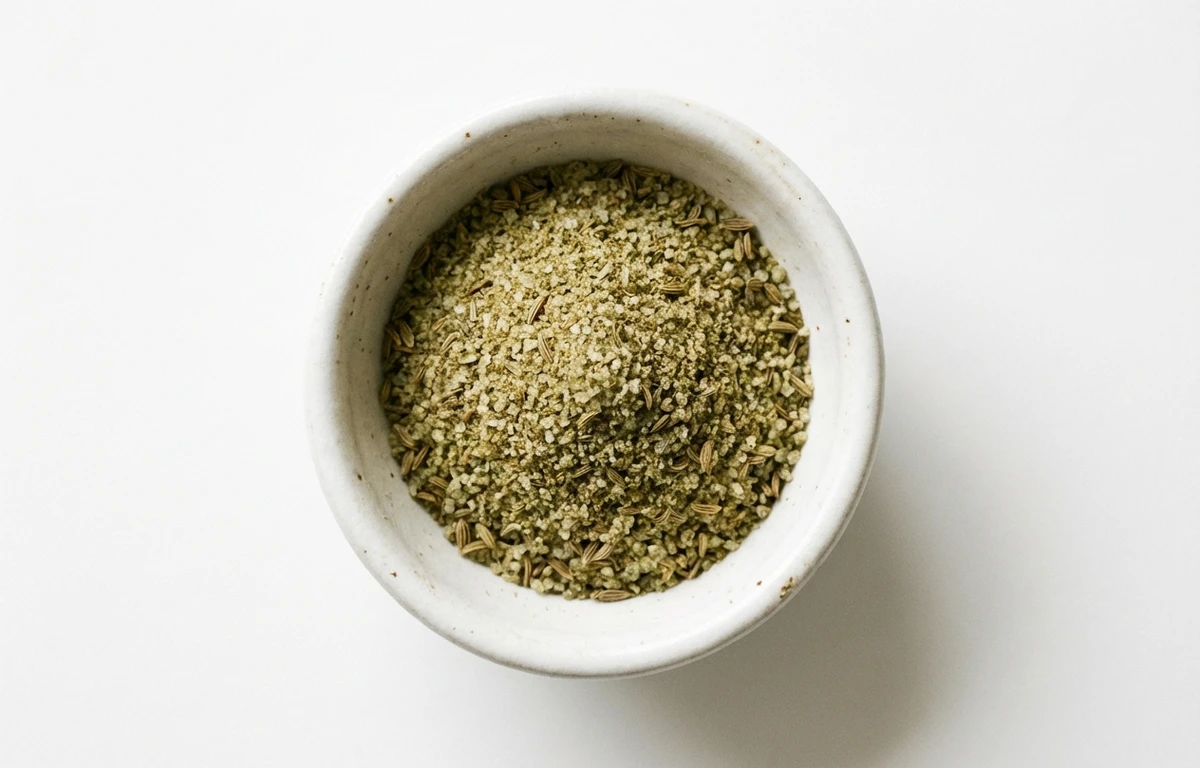
Look for a product with a strong, fresh celery aroma and a consistent greenish-grey speckled appearance. Avoid products that look bleached or have no scent.
Is celery salt the same as celery seed?
No. Celery seed is the pure spice, while celery salt is a mixture of ground celery seeds and table salt.
What are the most common uses for celery salt?
It is a key ingredient in Old Bay seasoning, Chicago-style hot dogs, Bloody Mary cocktails, and various egg or potato-based salads.
Does celery salt contain allergens?
While not one of the 'Top 8' allergens in the US, celery is a recognized allergen in the European Union and can cause reactions in sensitive individuals.
How do I prevent celery salt from clumping?
Keep it away from steam when cooking (don't shake it directly over a boiling pot) and ensure the lid is tightly closed after every use.
RECIPES
Cook with celery salt.
3 recipes · sorted by what’s quick