Dairy2 recipes
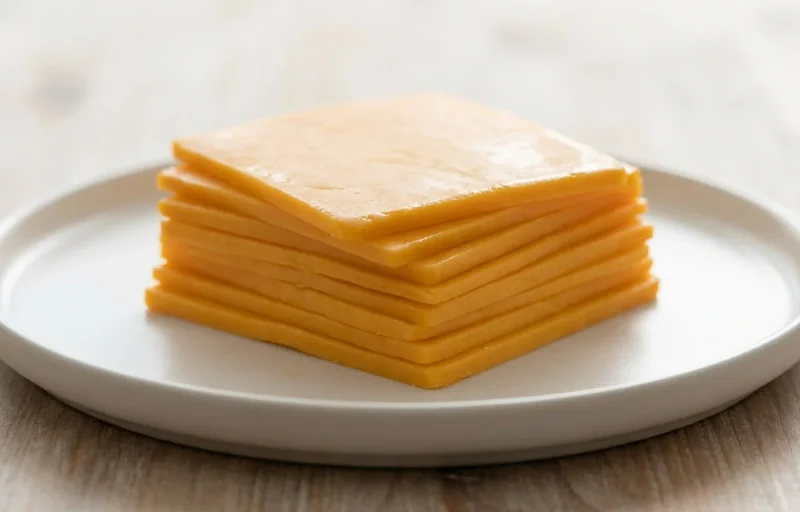
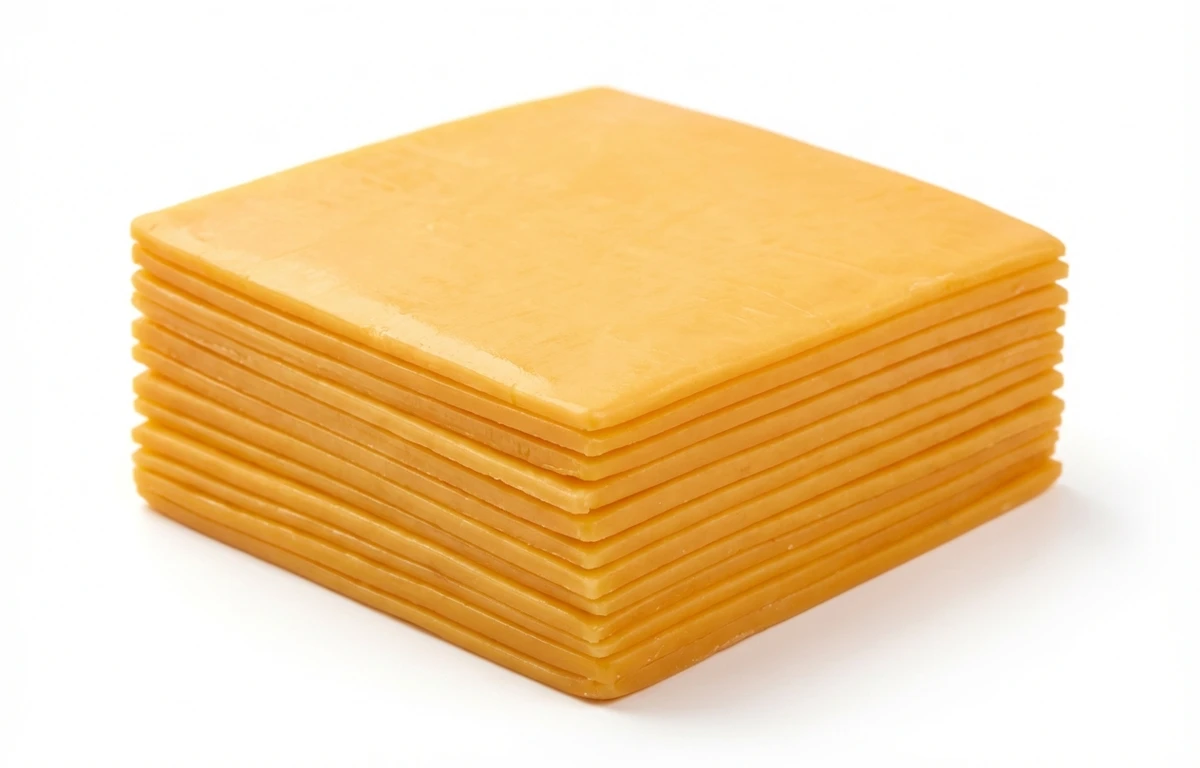
cheese slices.
VegetarianVeganGluten-freeDairy-freeNut-freePeanut-freeSoy-freeEgg-freeShellfish-freeHoney-freeAlcohol-freeFermented
ALSO KNOWN AS
sliced cheesecheese singlesAmerican cheese slices
SERVING
CALORIES
330
PROTEIN
19.5g
CARBS
6.5g
FAT
26g
FIBER
0g
NUTRITION PROFILE · per 100 g
Everything in this ingredient.
MACRONUTRIENTS
Calories330kcal—
Protein19.5g39%
Carbohydrates6.5g2%
Fiber0g0%
Sugar4.5g9%
Total fat26g33%
Saturated fat16g80%
Trans fat0g—
Cholesterol75mg25%
Water44g—
MINERALS
Sodium1350mg59%
Potassium120mg3%
Calcium550mg42%
Iron0.70mg4%
Magnesium27mg6%
Phosphorus494mg40%
Zinc3.1mg28%
Copper0.03mg3%
Manganese0.01mg0%
Selenium14.5µg26%
VITAMINS
Vitamin A260µg29%
Vitamin C0mg0%
Vitamin D0.60µg3%
Vitamin E0.24mg2%
Vitamin K2.4µg2%
Thiamin (B1)0.03mg3%
Riboflavin (B2)0.27mg21%
Niacin (B3)0.06mg0%
Pantothenic acid (B5)0.33mg7%
Vitamin B60.05mg3%
Folate (B9)18µg5%
Vitamin B120.94µg39%
%DV based on a 2,000 cal diet. Source: USDA FoodData Central. A dash in the %DV column means there’s no established Daily Value for that nutrient.
MEASUREMENT CONVERSIONS
How much is what.
1 cup113g
1 tablespoon15g
1 teaspoon5g
1 ml1g
1 liter1000g
1 piece21g
HEALTH BENEFITS
Why eat it.
- ✓Good source of calcium and phosphorus, which are essential for building and maintaining strong bones and teeth.
- ✓Provides high-quality, complete protein necessary for muscle repair and growth.
- ✓Contains Vitamin B12, crucial for nerve function and the formation of red blood cells.
- ✓A source of Vitamin A, which supports vision health and immune function.
COOKING TIPS
In the kitchen.
- 1Due to added emulsifiers, processed cheese slices melt smoothly and evenly, making them ideal for grilled cheese sandwiches, burgers, and nachos.
- 2For a quick and simple cheese sauce, gently heat a few slices with a splash of milk in a saucepan, whisking continuously until smooth.
- 3Separate slices when they are cold, as they are firmer and less likely to tear or stick together.
- 4Add a slice to the top of hot dishes like casseroles or chili during the last few minutes of cooking for a perfectly melted topping.
STORAGE
Keep it fresh.
- Refrigerate immediately in original packaging or an airtight container at 34-40°F (1-4°C).
- Once opened, consume within 5-7 days for best quality and to prevent drying out.
- Keep the individual plastic wrappers on each slice until use to prevent them from sticking together.
FAQ
Frequently asked questions.
Are cheese slices healthy?
Cheese slices are a good source of calcium, phosphorus, and high-quality protein, which are essential for bone health and muscle repair. However, they can be high in sodium and saturated fat, so they should be consumed in moderation as part of a balanced diet.
How much protein is in cheese slices?
Cheese slices contain approximately 19.5g of protein per 100g. A single standard slice (roughly 20g) provides about 4g of protein, making it a convenient way to add a small protein boost to sandwiches and snacks.
Are cheese slices keto-friendly?
Yes, cheese slices are generally keto-friendly because they are high in fat (26g per 100g) and relatively low in carbohydrates (6.5g per 100g). Users should check labels for 'processed cheese food' variants, as some may contain added starches that increase the carb count.
Are cheese slices lactose-free?
Most cheese slices are not lactose-free. While natural aged cheeses have lower lactose, many sliced varieties—especially processed ones—contain added milk solids or whey, which can trigger symptoms in those with lactose intolerance.
Can you melt cheese slices?
Yes, cheese slices are designed for easy melting due to their uniform thickness. Processed varieties often contain emulsifiers that help them melt smoothly without separating, making them ideal for burgers and grilled cheese sandwiches.
How should cheese slices be stored?
Cheese slices should be kept refrigerated in their original packaging or an airtight container to prevent them from drying out. If the slices are not individually wrapped, placing a piece of parchment paper between them can prevent sticking.
How long do cheese slices last after opening?
Once the package is opened, cheese slices typically stay fresh for 5 to 7 days in the refrigerator. Individually wrapped processed slices may last slightly longer, but you should always check for signs of mold or an off-smell before consuming.
Are cheese slices good for weight loss?
Because they are calorie-dense (330 calories per 100g) and high in fat, cheese slices should be eaten in limited portions during weight loss. However, their protein content can help with satiety, making a single slice a satisfying addition to a meal.
What is the difference between natural and processed cheese slices?
Natural slices are cut directly from a block of cheese, while processed slices are made by blending cheese with emulsifying salts and other dairy ingredients. Processed slices have a longer shelf life and melt more consistently, but natural slices often have a more complex flavor profile.
Can you freeze cheese slices?
Yes, you can freeze cheese slices for up to 3 months. While the texture may become slightly more brittle or crumbly upon thawing, they remain perfectly suitable for melting into hot dishes like casseroles or toasted sandwiches.
RECIPES
Cook with cheese slices.
2 recipes · sorted by what’s quick