
Protein1 recipes
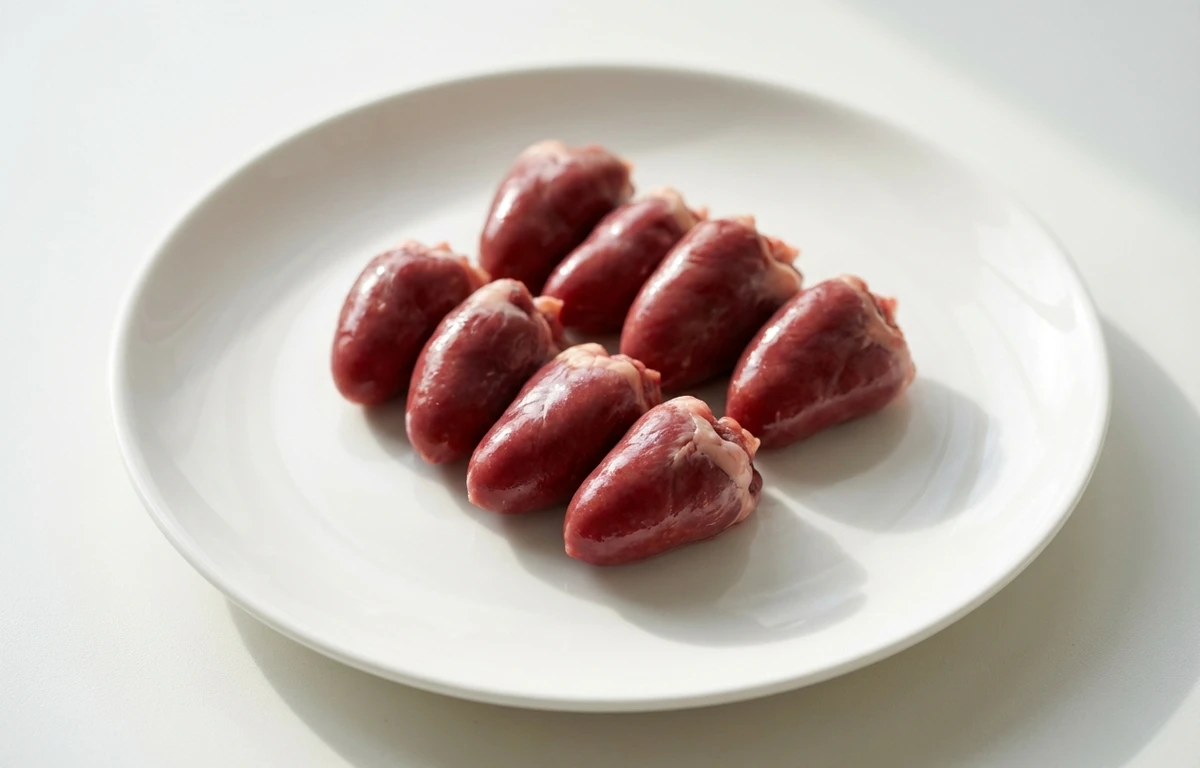
chicken hearts.
VegetarianVeganGluten-freeDairy-freeNut-freePeanut-freeSoy-freeEgg-freeShellfish-freeHoney-freeAlcohol-free
ALSO KNOWN AS
raw chicken heartchicken heartcorazones de pollomurgh ka dilpoultry hearts
SERVING
CALORIES
153
PROTEIN
15.5g
CARBS
0.10g
FAT
9.3g
FIBER
0g
NUTRITION PROFILE · per 100 g
Everything in this ingredient.
MACRONUTRIENTS
Calories153kcal—
Protein15.5g31%
Carbohydrates0.10g0%
Fiber0g0%
Sugar0g0%
Total fat9.3g12%
Saturated fat2.7g14%
Trans fat0g—
Cholesterol242mg81%
Water73.8g—
MINERALS
Sodium72mg3%
Potassium132mg3%
Calcium12mg1%
Iron9.0mg50%
Magnesium19mg5%
Phosphorus199mg16%
Zinc6.6mg60%
Copper0.35mg39%
Manganese0.05mg2%
Selenium34.2µg62%
VITAMINS
Vitamin A8.0µg1%
Vitamin C2.0mg2%
Vitamin D0.10µg1%
Vitamin E0.20mg1%
Vitamin K0.30µg0%
Thiamin (B1)0.15mg13%
Riboflavin (B2)0.90mg69%
Niacin (B3)4.8mg30%
Pantothenic acid (B5)2.6mg52%
Vitamin B60.30mg18%
Folate (B9)72µg18%
Vitamin B127.3µg304%
%DV based on a 2,000 cal diet. Source: USDA FoodData Central. A dash in the %DV column means there’s no established Daily Value for that nutrient.
MEASUREMENT CONVERSIONS
How much is what.
1 cup248g
1 tablespoon15.5g
1 teaspoon5.2g
1 oz28.4g
1 lb453.6g
1 ml1g
1 liter1050g
1 piece7g
HEALTH BENEFITS
Why eat it.
- ✓Excellent source of Vitamin B12 for nerve health
- ✓High iron content to prevent anemia
- ✓Rich in zinc for immune system support
- ✓Contains taurine which is beneficial for heart health
- ✓High-quality complete protein for muscle repair
COOKING TIPS
In the kitchen.
- 1Trim any excess external fat and rinse out residual blood before cooking
- 2Cook quickly over high heat (sauté or grill) to prevent them from becoming rubbery
- 3Marinate in acidic ingredients like lemon or vinegar to tenderize the muscle fibers
STORAGE
Keep it fresh.
- Store in the coldest part of the refrigerator for 1-2 days maximum
- Freeze in airtight bags or vacuum-sealed packs for up to 6-9 months
- Thaw slowly in the refrigerator before cooking to maintain texture
FAQ
Frequently asked questions.
How long do raw chicken hearts last in the fridge?
Raw chicken hearts are highly perishable and should be cooked or frozen within 1 to 2 days of purchase.
What do chicken hearts taste like?
They have a dense, chewy texture and a slightly metallic, gamey flavor similar to dark meat chicken but more intense.
How do I clean chicken hearts before cooking?
Rinse them under cold water, squeeze out any clotted blood from the chambers, and trim off the white fatty cap or any protruding vessels if desired.
Can chicken hearts be frozen?
Yes, they freeze very well. Store them in an airtight container or freezer bag for up to 9 months.
What is the best way to cook chicken hearts?
The most popular methods are pan-searing with garlic and butter, grilling on skewers (yakitori style), or slow-braising in stews.
Are chicken hearts healthy?
Yes, they are nutrient-dense organ meats, exceptionally high in iron, zinc, and B vitamins, though they are also high in cholesterol.
What can I use as a substitute for chicken hearts?
Chicken gizzards are the closest substitute in terms of texture, though they require longer cooking. Beef heart (cut into small pieces) is also a good alternative.
How do I know if chicken hearts have gone bad?
Fresh hearts should be firm and dark red. If they feel slimy, have a sour or ammonia-like smell, or turn a greyish color, they should be discarded.
Are chicken hearts high in cholesterol?
Yes, like most organ meats, chicken hearts contain a significant amount of cholesterol (about 242mg per 100g).
RECIPES
Cook with chicken hearts.
1 recipes · sorted by what’s quick



















