Dairy
clotted cream.
VegetarianVeganGluten-freeDairy-freeNut-freePeanut-freeSoy-freeEgg-freeShellfish-freeHoney-freeAlcohol-free
ALSO KNOWN AS
Devonshire creamCornish creamclotted dairy cream
SERVING
CALORIES
586
PROTEIN
1.6g
CARBS
2.3g
FAT
63.5g
FIBER
0g
NUTRITION PROFILE · per 100 g
Everything in this ingredient.
MACRONUTRIENTS
Calories586kcal—
Protein1.6g3%
Carbohydrates2.3g1%
Fiber0g0%
Sugar2.3g5%
Total fat63.5g81%
Saturated fat39.7g199%
Trans fat2.1g—
Cholesterol180mg60%
Water31.5g—
MINERALS
Sodium15mg1%
Potassium45mg1%
Calcium50mg4%
Iron0.10mg1%
Magnesium4.0mg1%
Phosphorus35mg3%
Zinc0.20mg2%
Copper0.01mg1%
Manganese0mg0%
Selenium0.80µg1%
VITAMINS
Vitamin A450µg50%
Vitamin C0.50mg1%
Vitamin D0.40µg2%
Vitamin E1.2mg8%
Vitamin K1.5µg1%
Thiamin (B1)0.02mg2%
Riboflavin (B2)0.08mg6%
Niacin (B3)0.05mg0%
Pantothenic acid (B5)0.15mg3%
Vitamin B60.02mg1%
Folate (B9)3.0µg1%
Vitamin B120.20µg8%
%DV based on a 2,000 cal diet. Source: USDA FoodData Central. A dash in the %DV column means there’s no established Daily Value for that nutrient.
MEASUREMENT CONVERSIONS
How much is what.
1 cup230g
1 tablespoon15g
1 teaspoon5g
1 oz28.4g
1 lb453.6g
1 liter950g
HEALTH BENEFITS
Why eat it.
- ✓High energy density for quick caloric needs
- ✓Rich source of fat-soluble vitamins A and D
- ✓Contains calcium for bone health
- ✓Provides satiety due to high fat content
- ✓Natural source of dairy proteins
COOKING TIPS
In the kitchen.
- 1Serve at room temperature for 15 minutes to enhance flavor
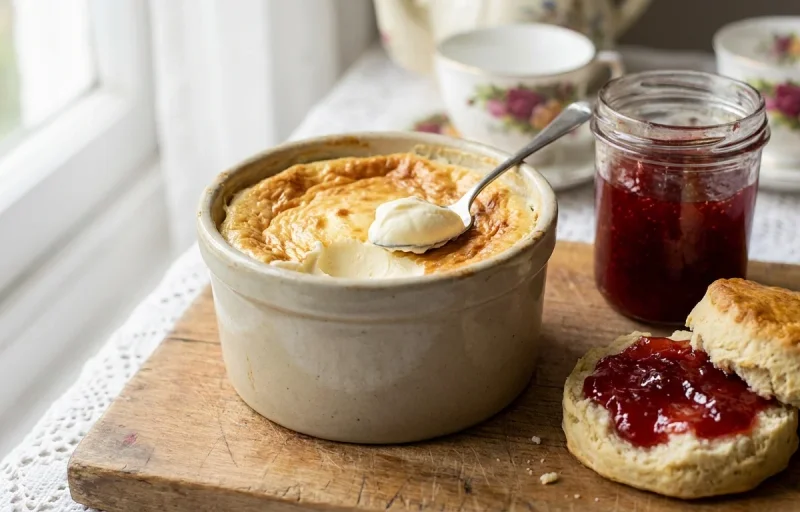
- 2Do not over-stir to preserve the characteristic golden crust
- 3Traditionally served as a topping rather than an ingredient in high-heat cooking
STORAGE
Keep it fresh.
- Always keep refrigerated between 1°C and 5°C
- Consume within 3 to 5 days of opening the container
- Do not freeze as it destroys the unique thick texture
FAQ
Frequently asked questions.
How long does clotted cream last?
Unopened, it lasts until the use-by date. Once opened, it should be consumed within 3-5 days.
Can clotted cream be frozen?
It is not recommended to freeze clotted cream as the emulsion breaks, causing it to become oily and lose its thick, velvety texture.
What is the best substitute for clotted cream?
A mixture of equal parts mascarpone and whipped heavy cream is the closest substitute in terms of thickness and mouthfeel.
How is clotted cream different from double cream?
Clotted cream is heated and cooled slowly to create a thick consistency with at least 55% fat, whereas double cream is liquid with about 48% fat.
What should I look for when buying clotted cream?
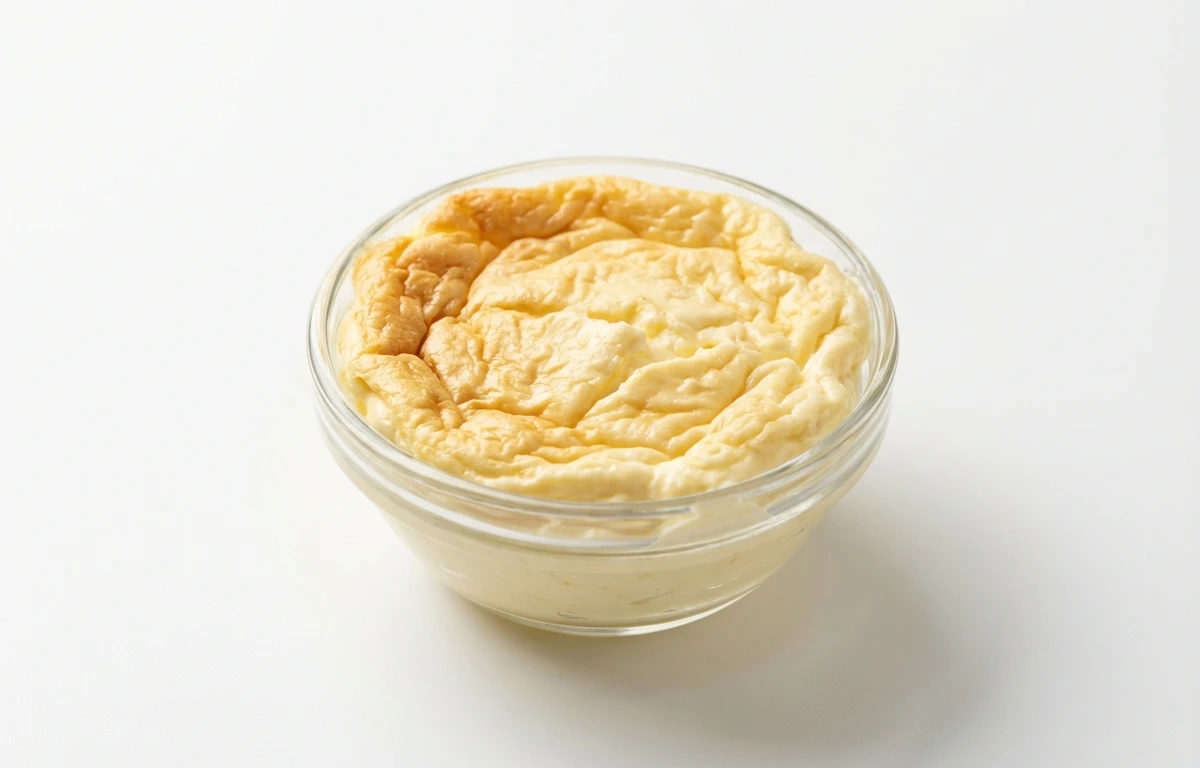
Look for a thick, non-pourable consistency and a characteristic golden-yellow crust on the surface.
Is clotted cream healthy?
It is very high in saturated fat and calories; it should be enjoyed as an occasional treat rather than a dietary staple.
How is clotted cream traditionally served?
It is the centerpiece of a 'Cream Tea,' served on scones with strawberry jam.
Why is clotted cream yellow?
The yellow color comes from the high carotene content in the grass eaten by the cows, which becomes concentrated in the fat.
Can I use clotted cream in coffee?
Yes, it can be used as an ultra-rich alternative to milk or cream, though it may not dissolve as easily due to its thickness.
RECIPES
Cook with clotted cream.
0 recipes · sorted by what’s quick