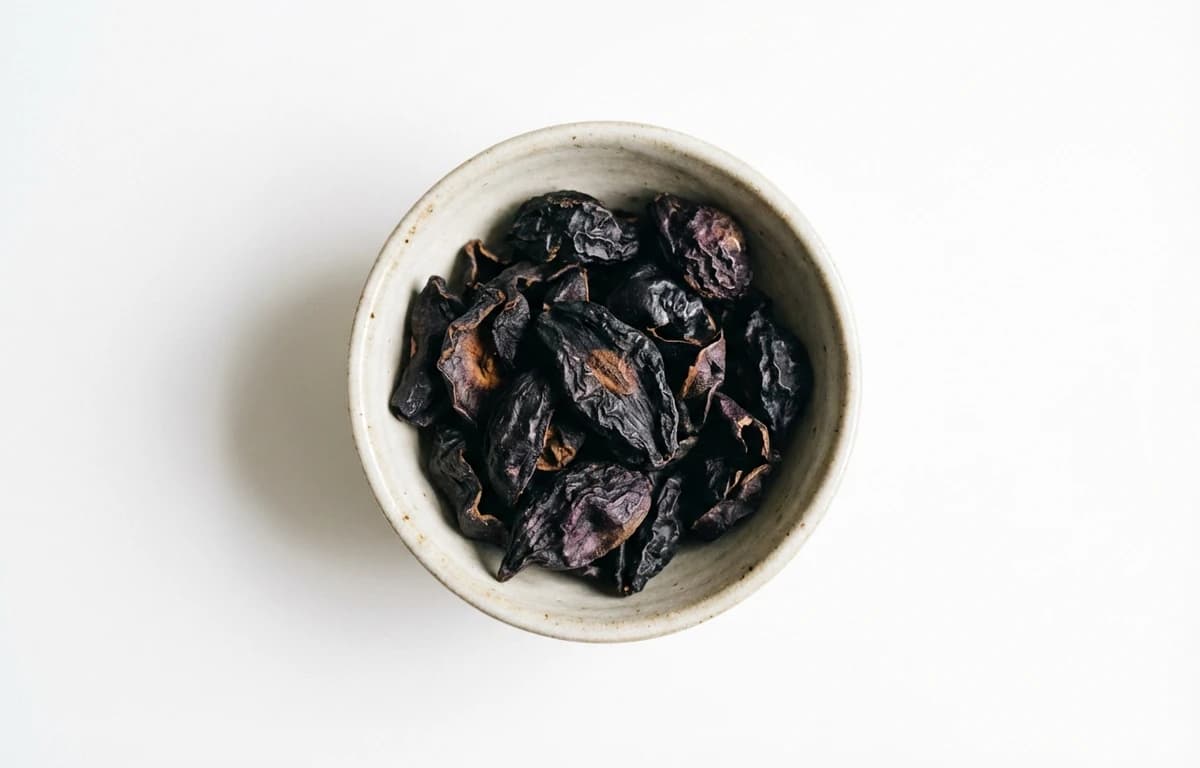
cocum
Also known as: kokum, amsul, garcinia indica, dried garcinia
Loading...
Also known as: kokum, amsul, garcinia indica, dried garcinia
Per 100g
Nutrition data source: USDA FoodData Central
Common measurement equivalents in grams
When stored in an airtight container in a cool, dry place, dried kokum can last for up to 1 year.
Freezing is not necessary as it is a shelf-stable dried product, but it can be frozen in a vacuum-sealed bag to extend shelf life even further.
Look for petals that are dark purple to black in color, slightly soft/leathery rather than brittle, and have a strong fruity aroma.
Tamarind paste or lemon juice are the best substitutes, though kokum has a unique floral-sour profile that is hard to replicate perfectly.
While the petals are edible, they are very sour and leathery; most people prefer to remove them or leave them aside while eating.
Kokum is traditionally cured with salt during the drying process to act as a preservative and enhance its shelf life.
They are from the same genus (Garcinia), but kokum (Garcinia indica) is used as a souring spice, while mangosteen (Garcinia mangostana) is a sweet tropical fruit.
It is a staple in Konkani and Maharashtrian cuisine, used in Sol Kadhi, fish curries, and dal (Amti).
While some Vitamin C is lost during drying, the minerals and beneficial HCA (Hydroxycitric Acid) remain concentrated in the dried form.
cocum is a versatile ingredient found in cuisines around the world. With 310 calories per 100g and 2.5 grams of protein, it's a nutritious addition to many dishes.
Explore more ingredients in the other category with complete nutrition information.
View all other →