
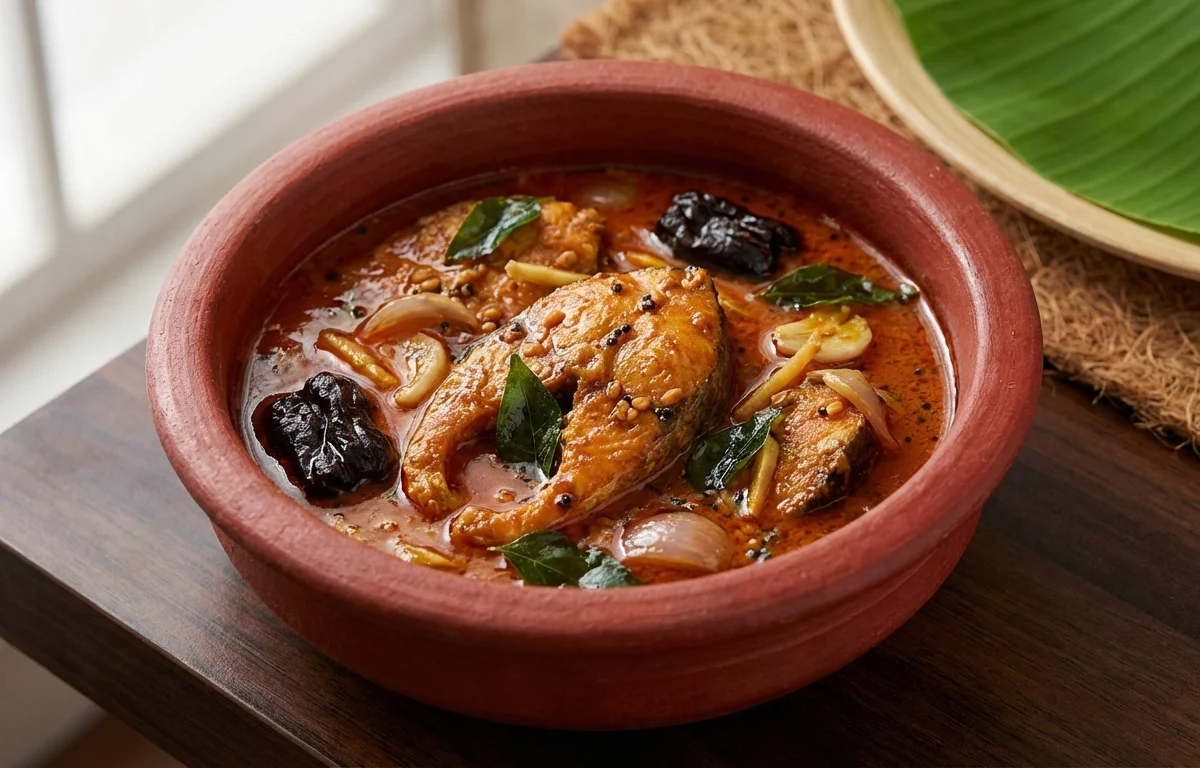
Kerala Meen Vevichathu
A fiery, tangy fish curry from Kerala's coastal kitchens, where firm fish steaks are gently simmered in a rich, red gravy made with Kashmiri chilies, tangy tamarind, and aromatic fenugreek. The gravy gets its depth from slow-cooked shallots and coconut oil, creating a dish that tastes even better the next day.
For 4 servings
- prep
Soak the tamarind and prep the fish.
1.Soak 15 g tamarind in 0.5 cup warm water for 10 minutes, then squeeze and extract the pulp. Set aside.2.Clean 500 g kingfish steaks, pat dry, and rub with a pinch of salt and turmeric. Set aside. - saute · ~15 min
Sauté the aromatics and build the masala.
1.Heat 2 tbsp coconut oil in a clay pot or deep pan over medium heat.2.Add 0.5 tsp fenugreek seeds and fry until they turn reddish brown (20-30 sec).3.Add 15 sliced shallots, 6 sliced garlic cloves, 2-inch julienned ginger, 3 slit green chilies, and 3 sprigs of curry leaves. Sauté until shallots turn deep golden (8-10 min).4.Add 2 sliced tomatoes and cook until they soften and lose shape (3-4 min).5.Lower the heat and add 2 tbsp Kashmiri red chili powder and 1 pinch turmeric powder. Sauté for 1-2 minutes until the raw smell disappears. Splash a little water if the masala sticks.TIPKeep the heat low when adding chili powder — high heat burns it and turns the curry bitter. - simmer · ~12 min
Simmer the fish in the gravy.
1.Pour the extracted tamarind pulp and 1.5 cups of water into the pot.2.Add 0.5 tsp salt and stir well. Bring the gravy to a gentle boil.3.Gently slide the fish steaks into the simmering gravy. Spoon some gravy over the fish.4.Simmer uncovered on low heat for 10-12 minutes until the fish is cooked through and the gravy thickens slightly. Do not cover or stir vigorously — just swirl the pot occasionally.TIPNever stir the curry with a ladle once the fish is in — it will break the steaks. Swirl the pot instead. - rest · ~15 min
Rest the curry before serving.
Turn off the heat and let the curry rest, covered, for at least 15 minutes. This allows the fish to absorb the flavors.
TIPKerala fish curry tastes significantly better after resting — make it 30 minutes ahead for best results. - garnish
Finish with a drizzle of raw coconut oil and fresh curry leaves.
Just before serving, drizzle a teaspoon of raw coconut oil on top and garnish with a sprig of fresh curry leaves.
What to keep in mind.
7 tips from the recipe — small details that make a real difference to the final dish.
- 1Use mature coconut oil for authentic flavor — it's the backbone of this dish.
- 2Fry fenugreek seeds until they turn reddish-brown but no darker, or they'll turn bitter.
- 3Rub salt and turmeric on the fish steaks 10 minutes before cooking to firm them up.
- 4Always slide fish into simmering gravy, never boiling — too violent and breaks the fish.
- 5Never stir the curry with a ladle after adding fish; swirl the pot gently instead.
- 6Let the curry rest for at least 30 minutes — it tastes even better the next day.
- 7If the gravy is too thin, simmer a few more minutes uncovered before adding fish.
Adapt it for your goals.
Low-Oil Version
Reduce coconut oil to 1 tbsp for sautéing and skip the final drizzle. The flavour will still be excellent with tamarind and spices.
High Protein VersionHigh-Protein Version
Replace half the water with light coconut milk for an extra protein boost and creamier texture — popular in coastal Kerala homes.
Prawn Meen VevichathuPrawn Meen Vevichathu
Substitute kingfish with 500 g cleaned prawns (shell-on for more flavour). Reduce simmering time to 5-7 minutes.
Vegetarian VariationVegetarian Variation
Replace fish with 400 g firm paneer cubes or 300 g raw jackfruit pieces. Simmer until jackfruit is tender, about 20 minutes.
Why this is on our healthy list.
Rich in Omega-3 Fatty Acids
Kingfish is an excellent source of omega-3s, supporting heart health and reducing inflammation.
High in Antioxidants
Kashmiri red chili powder and turmeric provide curcumin and capsaicin, which have anti-inflammatory properties.
Boosts Immunity
Garlic, ginger, and fenugreek seeds are traditionally used in Kerala to strengthen the immune system.
Supports Gut Health
Tamarind acts as a mild digestive aid and helps the body absorb iron from the curry.
Healthy Fats from Coconut Oil
Coconut oil contains medium-chain triglycerides (MCTs) that provide quick energy and support metabolism.
Frequently asked questions
Yes, but thaw it completely in the fridge, pat very dry, and use within 24 hours. Frozen fish may release more water, so reduce the added water by 1/4 cup.



.webp)
.webp)