
Protein2 recipes
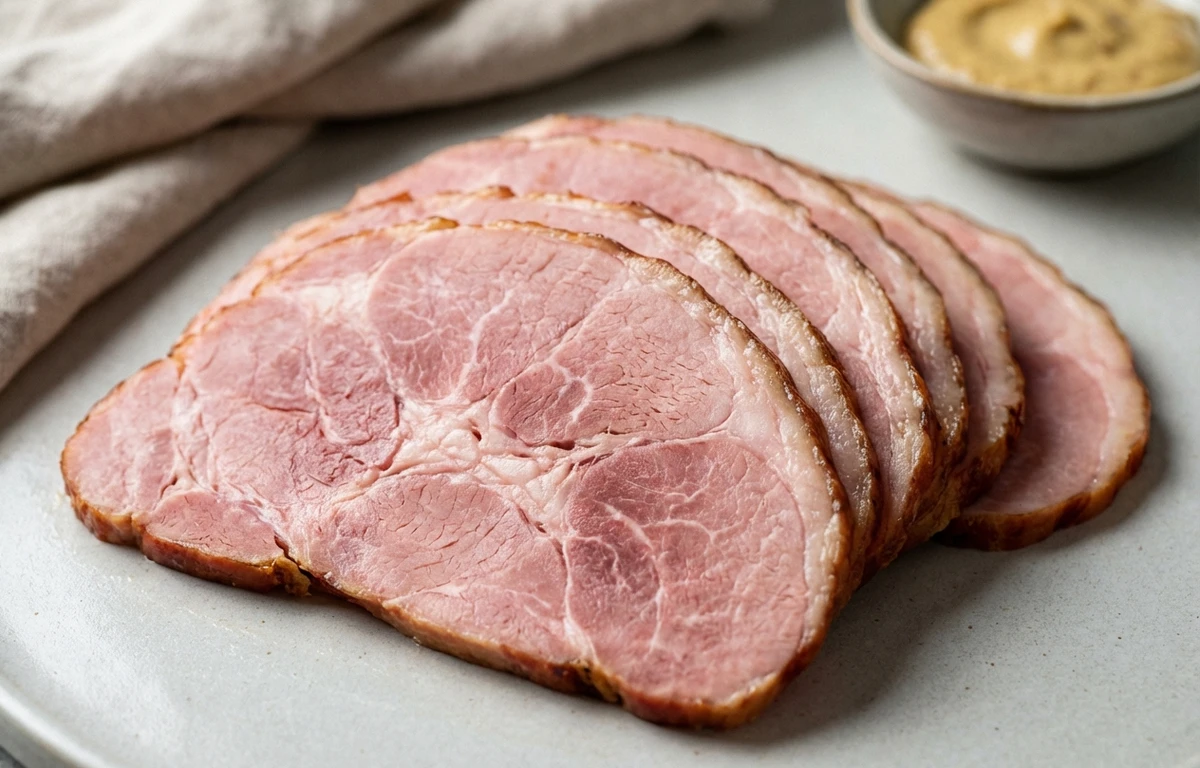
cooked ham.
VegetarianVeganGluten-freeDairy-freeNut-freePeanut-freeSoy-freeEgg-freeShellfish-freeHoney-freeAlcohol-freeHalalKosher
ALSO KNOWN AS
cured hamdeli hamsliced hamprocessed hamcold cut hamsmoked ham slicessliced smoked hamSmoked Deli Ham
SERVING
CALORIES
145
PROTEIN
21g
CARBS
1.5g
FAT
6.0g
FIBER
0g
NUTRITION PROFILE · per 100 g
Everything in this ingredient.
MACRONUTRIENTS
Calories145kcal—
Protein21g42%
Carbohydrates1.5g1%
Fiber0g0%
Sugar1.2g2%
Total fat6.0g8%
Saturated fat2.1g11%
Trans fat0g—
Cholesterol53mg18%
Water68g—
MINERALS
Sodium1200mg52%
Potassium287mg6%
Calcium8.0mg1%
Iron0.80mg4%
Magnesium20mg5%
Phosphorus210mg17%
Zinc2.1mg19%
Copper0.07mg8%
Manganese0.01mg0%
Selenium26µg47%
VITAMINS
Vitamin A0µg0%
Vitamin C0mg0%
Vitamin D0.50µg3%
Vitamin E0.20mg1%
Vitamin K0µg0%
Thiamin (B1)0.70mg58%
Riboflavin (B2)0.20mg15%
Niacin (B3)5.0mg31%
Pantothenic acid (B5)0.60mg12%
Vitamin B60.40mg24%
Folate (B9)4.0µg1%
Vitamin B120.60µg25%
%DV based on a 2,000 cal diet. Source: USDA FoodData Central. A dash in the %DV column means there’s no established Daily Value for that nutrient.
MEASUREMENT CONVERSIONS
How much is what.
1 cup150g
1 oz28.4g
1 lb453.6g
HEALTH BENEFITS
Why eat it.
- ✓High quality complete protein source
- ✓Excellent source of Thiamin (Vitamin B1)
- ✓Rich in Selenium for antioxidant support
- ✓Provides essential Zinc for immune health
- ✓Contains Phosphorus for bone maintenance
COOKING TIPS
In the kitchen.
- 1Reheat gently to avoid drying out the meat
- 2Dice and sauté to add a salty, savory base to soups or omelets
- 3Pair with acidic or sweet glazes like mustard or honey to balance the saltiness
STORAGE
Keep it fresh.
- Store in the refrigerator at or below 40°F (4°C)
- Keep in an airtight container or tightly wrapped in foil
- Consume within 3 to 5 days of opening the package
FAQ
Frequently asked questions.
How long does cooked ham last in the refrigerator?
Once opened or cooked, ham typically lasts 3 to 5 days when stored properly in an airtight container.
Can you freeze cooked ham?
Yes, cooked ham can be frozen for 1 to 2 months for best quality, though it remains safe indefinitely if kept frozen.
How can you tell if cooked ham has gone bad?
Signs of spoilage include a sour smell, a slimy texture, or visible mold. If it feels sticky or smells off, discard it.
What is a good substitute for cooked ham?
Turkey ham or Canadian bacon are the closest meat substitutes. For a vegetarian option, smoked tofu or seitan can work.
Is cooked ham high in sodium?
Yes, ham is a cured meat and is significantly higher in sodium than fresh pork, often containing over 1000mg per 100g.
Why is cooked ham pink?
The pink color is a result of the curing process, specifically the reaction of nitrites with the meat's myoglobin.
Can cooked ham be eaten cold?
Yes, most commercially available cooked ham is fully cooked and safe to eat cold straight from the refrigerator.
Is cooked ham gluten-free?
While pure ham is gluten-free, some processed hams may use glazes or fillers containing gluten. Always check the label.
How do you reheat ham without it getting tough?
Reheat it slowly at a low temperature, covered with foil, and add a splash of water or broth to maintain moisture.
What are common dishes that use cooked ham?
It is commonly used in sandwiches, Chef salads, Quiche Lorraine, split pea soup, and breakfast scrambles.
RECIPES
Cook with cooked ham.
2 recipes · sorted by what’s quick



















