Loading...
Per 100g
Nutrition data source: USDA FoodData Central
Common measurement equivalents in grams
When refrigerated, deli mustard can maintain its quality for up to 12 months, though it may lose some of its spicy heat over time.
While its high acidity makes it shelf-stable, refrigeration is highly recommended to preserve the flavor and spice level.
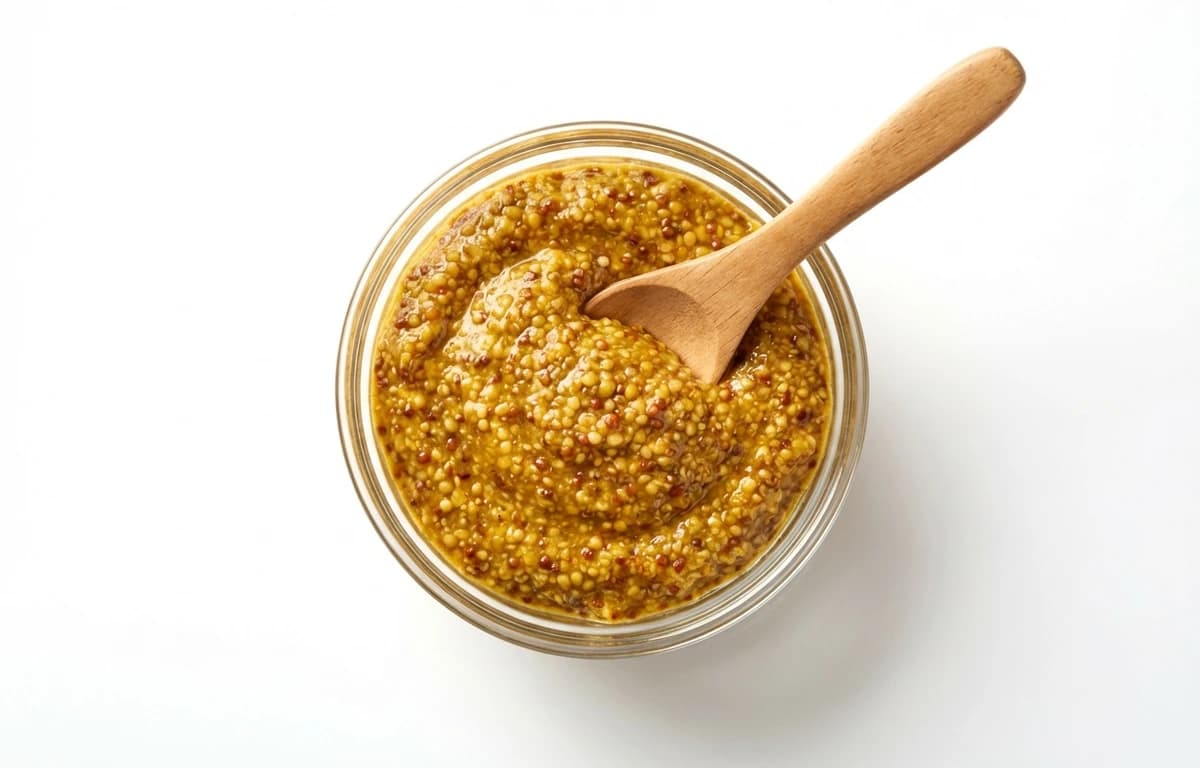
Deli mustard (spicy brown) uses brown mustard seeds and a coarser grind, making it spicier and more textured than yellow mustard, which uses milder white seeds and turmeric.
Yes, Dijon is a good substitute, though it is smoother and often saltier. Use a 1:1 ratio.
Most deli mustards are naturally gluten-free, but always check the label for thickeners or malt vinegar which may contain gluten.
Look for significant darkening, a dry/crusty texture throughout, or an off-smell. Liquid separation is normal and can be stirred back in.
Yes, standard deli mustard is vegan as it consists of mustard seeds, vinegar, salt, and spices.
It pairs perfectly with pastrami, corned beef, soft pretzels, bratwurst, and roast beef sandwiches.
Freezing is not recommended as it can cause the ingredients to separate and ruin the texture upon thawing.
deli mustard is a versatile ingredient found in cuisines around the world. With 90 calories per 100g and 5 grams of protein, it's a nutritious addition to many dishes.
Explore more ingredients in the condiment category with complete nutrition information.
View all condiment →Discover 0 recipes featuring deli mustard with step-by-step instructions.
Browse recipes →