
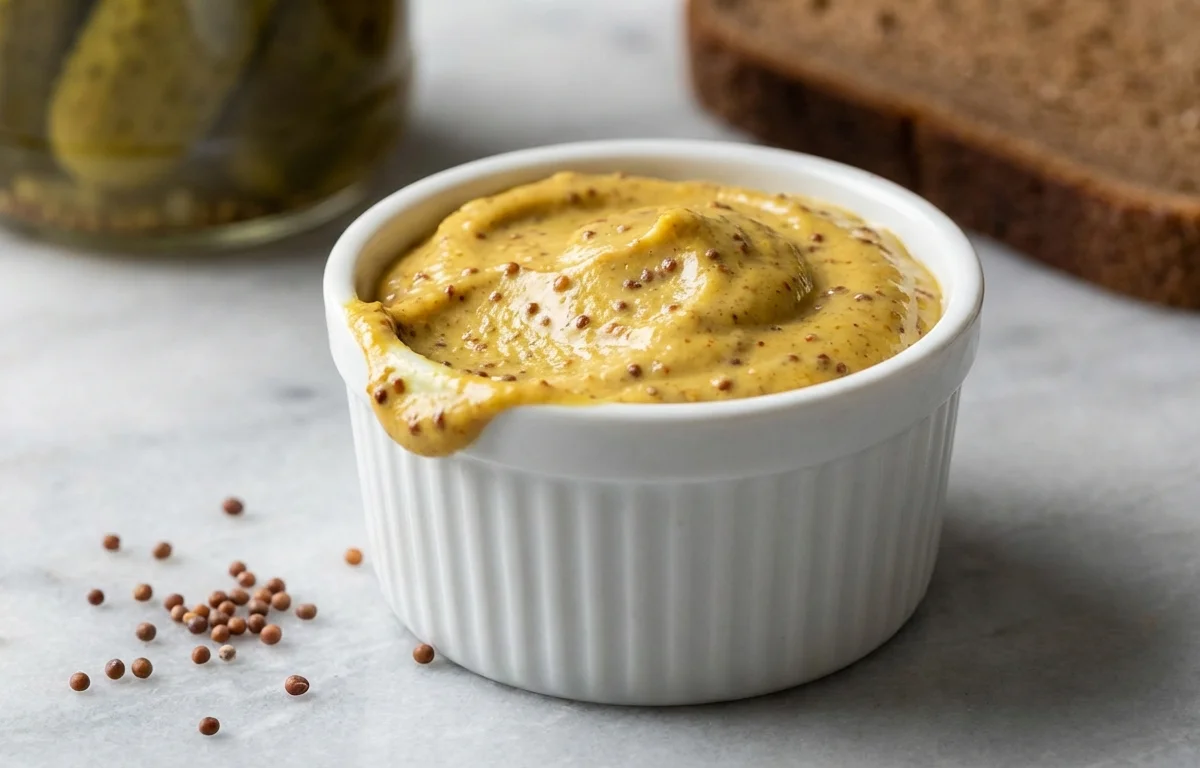
Deli Mustard
A bold, tangy, and slightly spicy brown mustard that brings classic deli-style punch to sandwiches, hot dogs, and pretzels. Made from scratch with a blend of brown and yellow mustard seeds soaked in vinegar and beer, then blended into a smooth, spreadable paste. Far superior to store-bought and ready in just a day of resting.
For 16 servings
- prep
Soak the mustard seeds overnight.
1.Combine the brown and yellow mustard seeds in a small glass jar or bowl.2.Pour the apple cider vinegar and 3 tablespoons of cold water over the seeds and stir.3.Cover and refrigerate for at least 24 hours to soften the seeds and reduce bitterness.TIPThe longer the soak, the smoother the final mustard. 48 hours is even better. - mix
Blend the mustard to your desired texture.
1.Transfer the soaked seed mixture (along with all the soaking liquid) to a blender.2.Add the minced garlic clove, a pinch of turmeric, a pinch of salt, and the teaspoon of honey.3.Blend until the mixture is a coarse paste, about 1 to 2 minutes, scraping down the sides as needed.4.For a smoother deli-style mustard, continue blending for another 2 to 3 minutes, adding another teaspoon of cold water if necessary.TIPAvoid over-blending in one go, or the mustard can become bitter. Pulse in short bursts. - rest · ~1440 min
Rest the mustard to mellow the heat.
Spoon the mustard into a clean glass jar, seal tightly, and refrigerate for at least 24 hours before using. The initial sharp, nasal-clearing heat will mellow significantly during this rest.
TIPTaste it fresh and you'll be alarmed—don't worry, the fury fades. Wait a day. - serve
Adjust consistency and serve.
After resting, stir the mustard. If it has become too thick, whisk in cold water half a teaspoon at a time until it reaches a smooth, spreadable consistency. Serve chilled on sandwiches, with pretzels, or alongside grilled sausages.
What to keep in mind.
6 tips from the recipe — small details that make a real difference to the final dish.
- 1Soak mustard seeds for a full 48 hours if you want an ultra-smooth, mellow mustard.
- 2Pulse the blender in short bursts to avoid overheating the seeds, which can cause bitterness.
- 3Use a glass or non-reactive container for soaking—metal can react with the vinegar and alter flavor.
- 4Taste the mustard fresh after blending; the intense heat will mellow significantly after 24 hours in the fridge.
- 5Store homemade mustard in a sealed jar in the refrigerator for up to 3 weeks for best flavor.
- 6If the mustard thickens too much after resting, stir in cold water ½ teaspoon at a time until spreadable.
Adapt it for your goals.
Spicy-horseradish
Add 1 tablespoon of prepared horseradish and ½ teaspoon of cayenne pepper when blending for a sinus-clearing kick that pairs perfectly with roast beef.
honey sweetHoney-sweet
Increase the honey to 2 tablespoons and substitute apple cider vinegar with white wine vinegar for a sweeter, milder mustard ideal for dipping pretzels.
beer freeBeer-free
Replace the soaking water with extra apple cider vinegar (total ½ cup) to keep the tangy base while eliminating any trace of beer flavor.
herb gardenHerb-garden
Blend in 1 tablespoon of fresh dill and 1 teaspoon of dried tarragon for a bright, herbal mustard that elevates fish sandwiches and potato salads.
Why this is on our healthy list.
Rich in Selenium
Mustard seeds are a good source of selenium, a mineral that supports thyroid function and antioxidant defenses.
Anti-Inflammatory Turmeric
The pinch of turmeric adds curcumin, a compound known for its anti-inflammatory properties.
Low in Calories & Fat
This homemade mustard contains no added oils and is naturally low in calories, making it a guilt-free condiment.
Digestive Aid
Mustard seeds stimulate saliva and gastric juices, which can aid digestion when eaten with meals.
Frequently asked questions
The rest allows the volatile compounds that cause the initial intense heat to mellow, resulting in a smoother, more balanced flavor.


