
Grain
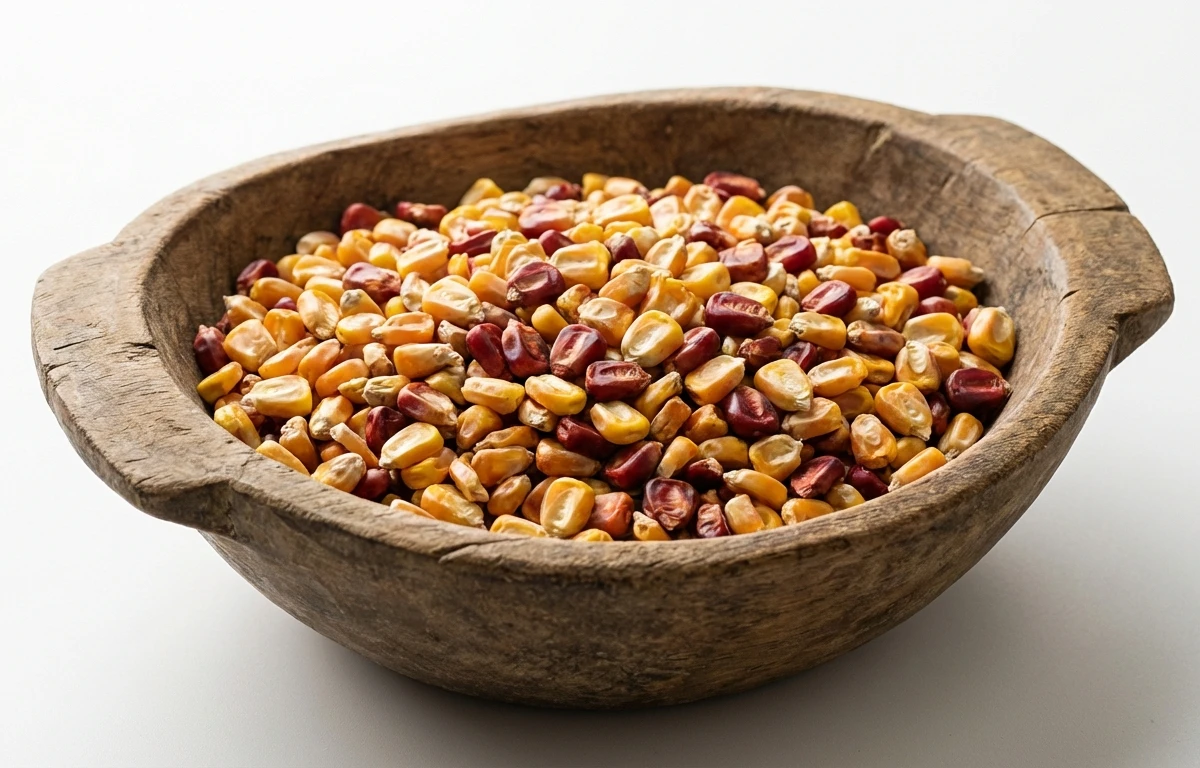
dried corn.
VegetarianVeganGluten-freeDairy-freeNut-freePeanut-freeSoy-freeEgg-freeShellfish-freeHoney-freeAlcohol-freeWhole grain
SERVING
CALORIES
365
PROTEIN
9.4g
CARBS
74.3g
FAT
4.7g
FIBER
7.3g
NUTRITION PROFILE · per 100 g
Everything in this ingredient.
MACRONUTRIENTS
Calories365kcal—
Protein9.4g19%
Carbohydrates74.3g27%
Fiber7.3g26%
Sugar0.60g1%
Total fat4.7g6%
Saturated fat0.70g3%
Trans fat0g—
Cholesterol0mg0%
Water10.4g—
MINERALS
Sodium35mg2%
Potassium287mg6%
Calcium7.0mg1%
Iron2.7mg15%
Magnesium127mg30%
Phosphorus210mg17%
Zinc2.2mg20%
Copper0.30mg33%
Manganese0.50mg22%
Selenium15.5µg28%
VITAMINS
Vitamin A11µg1%
Vitamin C0mg0%
Vitamin D0µg0%
Vitamin E0.40mg3%
Vitamin K0.30µg0%
Thiamin (B1)0.38mg32%
Riboflavin (B2)0.20mg15%
Niacin (B3)3.6mg23%
Pantothenic acid (B5)0.40mg8%
Vitamin B60.60mg35%
Folate (B9)19µg5%
Vitamin B120µg0%
%DV based on a 2,000 cal diet. Source: USDA FoodData Central. A dash in the %DV column means there’s no established Daily Value for that nutrient.
MEASUREMENT CONVERSIONS
How much is what.
1 cup180g
1 tablespoon11.3g
1 teaspoon3.8g
1 ml0.8g
1 liter750g
HEALTH BENEFITS
Why eat it.
- ✓Rich in dietary fiber, which aids digestion and promotes a feeling of fullness.
- ✓Good source of complex carbohydrates, providing sustained energy.
- ✓Contains antioxidants like lutein and zeaxanthin, which are beneficial for eye health.
- ✓Provides essential minerals such as magnesium, phosphorus, and manganese.
COOKING TIPS
In the kitchen.
- 1Soak dried corn in water for at least 8 hours or overnight to rehydrate and significantly reduce cooking time.
- 2Simmer slowly in water or broth until tender, which can take 1 to 2 hours. It's excellent in stews, soups, and chili.
- 3Dried corn can be ground to make fresh cornmeal for polenta, grits, or cornbread.
- 4For a crunchy snack, toast the rehydrated kernels with oil and seasonings until golden brown.
STORAGE
Keep it fresh.
- Store in an airtight container in a cool, dark, and dry place like a pantry to prevent moisture and pest infestation.
- When stored properly, dried corn can maintain its quality for over a year.
FAQ
Frequently asked questions.
Is dried corn healthy?
Yes, dried corn is healthy. It's rich in dietary fiber, which aids digestion and promotes a feeling of fullness. It also provides complex carbohydrates for sustained energy and contains antioxidants like lutein and zeaxanthin, beneficial for eye health. Additionally, it offers essential minerals such as magnesium, phosphorus, and manganese.
How much protein, calories, and carbs are in dried corn?
Per 100g, dried corn contains approximately 365 calories, 9.4g of protein, 74.3g of carbohydrates, and 4.7g of fat. It is a calorie-dense food, primarily providing energy from its high complex carbohydrate content.
Is dried corn good for weight loss?
While dried corn is calorie-dense, its high fiber content can contribute to a feeling of fullness, potentially helping to manage appetite. However, due to its calorie and carbohydrate count, portion control is crucial for weight management. It's best consumed as part of a balanced diet.
Is dried corn gluten-free?
Yes, dried corn is naturally gluten-free. It is a grain that does not contain gluten, making it a suitable option for individuals with celiac disease or gluten sensitivity.
Can diabetics eat dried corn?
Diabetics can eat dried corn in moderation. It is a source of complex carbohydrates, which can affect blood sugar levels. Due to its carb content (74.3g per 100g), it's important for diabetics to monitor portion sizes and consider it within their daily carbohydrate allowance.
Is dried corn keto-friendly?
No, dried corn is generally not considered keto-friendly. With 74.3g of carbohydrates per 100g, it is too high in carbs to fit into a typical ketogenic diet, which severely restricts carbohydrate intake.
How do you cook/prepare dried corn?
Dried corn typically needs to be rehydrated before cooking. This usually involves soaking it in water for several hours or overnight, then simmering it until tender. Once rehydrated and cooked, it can be used in various dishes like soups, stews, or casseroles.
What does dried corn taste like?
Dried corn has a concentrated, slightly sweet, and earthy corn flavor. The drying process intensifies its natural sweetness and gives it a chewier texture compared to fresh or canned corn.
How do you store dried corn?
Dried corn should be stored in an airtight container in a cool, dark, and dry place. Proper storage helps prevent moisture absorption and keeps pests away. When stored correctly, it can last for several years.
What is dried corn used for?
Dried corn is versatile and used in various dishes, especially in traditional cuisines. It's commonly rehydrated and added to hearty soups, stews, chili, and casseroles. It can also be ground into cornmeal for baking or used to make hominy.



















