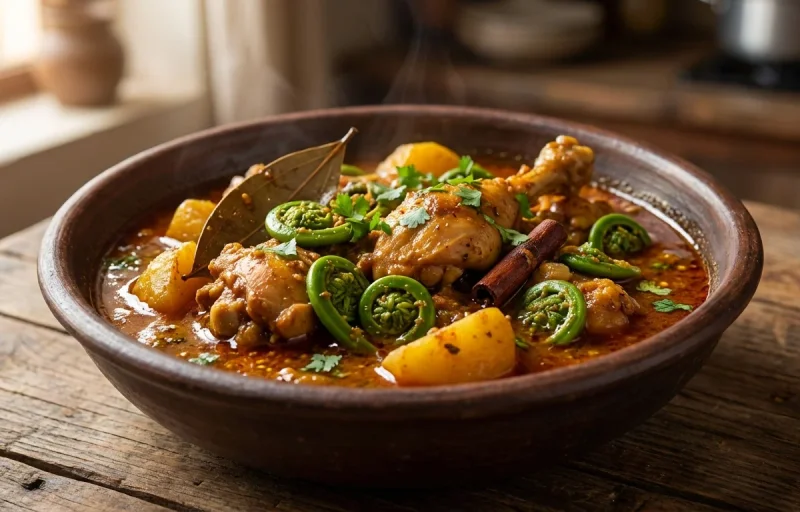
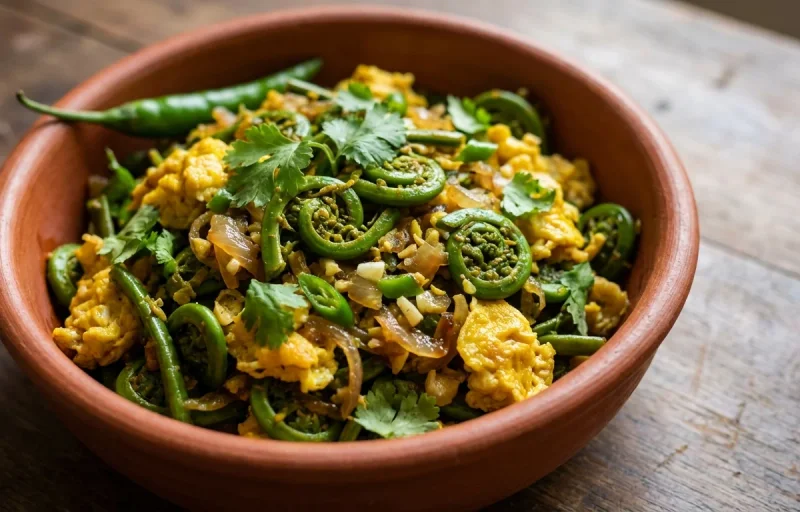
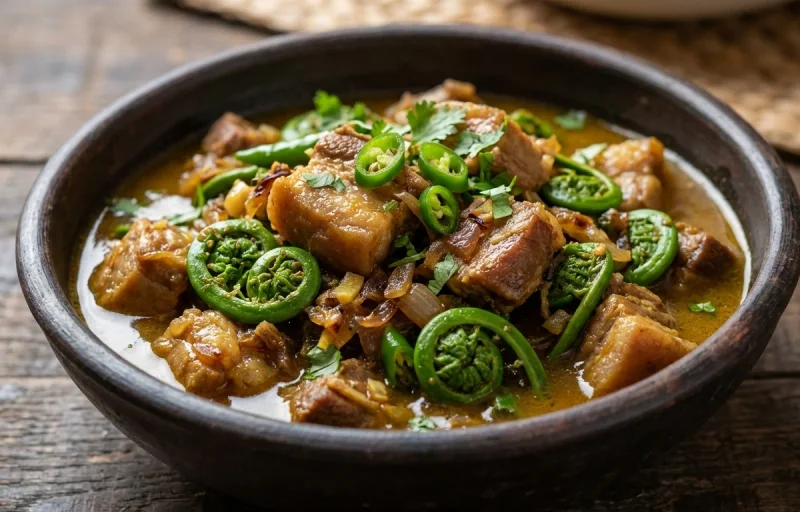
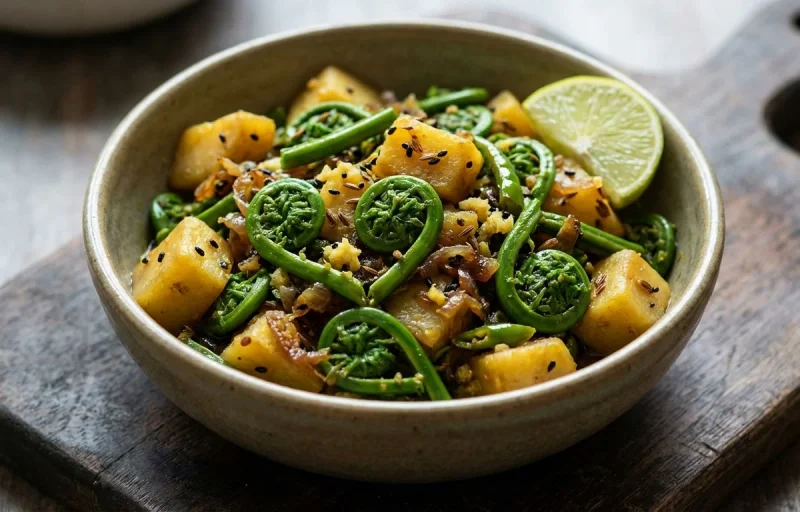
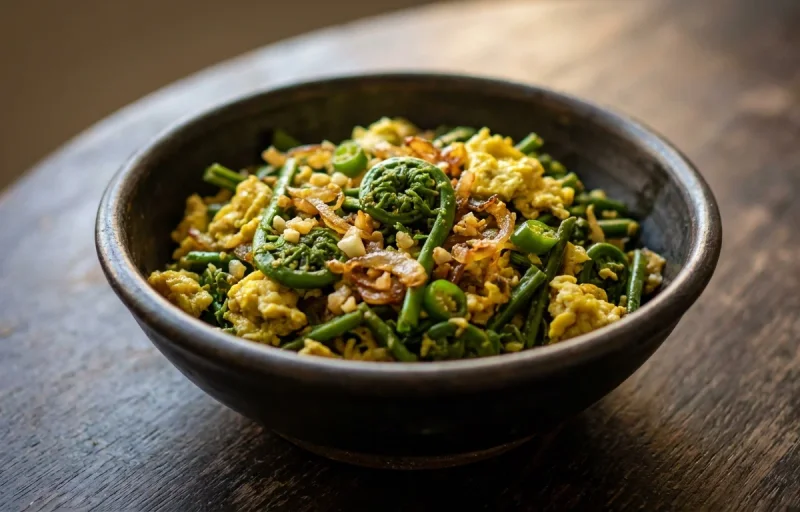
Other2 recipes
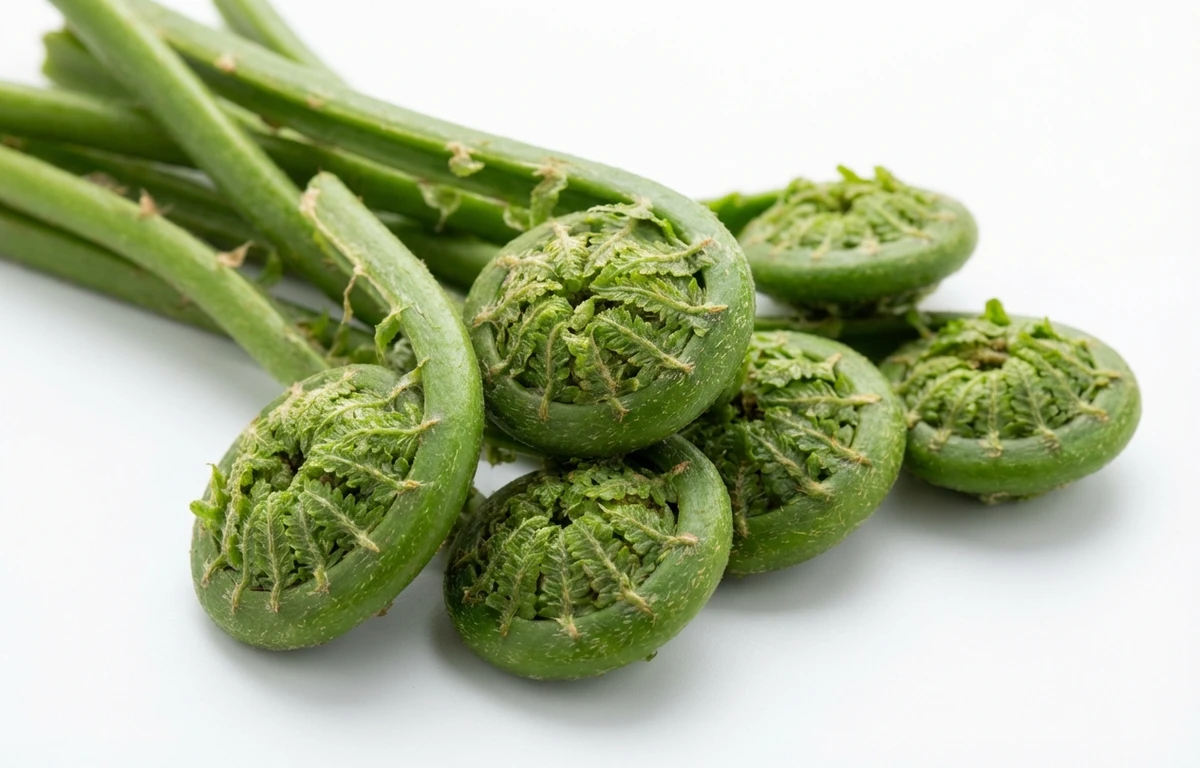
fiddlehead ferns.
VegetarianVeganGluten-freeDairy-freeNut-freePeanut-freeSoy-freeEgg-freeShellfish-freeHoney-freeAlcohol-freeHalalKosher
ALSO KNOWN AS
fiddleheadsostrich fernlingudadhekia saakcroziersmatteuccia struthiopteris
SERVING
CALORIES
44
PROTEIN
4.5g
CARBS
5.5g
FAT
0.40g
FIBER
2.0g
This ingredient is flagged as naturally gluten-free. Per 100 g, it provides 15 µg of vitamin K.
NUTRITION PROFILE · per 100 g
Everything in this ingredient.
MACRONUTRIENTS
Calories44kcal—
Protein4.5g9%
Carbohydrates5.5g2%
Fiber2.0g7%
Total fat0.40g1%
Saturated fat0.05g0%
Trans fat0g—
Cholesterol0mg0%
Water89g—
MINERALS
Sodium1.0mg0%
Potassium370mg8%
Calcium32mg2%
Iron1.3mg7%
Magnesium34mg8%
Phosphorus101mg8%
Zinc0.83mg8%
Copper0.32mg36%
Manganese0.51mg22%
Selenium0.70µg1%
VITAMINS
Vitamin A181µg20%
Vitamin C26.6mg30%
Vitamin D0µg0%
Vitamin E1.0mg7%
Vitamin K15µg13%
Thiamin (B1)0.02mg2%
Riboflavin (B2)0.21mg16%
Niacin (B3)5.0mg31%
Pantothenic acid (B5)0.27mg5%
Vitamin B60.16mg9%
Folate (B9)8.0µg2%
Vitamin B120µg0%
%DV based on a 2,000 cal diet. Source: USDA FoodData Central. A dash in the %DV column means there’s no established Daily Value for that nutrient.
MEASUREMENT CONVERSIONS
How much is what.
1 cup130g
1 oz28.4g
1 lb453.6g
1 piece10g
HEALTH BENEFITS
Why eat it.
- ✓Unique plant source of Omega-3 fatty acids
- ✓Rich in potassium which supports heart health
- ✓Good source of iron for red blood cell production
- ✓Low in calories and high in protein compared to other greens
COOKING TIPS
In the kitchen.
- 1Must be cooked thoroughly (boiled or steamed) to remove natural toxins
- 2Remove the brown papery scales by rubbing them off or rinsing in cold water
- 3Boil for 10-15 minutes or steam for 10-12 minutes before sautéing or serving
STORAGE
Keep it fresh.
- Store in a plastic bag in the crisper drawer of the refrigerator
- Use within 2 to 3 days for optimal freshness
- To freeze, blanch in boiling water for 2 minutes, then plunge into ice water before bagging
FAQ
Frequently asked questions.
Can fiddlehead ferns be eaten raw?
No, fiddleheads should never be eaten raw. They contain a natural toxin that can cause foodborne illness unless they are thoroughly boiled or steamed.
How long do fiddleheads last in the fridge?
They are highly perishable and should be used within 2 to 3 days of purchase or harvest.
What is the best way to clean fiddleheads?
Rinse them several times in cold water to remove dirt and the brown, papery skin. Trim the ends if they look brown or dried out.
What do fiddlehead ferns taste like?
They have a unique flavor often described as a cross between asparagus, green beans, and young spinach, with a slightly nutty undertone.
What can I use as a substitute for fiddleheads?
Asparagus spears or green beans are the best substitutes due to their similar texture and earthy flavor profile.
When is fiddlehead season?
They are a seasonal delicacy available only in early spring, typically from late April to early June depending on the region.
How do I know if fiddleheads are fresh?
Look for ferns that are bright green, tightly coiled, and firm to the touch. Avoid any that are soft, yellowed, or have loose coils.
Are fiddleheads healthy?
Yes, they are very nutritious, providing high levels of Vitamin A, Vitamin C, and minerals like potassium and iron, while being low in calories.
Can you freeze fiddlehead ferns?
Yes, but they must be blanched first. Boil them for 2 minutes, cool them in ice water, dry them, and then store in airtight freezer bags.
RECIPES
Cook with fiddlehead ferns.
2 recipes · sorted by what’s quick