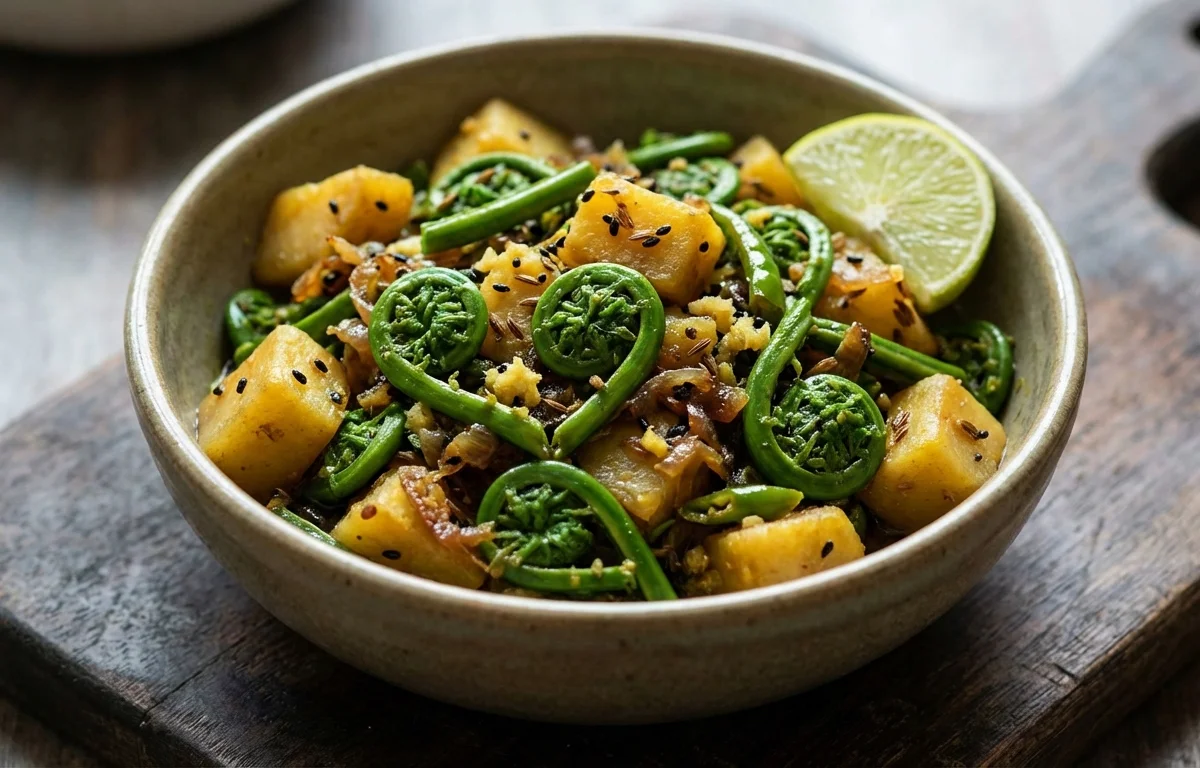
Kosu aru Dhekia Bhaji
A light Assamese stir-fry of cabbage and tender fiddlehead ferns, cooked with very few spices so the vegetables stay front and center. It is simple, earthy, and pairs beautifully with plain rice and dal.
For 4 servings
- prep · ~15 min
Clean and prepare the vegetables.
1.Wash the dhekia very well in several changes of water to remove any grit.2.Trim any fibrous ends and cut the dhekia into short, even pieces.3.Shred the cabbage, slice the potato thinly, slice the onion, crush the garlic, and slit the green chilies.TIPTender fiddleheads cook quickly, but older stems can stay stringy, so trim them well. - saute · ~4 min
Cook the onion, garlic, and chili.
1.Heat mustard oil in a kadhai or pan over medium heat until it smells sharp and just reaches smoking point.2.Lower the heat slightly and add the onion, garlic, and green chilies.3.Cook for 2 to 3 minutes until the onion softens but does not brown deeply. - saute · ~4 min
Add the potato and start the bhaji.
Add the sliced potato, salt, and turmeric powder. Mix well and cook for 3 to 4 minutes, stirring often, until the potato starts to soften at the edges.
- saute · ~5 min
Cook the dhekia and cabbage.
1.Add the dhekia and cabbage to the pan.2.Stir well so the vegetables are coated with the oil and aromatics.3.Cook over medium heat for 4 to 5 minutes, stirring often, until the cabbage starts to wilt. - simmer · ~5 min
Cover and finish the bhaji.
Sprinkle in the water, cover the pan, and cook on low heat for 4 to 5 minutes until the potato is tender and the dhekia is just cooked through. Remove the lid and cook briefly if any moisture remains.
TIPDo not overcook the dhekia or it can lose its fresh bite and color. - serve
Serve hot with rice.
Taste and adjust the seasoning if needed, then serve the bhaji hot as a simple side with steamed rice and other Assamese dishes.
What to keep in mind.
7 tips from the recipe — small details that make a real difference to the final dish.
- 1Wash dhekia in several changes of water and check the curled tips well, as grit often hides inside.
- 2Let the mustard oil reach its smoking point briefly before adding onion; this mellows its raw pungency.
- 3Slice the potato very thin so it finishes cooking in the same short time as the cabbage and dhekia.
- 4Do not brown the onion deeply; this bhaji tastes best when the vegetables stay delicate and lightly sweet.
- 5Keep the pan covered only until the potato turns tender, then uncover so the bhaji stays dry, not stewy.
- 6If your dhekia stems seem mature, blanch them for 1 minute first to reduce stringiness and ensure even cooking.
- 7This bhaji reheats well the same day; warm gently in a pan rather than microwaving to keep the texture intact.
Adapt it for your goals.
No-potato
Skip the potato for a lighter, faster bhaji that puts the texture and flavor of the dhekia and cabbage more clearly in focus.
more spicyMore-spicy
Add extra slit green chilies or a few chopped bird's eye chilies if you want more heat while still keeping the dish traditionally simple.
garlic freeGarlic-free
Omit the garlic for a plainer version; the mustard oil, onion, and green chili still give the bhaji gentle character.
mixed vegMixed-veg
Add a small handful of green peas or thinly sliced carrots for extra color and sweetness, though the flavor will be less traditional.
Why this is on our healthy list.
Fiber-Rich Vegetables
Cabbage, potato, onion, and fiddlehead fern together make this side naturally rich in plant fiber that supports fullness and balanced meals.
Lightly Cooked and Low in Heavy Ingredients
This bhaji uses very little oil and no cream or rich gravy, making it a light vegetable side for everyday meals.
Contains Protective Plant Compounds
Cabbage, garlic, green chili, and turmeric contribute a range of naturally occurring plant compounds common in simple, wholesome cooking.
Frequently asked questions
It should be tender but still slightly crisp and bright, not mushy or dull. Overcooked dhekia loses both texture and fresh flavor.