Loading...
Per 100g
Nutrition data source: USDA FoodData Central
Common measurement equivalents in grams
Freshly squeezed orange juice typically lasts 2 to 3 days when stored in a sealed container in the refrigerator.
Yes, you can freeze it for up to 4 months. Freezing it in ice cube trays is convenient for portioning.
Valencia oranges are widely considered the best for juicing due to their high juice content and sweet flavor. Navel oranges are also good but should be consumed immediately as they can turn bitter.
Yes, fresh juice typically contains more vitamins and enzymes and lacks the added sugars or preservatives often found in commercial varieties.
Roll the orange on a counter with firm pressure before cutting, or microwave it for 10-15 seconds to loosen the membranes.
You can use tangerine juice, grapefruit juice, or a mix of lemon juice and water with a pinch of sugar.
Yes, Vitamin C is sensitive to light and air. It begins to degrade slowly once the juice is exposed, so it is best consumed fresh.
Juice with pulp contains slightly more fiber and flavonoids, making it a nutritionally superior choice compared to strained juice.
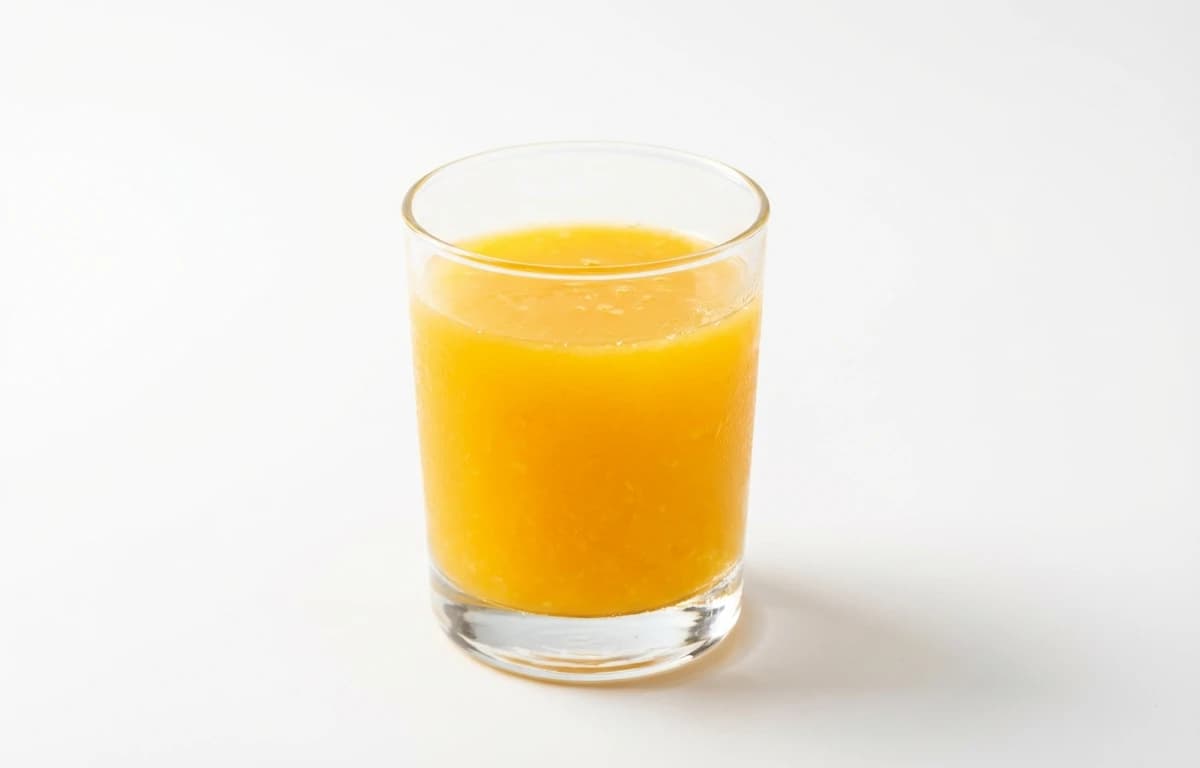
fresh orange juice is a versatile ingredient found in cuisines around the world. With 45 calories per 100g and 0.7 grams of protein, it's a nutritious addition to many dishes.
Explore more ingredients in the fruit category with complete nutrition information.
View all fruit →Discover 1 recipes featuring fresh orange juice with step-by-step instructions.
Browse recipes →While the citric acid is a natural cleaner, the high sugar content makes it sticky; lemon juice is generally preferred for cleaning tasks.
Yes, orange juice has a pH between 3.3 and 4.2, making it acidic, which is why it works well in marinades.