Other
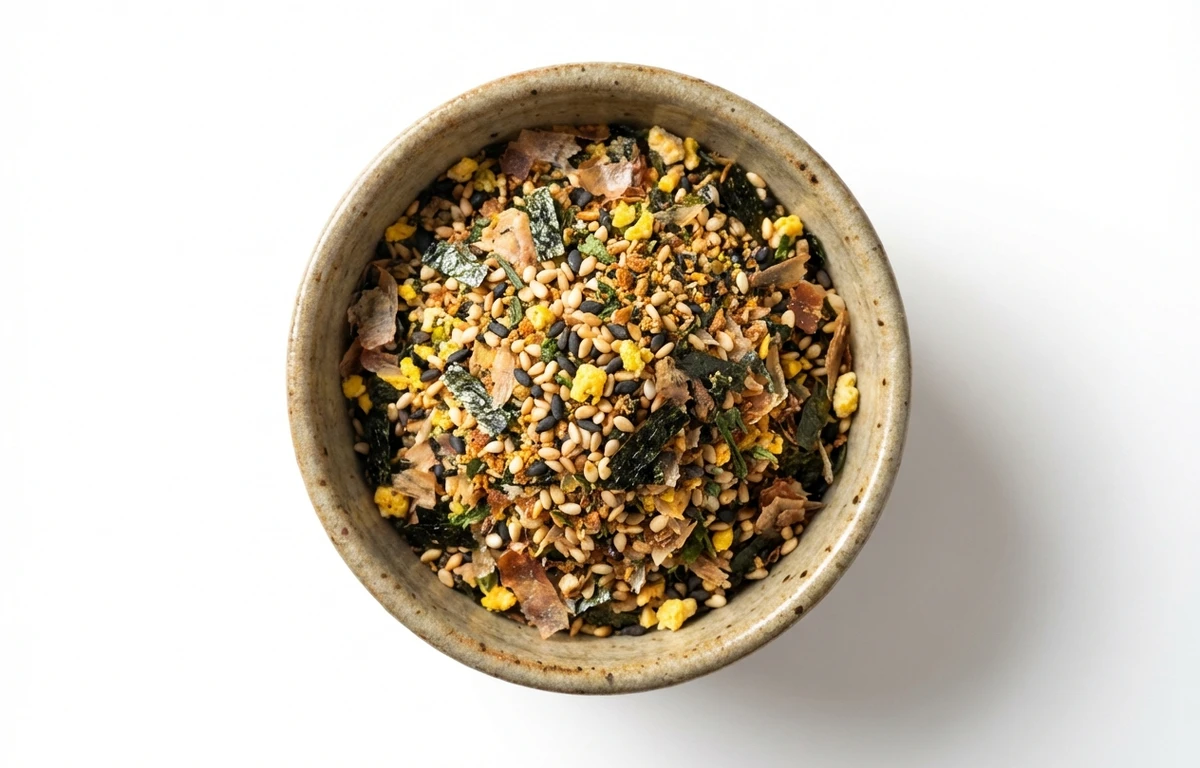
furikake seasoning.
VegetarianVeganGluten-freeDairy-freeNut-freePeanut-freeSoy-freeEgg-freeShellfish-freeHoney-freeAlcohol-freeFermented
SERVING
CALORIES
375
PROTEIN
18g
CARBS
35g
FAT
22g
FIBER
8.0g
Per 100 g, it provides 15 µg of vitamin K.
NUTRITION PROFILE · per 100 g
Everything in this ingredient.
MACRONUTRIENTS
Calories375kcal—
Protein18g36%
Carbohydrates35g13%
Fiber8.0g29%
Sugar15g30%
Total fat22g28%
Saturated fat3.5g18%
Trans fat0g—
Cholesterol15mg5%
Water3.0g—
MINERALS
Sodium5500mg239%
Potassium450mg10%
Calcium600mg46%
Iron6.0mg33%
Magnesium250mg60%
Phosphorus400mg32%
Zinc4.0mg36%
Copper1.2mg133%
Manganese1.5mg65%
Selenium30µg55%
VITAMINS
Vitamin A50µg6%
Vitamin C2.0mg2%
Vitamin D1.5µg8%
Vitamin E2.5mg17%
Vitamin K15µg13%
Thiamin (B1)0.30mg25%
Riboflavin (B2)0.20mg15%
Niacin (B3)4.0mg25%
Pantothenic acid (B5)0.50mg10%
Vitamin B60.40mg24%
Folate (B9)60µg15%
Vitamin B125.0µg208%
%DV based on a 2,000 cal diet. Source: USDA FoodData Central. A dash in the %DV column means there’s no established Daily Value for that nutrient.
MEASUREMENT CONVERSIONS
How much is what.
1 cup120g
1 tablespoon7.5g
1 teaspoon2.5g
1 oz28.4g
1 lb453.6g
1 ml0.6g
HEALTH BENEFITS
Why eat it.
- ✓Rich in iodine from seaweed for thyroid health
- ✓Good source of calcium from sesame seeds
- ✓Contains healthy unsaturated fats
- ✓Provides trace minerals like magnesium and iron
- ✓High in Vitamin B12 from dried fish and seaweed
COOKING TIPS
In the kitchen.
- 1Sprinkle over hot steamed rice just before serving for best texture
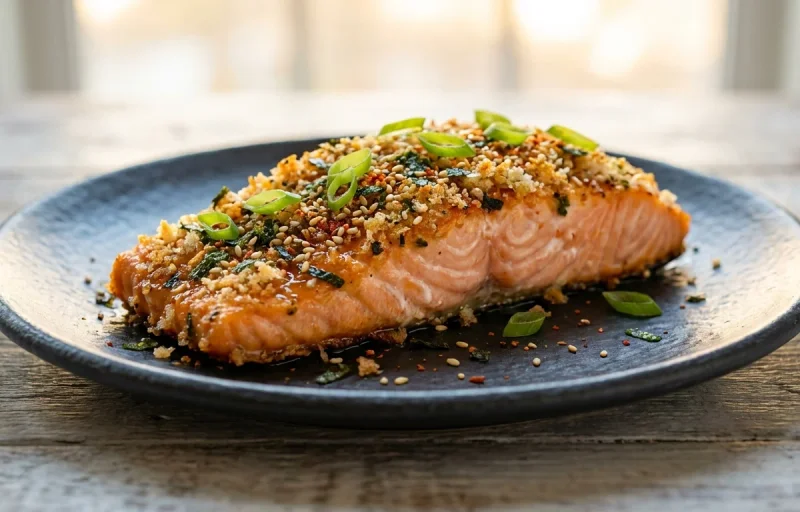
- 2Use as a dry rub or crust for pan-seared tuna or salmon
- 3Mix into popcorn or avocado toast for a savory umami boost
STORAGE
Keep it fresh.
- Store in a cool, dry place away from direct sunlight
- Keep in an airtight container to prevent the seaweed from becoming soggy
- Use a silica gel desiccant pack if living in a humid environment
FAQ
Frequently asked questions.
Is furikake seasoning vegan?
Most traditional furikake is not vegan as it contains katsuobushi (dried bonito fish flakes) or salmon flakes. However, vegan versions made only with seaweed and seeds are available.
Does furikake contain gluten?
Yes, most commercial furikake contains soy sauce powder, which is made with wheat. Look for certified gluten-free versions if you have a sensitivity.
How long does furikake last?
Unopened, it can last up to a year. Once opened, it is best consumed within 1-2 months for maximum freshness and crunch.
Can I freeze furikake?
Freezing is not recommended as moisture can ruin the texture of the dried seaweed and seeds. A cool, dry pantry is best.
What are the main ingredients in furikake?
The base usually consists of toasted sesame seeds, chopped nori (seaweed), salt, and sugar. Many varieties add dried fish flakes, egg granules, or shiso leaves.
Is furikake high in sodium?
Yes, furikake is a salt-dense condiment. It should be used sparingly as a garnish rather than a main ingredient.
What can I use as a substitute for furikake?
A mix of toasted sesame seeds, crumbled nori sheets, and a pinch of sea salt and sugar can serve as a basic homemade substitute.
Does furikake contain MSG?
Many commercial brands include MSG to enhance the umami flavor, though MSG-free varieties are increasingly common in health food stores.
RECIPES
Cook with furikake seasoning.
0 recipes · sorted by what’s quick