Loading...
Per 100g
Nutrition data source: USDA FoodData Central
Common measurement equivalents in grams
Rinse thoroughly under running water, turn them inside out using a stick or water pressure, and scrub with coarse salt, lemon juice, or flour to remove mucus and impurities.
Fresh goat intestines are highly perishable and should be cooked within 24 to 48 hours of purchase.
Yes, they can be frozen for 3-4 months. Ensure they are cleaned and dried before sealing in airtight freezer-safe packaging.
They are best prepared in slow-cooked stews, curries (like Boti Masala), or grilled after being thoroughly cleaned and parboiled.
They are high in protein and B vitamins but also high in cholesterol, so they should be consumed in moderation as part of a balanced diet.
Lamb intestines are the closest substitute. While tripe (stomach lining) is often used in similar dishes, it has a different texture.
Soaking in vinegar or lemon water and parboiling with aromatics like ginger, garlic, and turmeric helps neutralize the odor.
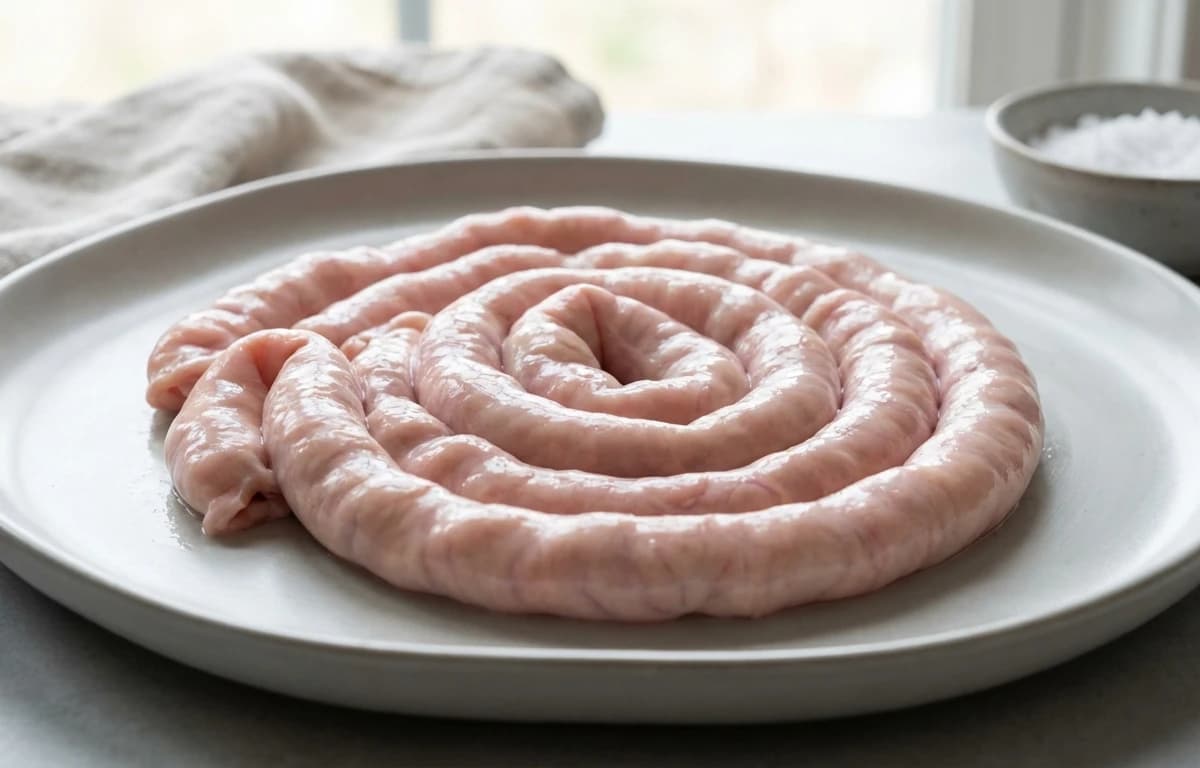
Look for intestines that are moist, have a pale pinkish-white color, and do not have an overwhelming or foul ammonia-like smell.
goat intestines is a versatile ingredient found in cuisines around the world. With 94 calories per 100g and 15.8 grams of protein, it's a nutritious addition to many dishes.
Explore more ingredients in the other category with complete nutrition information.
View all other →Discover 1 recipes featuring goat intestines with step-by-step instructions.
Browse recipes →