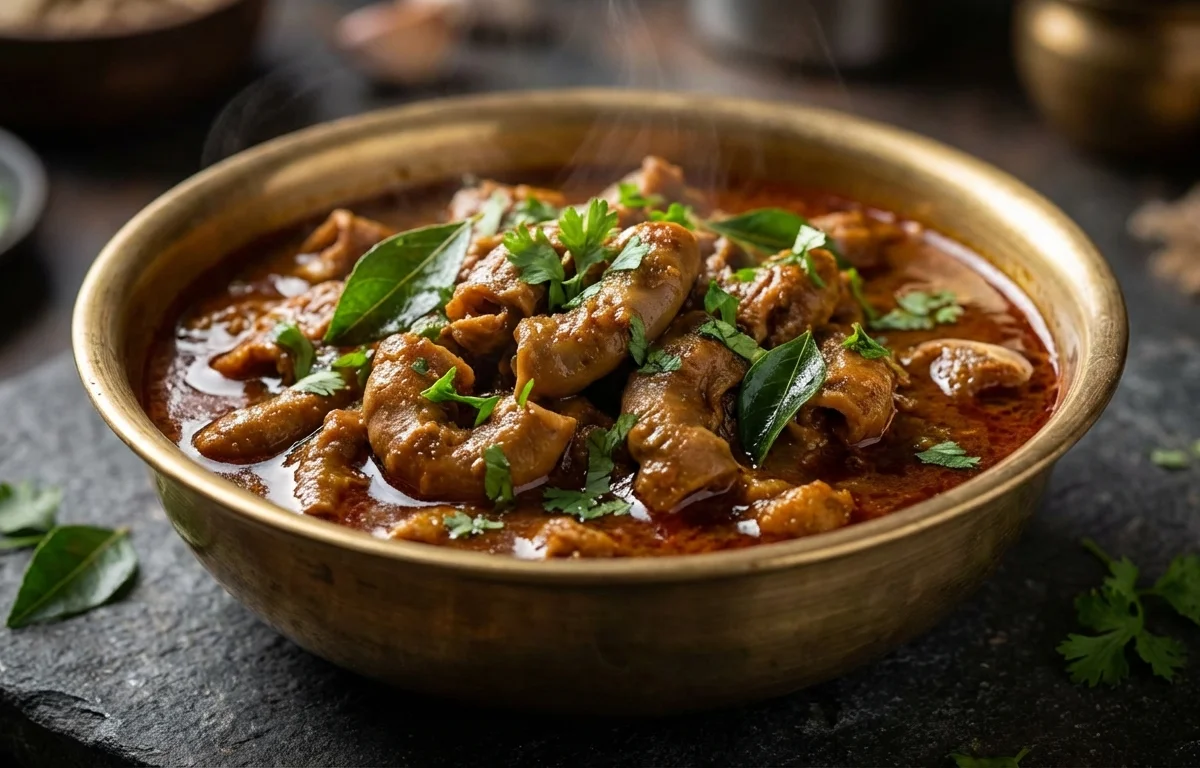
Kudal Kuzhambu
A bold Tamil-style mutton intestine curry with roasted spices, onions, and coconut simmered into a deeply savory gravy. It is rich, earthy, and traditionally served in small portions with rice, idli, or dosa.
For 4 servings
- prep · ~15 min
Clean the intestine well.
1.Rinse the goat intestine several times under running water.2.Rub with a little turmeric powder and wash again well.3.Trim any tough membrane if needed and cut into small bite-size pieces.TIPClean thoroughly to remove any strong smell and grit before cooking. - pressure cook · ~30 min
Pressure cook the intestine.
1.Add the cleaned intestine to a pressure cooker with 1 cup water, a pinch of turmeric powder, and half of the salt.2.Close the cooker and cook on medium heat for 15 to 20 minutes until tender.3.Let the pressure drop naturally and keep the cooked intestine with its cooking liquid aside. - roast · ~2 min
Roast the spice ingredients lightly.
Warm a small pan and dry roast cumin seeds for 30 to 40 seconds until fragrant. Let them cool slightly with the grated coconut and poppy seeds.
TIPKeep the heat low so the cumin and coconut stay aromatic, not bitter. - mix · ~3 min
Grind the masala paste.
Grind the roasted cumin seeds, coconut, and poppy seeds with a little water to a smooth paste. Keep it ready for the gravy.
- saute · ~15 min
Cook the onion and tomato base.
1.Heat oil in a heavy pan over medium heat.2.Add fennel seeds, cinnamon, cloves, and curry leaves; let them sizzle for a few seconds.3.Add onion and green chili, then cook until the onion turns light golden.4.Add ginger-garlic paste and cook until the raw smell fades.5.Add tomato and cook until soft and pulpy. - saute · ~1 min
Add the ground spices.
Stir in coriander powder, red chili powder, black pepper, and the remaining salt. Cook for 1 minute so the spices bloom in the oil.
- simmer · ~15 min
Simmer the curry.
1.Add the cooked intestine along with its cooking liquid to the pan.2.Mix in the ground coconut paste and 1 cup water.3.Bring the curry to a gentle simmer and cook until the gravy thickens and the flavors come together.TIPThe gravy should coat the intestine lightly and stay spoonable, not watery. - garnish
Finish with cilantro.
- serve
Serve hot with rice, idli, or dosa.
What to keep in mind.
7 tips from the recipe — small details that make a real difference to the final dish.
- 1Do not skip the turmeric wash; it helps tame the strong smell before pressure cooking.
- 2Pressure cook only until tender, not mushy, so the intestine keeps a pleasant bite in the gravy.
- 3Use the reserved cooking liquid in the curry for deeper flavor instead of replacing it fully with fresh water.
- 4Roast the cumin, coconut, and poppy seeds on low heat just until fragrant to avoid a bitter masala.
- 5Cook the onions to light golden before adding tomato; this gives the kuzhambu a fuller, sweeter base.
- 6Let the curry rest for 10 to 15 minutes after simmering so the spice and offal flavors settle together.
- 7This kuzhambu often tastes even better the next day; reheat gently so the coconut gravy does not split.
Adapt it for your goals.
Spicier
Increase black pepper and red chili powder slightly for a hotter, more robust Tamil-style kuzhambu.
dry styleDry-style
Use less water and simmer longer for a thicker, clingier masala that pairs especially well with dosa.
without coconutWithout-coconut
Skip the coconut for a lighter, sharper gravy where the fennel, pepper, and coriander stand out more.
Why this is on our healthy list.
Protein-Rich Main Dish
Goat intestine provides animal protein, making this curry filling when served in small portions with rice or tiffin.
Spice-Forward Digestive Support
Fennel, cumin, ginger, garlic, and pepper add not only flavor but also the kind of warming spices often used in South Indian meat curries.
Includes Aromatic Herbs
Curry leaves and cilantro contribute fresh herbal notes along with plant compounds that add depth beyond the meat itself.
Frequently asked questions
Wash it several times, rub with turmeric, rinse again very well, and trim any tough membrane before cooking.