
Other
heartleaf.
VegetarianVeganGluten-freeDairy-freeNut-freePeanut-freeSoy-freeEgg-freeShellfish-freeHoney-freeAlcohol-freeHalalKosher
ALSO KNOWN AS
mosondori xaakfish mint
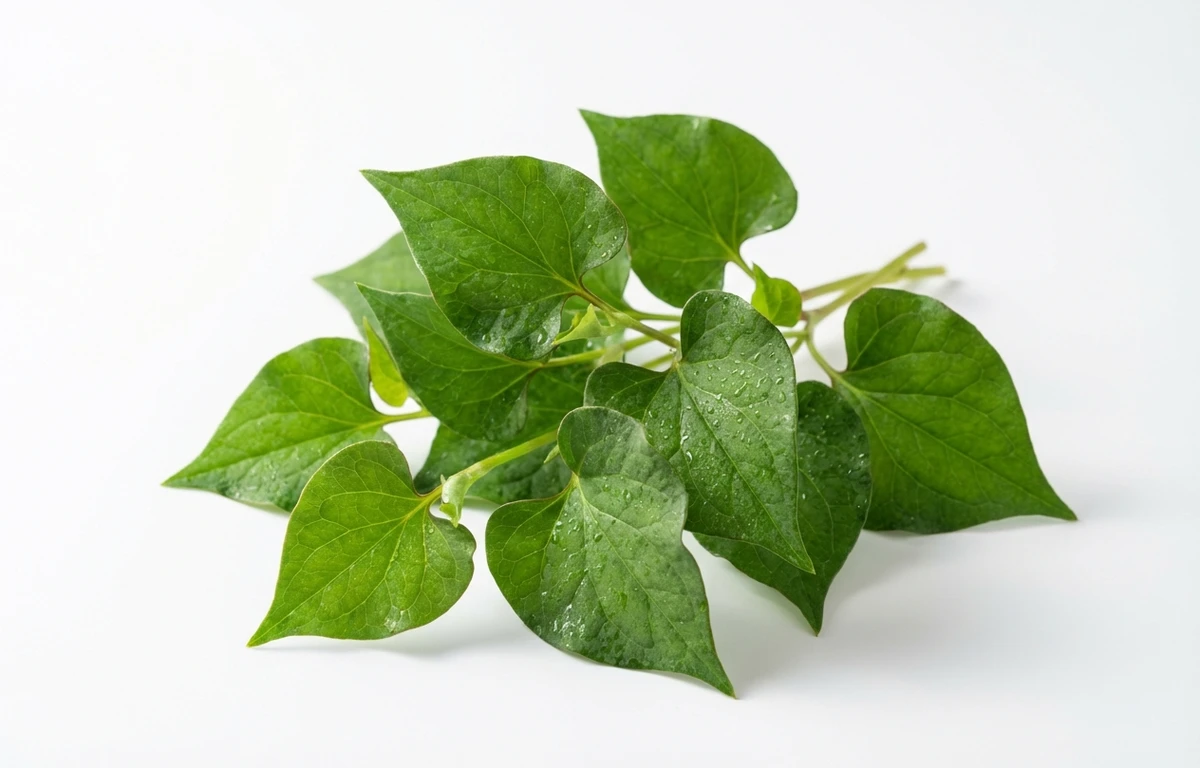
SERVING
CALORIES
18
PROTEIN
1.4g
CARBS
3.2g
FAT
0.20g
FIBER
1.6g
This ingredient is flagged as naturally gluten-free. Per 100 g, it provides 150 µg of vitamin K.
NUTRITION PROFILE · per 100 g
Everything in this ingredient.
MACRONUTRIENTS
Calories18kcal—
Protein1.4g3%
Carbohydrates3.2g1%
Fiber1.6g6%
Sugar0.50g1%
Total fat0.20g0%
Saturated fat0.04g0%
Trans fat0g—
Cholesterol0mg0%
Water92g—
MINERALS
Sodium15mg1%
Potassium450mg10%
Calcium120mg9%
Iron1.8mg10%
Magnesium25mg6%
Phosphorus35mg3%
Zinc0.40mg4%
Copper0.10mg11%
Manganese0.50mg22%
Selenium0.50µg1%
VITAMINS
Vitamin A250µg28%
Vitamin C45mg50%
Vitamin D0µg0%
Vitamin E0.80mg5%
Vitamin K150µg125%
Thiamin (B1)0.05mg4%
Riboflavin (B2)0.12mg9%
Niacin (B3)0.60mg4%
Pantothenic acid (B5)0.20mg4%
Vitamin B60.10mg6%
Folate (B9)40µg10%
Vitamin B120µg0%
%DV based on a 2,000 cal diet. Source: USDA FoodData Central. A dash in the %DV column means there’s no established Daily Value for that nutrient.
MEASUREMENT CONVERSIONS
How much is what.
1 cup50g
1 tablespoon3.1g
1 teaspoon1g
1 ml0.2g
1 liter208.3g
COOKING TIPS
In the kitchen.
- 1Primarily used raw in salads, as a garnish, or in fresh spring rolls to showcase its unique, pungent, and slightly fishy flavor.
- 2The flavor is very strong and can be an acquired taste; start with a small amount and adjust to your preference.
- 3If cooking, add it to soups, stews, or stir-fries at the very end to slightly mellow its intensity without losing its aromatic character.
- 4Pairs well with bold-flavored dishes, especially grilled meats, fish, and spicy Southeast Asian preparations.
STORAGE
Keep it fresh.
- Wrap fresh leaves in a damp paper towel, place in a sealed plastic bag, and store in the refrigerator's crisper drawer for up to one week.
- Alternatively, place the stems in a jar with an inch of water, cover loosely with a plastic bag, and refrigerate.
FAQ
Frequently asked questions.
How many calories and carbohydrates are in heartleaf?
Per 100 grams, heartleaf is very low in calories, containing approximately 18 calories. It also has about 3.2 grams of carbohydrates, 1.4 grams of protein, and only 0.2 grams of fat, making it a light and nutrient-dense vegetable.
Is heartleaf vegan and gluten-free?
Yes, as a plant-based vegetable, heartleaf is naturally vegan and gluten-free. It's suitable for individuals following plant-based diets or those with gluten sensitivities.
Is heartleaf keto-friendly?
Yes, heartleaf can be considered keto-friendly due to its very low carbohydrate content. With only 3.2 grams of net carbs per 100 grams, it can be incorporated into ketogenic diets in moderation.
How do you cook or prepare heartleaf?
Heartleaf can be enjoyed in various ways. It's often used raw in salads, blanched, or lightly stir-fried. It can also be added to soups, stews, or made into a tea, especially when dried, to extract its beneficial compounds.
What does heartleaf taste like?
Heartleaf has a distinctive, slightly bitter and peppery taste, often described as earthy or pungent. Some varieties might have a subtle fishy aroma, which is why it's also known as 'fish mint' or 'fish herb' in some cultures.
How do you store fresh heartleaf?
To store fresh heartleaf, wrap it loosely in a damp paper towel and place it in a plastic bag in the refrigerator's crisper drawer. It typically stays fresh for 3-5 days. For longer storage, it can also be dried.
Can heartleaf be eaten raw?
Yes, heartleaf is commonly eaten raw, especially in salads or as a garnish in many Asian cuisines. Eating it raw helps preserve its delicate flavor and some heat-sensitive nutrients.



















