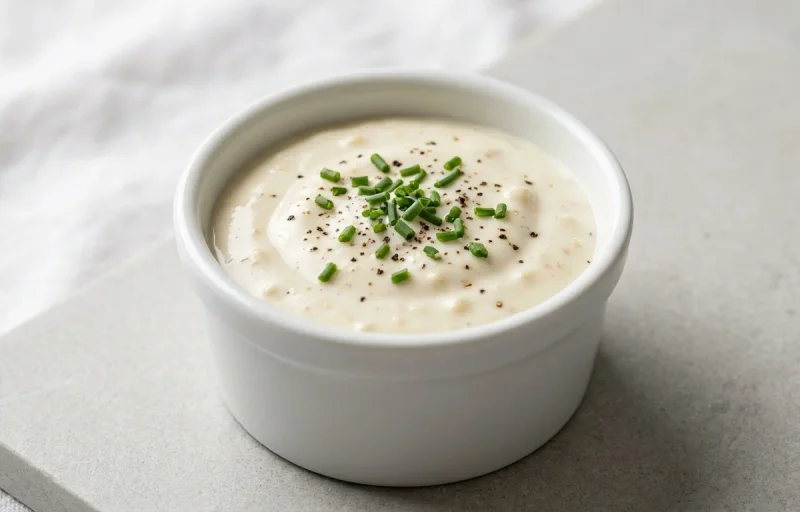
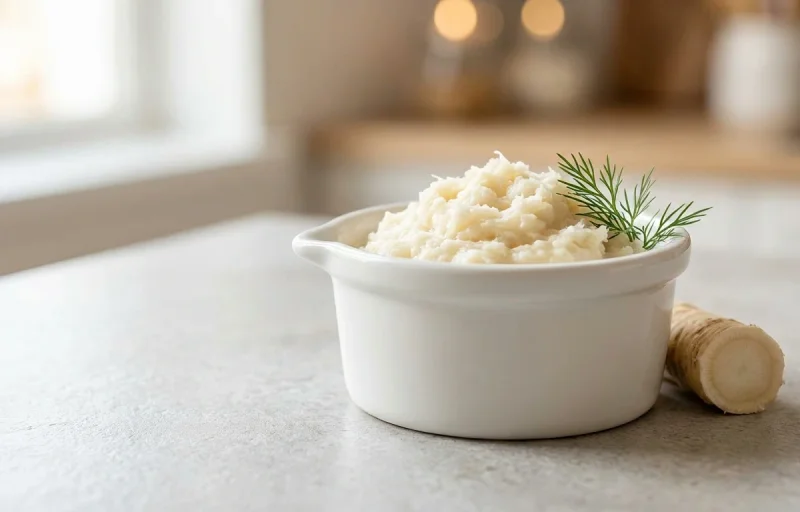
Other5 recipes
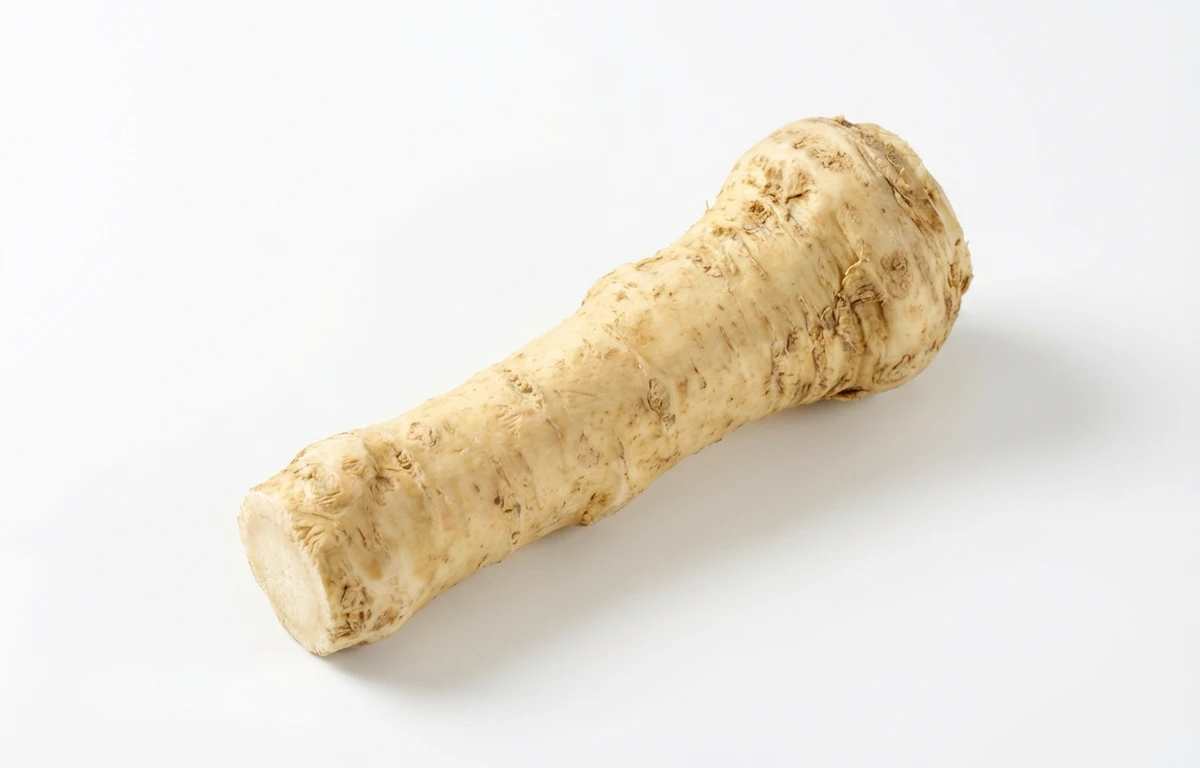
horseradish root.
VegetarianVeganGluten-freeDairy-freeNut-freePeanut-freeSoy-freeEgg-freeShellfish-freeHoney-freeAlcohol-freeHalalKosher
ALSO KNOWN AS
horseradish rootraw horseradishArmoracia rusticanameerrettichkhrenhorseradish
SERVING
CALORIES
48
PROTEIN
1.2g
CARBS
11.3g
FAT
0.69g
FIBER
3.3g
This ingredient is flagged as naturally gluten-free. Per 100 g, it provides 1.3 µg of vitamin K.
NUTRITION PROFILE · per 100 g
Everything in this ingredient.
MACRONUTRIENTS
Calories48kcal—
Protein1.2g2%
Carbohydrates11.3g4%
Fiber3.3g12%
Sugar8.0g16%
Total fat0.69g1%
Saturated fat0.09g0%
Trans fat0g—
Cholesterol0mg0%
Water85.1g—
MINERALS
Sodium314mg14%
Potassium246mg5%
Calcium56mg4%
Iron0.42mg2%
Magnesium27mg6%
Phosphorus31mg2%
Zinc0.83mg8%
Copper0.06mg7%
Manganese0.13mg6%
Selenium2.8µg5%
VITAMINS
Vitamin A0µg0%
Vitamin C24.9mg28%
Vitamin D0µg0%
Vitamin E0.01mg0%
Vitamin K1.3µg1%
Thiamin (B1)0.01mg1%
Riboflavin (B2)0.02mg2%
Niacin (B3)0.39mg2%
Pantothenic acid (B5)0.09mg2%
Vitamin B60.07mg4%
Folate (B9)57µg14%
Vitamin B120µg0%
%DV based on a 2,000 cal diet. Source: USDA FoodData Central. A dash in the %DV column means there’s no established Daily Value for that nutrient.
MEASUREMENT CONVERSIONS
How much is what.
1 cup150g
1 tablespoon15g
1 teaspoon5g
1 oz28.4g
1 lb453.6g
1 piece175g
HEALTH BENEFITS
Why eat it.
- ✓Natural decongestant that helps clear sinuses
- ✓Possesses potent antibacterial and antimicrobial properties
- ✓Stimulates digestion and increases gastric secretions
COOKING TIPS
In the kitchen.
- 1Grate fresh for maximum heat; the spice is released when cells are crushed
- 2Add vinegar immediately after grating to stabilize the heat level
- 3Avoid cooking at high heat as it destroys the characteristic flavor and pungency
STORAGE
Keep it fresh.
- Store unwashed root in a plastic bag in the refrigerator crisper drawer
- Keep the root whole until ready to use to preserve its pungency
- Can be stored for 2-3 weeks in the fridge or frozen for longer use
FAQ
Frequently asked questions.
How long does fresh horseradish root last?
Fresh horseradish root can last 2 to 3 weeks in the refrigerator if kept dry and wrapped in plastic.
Why does horseradish lose its heat?
The heat comes from volatile oils released when the root is grated. These oils dissipate quickly when exposed to air or heat.
How do you prepare fresh horseradish?
Peel the tough outer skin with a vegetable peeler, then grate the white flesh using a fine grater or food processor.
What is a good substitute for fresh horseradish?
Prepared horseradish (from a jar), wasabi paste, or spicy brown mustard can be used as alternatives.
Can you freeze horseradish root?
Yes, you can freeze the whole root or grated portions, though it may lose some of its crisp texture upon thawing.
Why is vinegar added to grated horseradish?
Vinegar stops the enzymatic reaction that creates the heat. Adding it sooner results in a milder flavor; adding it later results in a hotter kick.
How do I pick a good horseradish root?
Look for roots that are firm, heavy for their size, and free of soft spots, mold, or shriveled skin.
Is horseradish the same as wasabi?
No, but most 'wasabi' served in restaurants is actually dyed horseradish because real wasabi is very expensive.
RECIPES
Cook with horseradish root.
5 recipes · sorted by what’s quick