
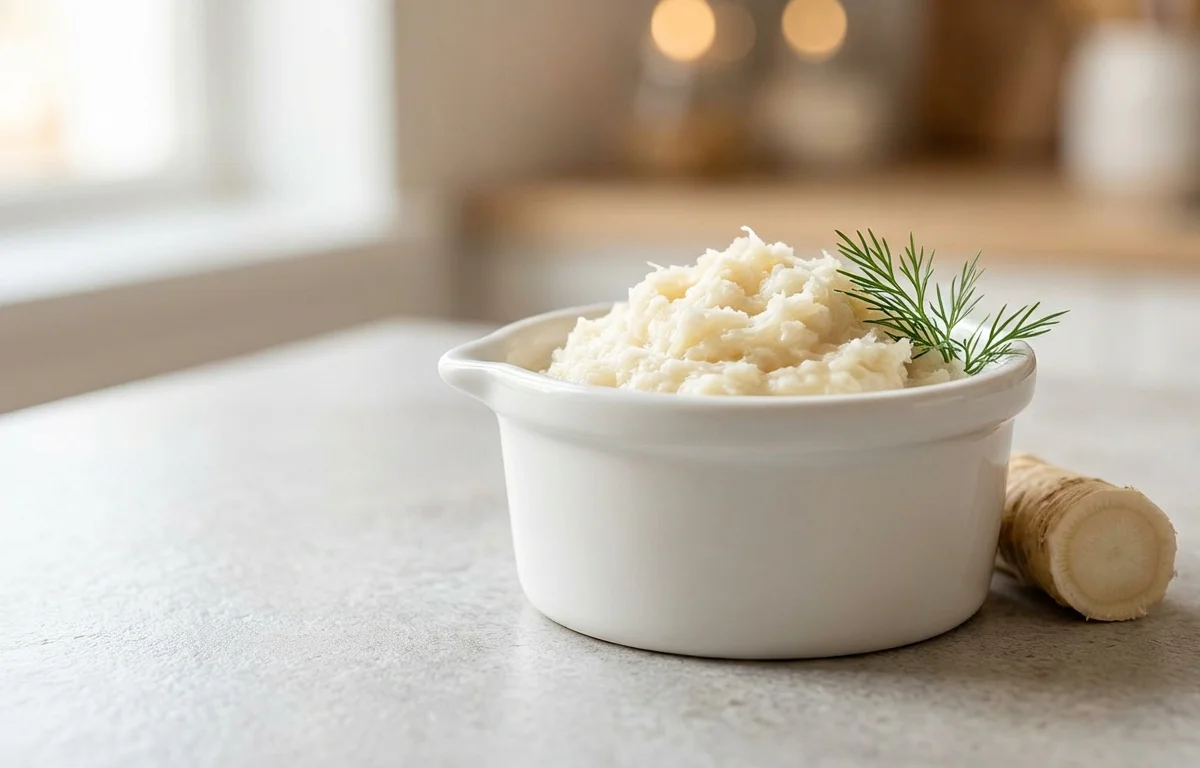
Prepared Horseradish
A pungent, nose-tingling condiment made from fresh horseradish root, vinegar, and a touch of salt. This homemade version delivers a clean, fiery kick that store-bought jars can't match. Perfect alongside roast beef, in cocktail sauce, or swirled into mashed potatoes.
For 16 servings
- prep · ~3 min
Prep the horseradish root.
1.Peel the horseradish root with a vegetable peeler.2.Cut into small 1-inch cubes for easier processing.TIPOpen a window or work in a well-ventilated area — the fumes are intense, like a strong onion. - mix · ~2 min
Grind the horseradish with vinegar and water.
1.Place cubed horseradish root into a food processor.2.Add ice cold water and pulse to a coarse, wet-sand texture (about 10-12 pulses). Scrape down sides as needed.3.Immediately add white vinegar and pulse 2-3 more times to incorporate.TIPTiming is everything: the vinegar stops the enzyme reaction. Add it as soon as the root is ground for a milder kick, or wait 2-3 minutes for more heat. - mix · ~1 min
Season and adjust consistency.
1.Transfer the mixture to a mixing bowl.2.Stir in salt and sugar until dissolved.3.If too thick, add water 1 teaspoon at a time. The final texture should be spoonable but not runny. - assemble · ~1 min
Jar and refrigerate.
1.Spoon the prepared horseradish into a clean glass jar.2.Seal tightly with a lid and refrigerate for at least 1 hour before using. The flavor mellows slightly as it sits.TIPFor best flavor, let it rest overnight in the fridge. It keeps for 3-4 weeks refrigerated.
What to keep in mind.
5 tips from the recipe — small details that make a real difference to the final dish.
- 1Peel the root just before blending to preserve its volatile heat.
- 2Use ice-cold water to slow the enzymatic reaction for a cleaner burn.
- 3For maximum heat, let the ground root sit 2–3 minutes before adding vinegar.
- 4Transfer to a dry glass jar and press out air bubbles to prevent spoilage.
- 5Taste and adjust salt after 1 hour of refrigeration—flavors settle as it chills.
Adapt it for your goals.
Creamy horseradish
Fold the prepared horseradish into 1/2 cup of sour cream or crème fraîche for a milder, silky sauce perfect for roast beef or smoked fish.
beet horseradishBeet horseradish
Add 100g of grated cooked beetroot along with the vinegar for a vibrant pink, slightly sweet variation that's classic in Eastern European cuisine.
extra hotExtra-hot
Substitute half the white vinegar with lemon juice and wait 4 minutes before adding any acid for an intensely sharp, long-lasting heat.
Why this is on our healthy list.
Low-Calorie Condiment
This homemade horseradish has essentially zero calories per serving, making it a guilt-free way to add bold flavor to meats and vegetables.
Contains Glucosinolates
Horseradish root is rich in glucosinolates, plant compounds that may support the body's natural detoxification processes.
Sodium-Controlled
With just 1/4 teaspoon of salt for four servings, you control the sodium intake—far less than many store-bought condiments.
Frequently asked questions
Browning occurs when the root is exposed to air for too long or stored in a non-airtight container. Always seal the jar tightly and keep it refrigerated.


