Protein1 recipes
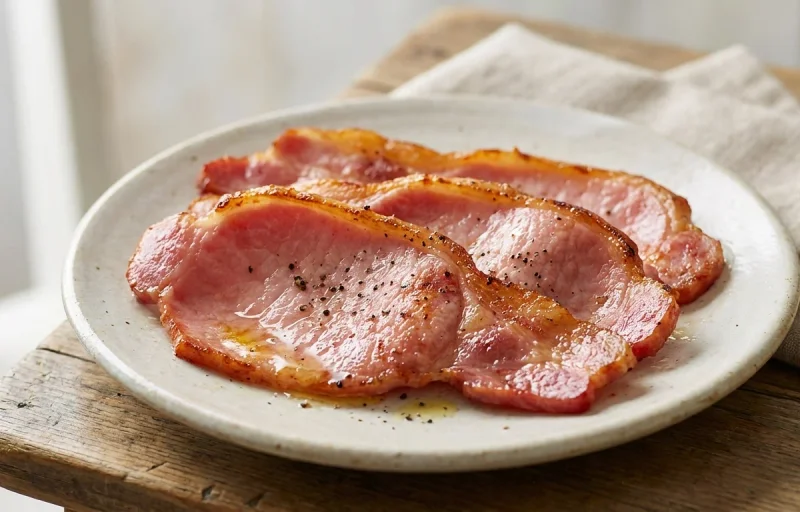
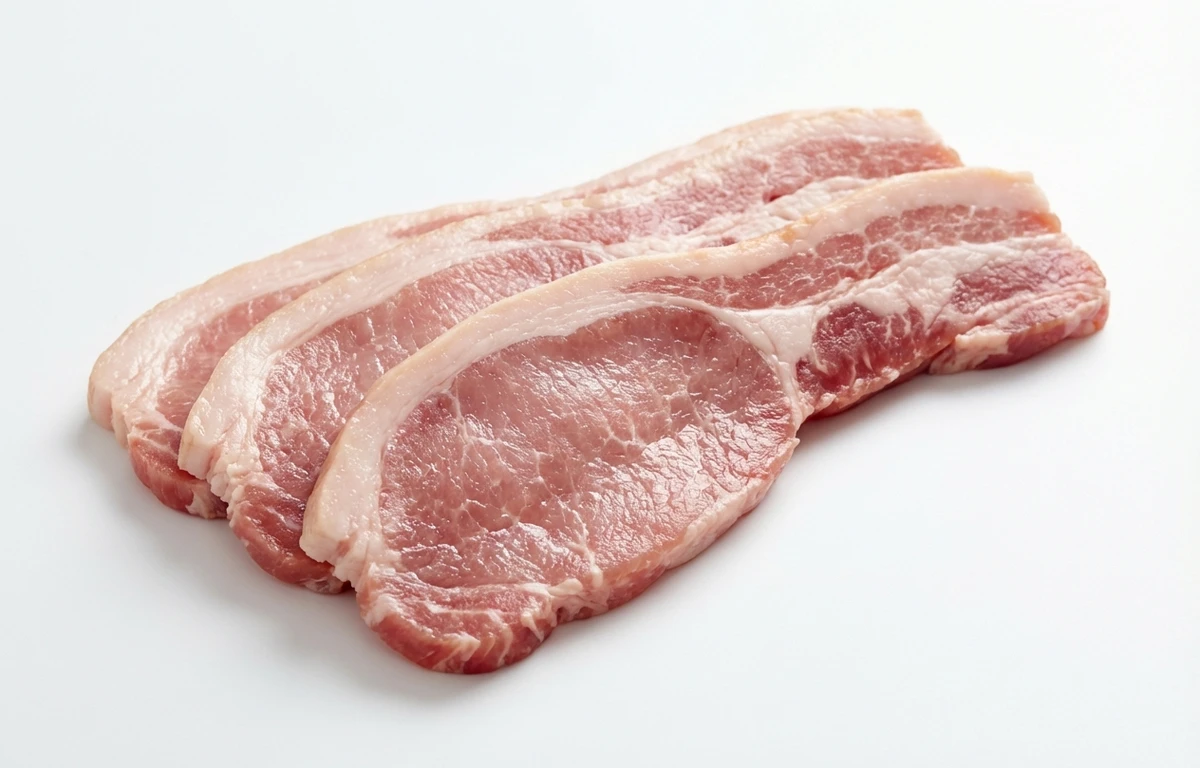
irish bacon.
VegetarianVeganGluten-freeDairy-freeNut-freePeanut-freeSoy-freeEgg-freeShellfish-freeHoney-freeAlcohol-freeHalalKosher
ALSO KNOWN AS
back bacon
SERVING
CALORIES
220
PROTEIN
19g
CARBS
0.80g
FAT
15.5g
FIBER
0g
NUTRITION PROFILE · per 100 g
Everything in this ingredient.
MACRONUTRIENTS
Calories220kcal—
Protein19g38%
Carbohydrates0.80g0%
Fiber0g0%
Sugar0.50g1%
Total fat15.5g20%
Saturated fat5.4g27%
Trans fat0g—
Cholesterol62mg21%
Water61.2g—
MINERALS
Sodium1350mg59%
Potassium310mg7%
Calcium10mg1%
Iron0.90mg5%
Magnesium18mg4%
Phosphorus210mg17%
Zinc2.4mg22%
Copper0.08mg9%
Manganese0.01mg0%
Selenium32.5µg59%
VITAMINS
Vitamin A0µg0%
Vitamin C0mg0%
Vitamin D0.60µg3%
Vitamin E0.20mg1%
Vitamin K0µg0%
Thiamin (B1)0.65mg54%
Riboflavin (B2)0.22mg17%
Niacin (B3)5.2mg33%
Pantothenic acid (B5)0.60mg12%
Vitamin B60.42mg25%
Folate (B9)2.0µg1%
Vitamin B121.1µg46%
%DV based on a 2,000 cal diet. Source: USDA FoodData Central. A dash in the %DV column means there’s no established Daily Value for that nutrient.
MEASUREMENT CONVERSIONS
How much is what.
1 oz28.4g
1 lb453.6g
1 piece75g
HEALTH BENEFITS
Why eat it.
- ✓Excellent source of high-quality, complete protein, crucial for muscle maintenance and repair.
- ✓Rich in B vitamins, especially B12 and niacin, which support energy metabolism and nervous system function.
- ✓Provides essential minerals like selenium, a powerful antioxidant, and phosphorus, vital for bone health.
- ✓Contains zinc, which is important for immune function and wound healing.
COOKING TIPS
In the kitchen.
- 1Irish bacon is leaner than American bacon, so cook it over medium heat to prevent it from becoming tough. You may need a small amount of oil or butter in the pan.
- 2Traditionally, it is pan-fried (grilled) until the edges are slightly crisp but the center remains meaty and tender, not cooked to a brittle state.
- 3To prevent the rashers from curling up during cooking, you can snip the fatty edge in a few places with scissors.
- 4Beyond breakfast, it can be diced and used to flavor soups, stews, or classic dishes like colcannon or cabbage and bacon.
STORAGE
Keep it fresh.
- Keep refrigerated in its original packaging at or below 40°F (4°C) until ready to use. Check the use-by date.
- Once opened, wrap the bacon tightly in plastic wrap or foil, or place it in an airtight container, and use within a week.
- For long-term storage, freeze for up to three months. Thaw in the refrigerator overnight before cooking.
FAQ
Frequently asked questions.
Is Irish bacon healthy?
Irish bacon is an excellent source of high-quality protein, essential B vitamins (especially B12 and niacin), and minerals like selenium and zinc. While it offers these nutritional benefits, it is also high in saturated fat and sodium, so it should be consumed in moderation as part of a balanced diet.
How much protein and calories are in Irish bacon?
Per 100g, Irish bacon typically contains approximately 19g of protein and around 220 calories. It also provides about 15.5g of fat and 0.8g of carbohydrates, making it a protein-rich food.
Is Irish bacon good for weight loss?
Due to its high protein content, Irish bacon can contribute to satiety, which may help with weight management. However, its calorie and fat content mean that portion control is crucial. Incorporate it sparingly into a calorie-controlled diet rather than relying on it as a primary weight-loss food.
Is Irish bacon gluten-free?
Most plain Irish bacon is naturally gluten-free, as it's typically just cured pork. However, it's always important to check the ingredient label for any added flavorings, marinades, or processing agents that might contain gluten, especially with flavored or pre-marinated varieties.
Is Irish bacon keto-friendly?
Yes, Irish bacon is generally considered keto-friendly. It is very low in carbohydrates (around 0.8g per 100g) and provides a good amount of fat and protein, aligning well with the macronutrient ratios of a ketogenic diet. Enjoy it in moderation as part of your keto meal plan.
How do you cook Irish bacon?
Irish bacon, often thicker than streaky bacon, can be fried, grilled, or baked. For frying, cook in a pan over medium heat until crispy and cooked through, about 3-5 minutes per side. Grilling or baking on a rack can also yield delicious results, often with less added fat.
What does Irish bacon taste like?
Irish bacon has a savory, meaty flavor that is typically less smoky and saltier than American streaky bacon. It's often described as having a milder, more pork-forward taste, with a good balance of lean meat and a rim of fat, offering a satisfying texture.
How do you store Irish bacon?
Uncooked Irish bacon should be stored in its original packaging in the refrigerator and consumed by the 'use-by' date. Once opened, store it in an airtight container or tightly wrapped and use within 3-5 days. For longer storage, it can be frozen for up to 1-2 months.
What is the difference between Irish bacon and American bacon?
The primary difference lies in the cut of pork used. Irish bacon is typically 'back bacon,' cut from the loin of the pig, making it leaner and meatier with a round of lean meat and a strip of fat. American bacon, or 'streaky bacon,' is cut from the pork belly, resulting in more fat and a crispier texture when cooked.
Can you eat Irish bacon raw?
No, Irish bacon should not be eaten raw. Like all pork products, it must be cooked thoroughly to an internal temperature of 145°F (63°C) to kill any potential bacteria or parasites and ensure it is safe for consumption.
RECIPES
Cook with irish bacon.
1 recipes · sorted by what’s quick