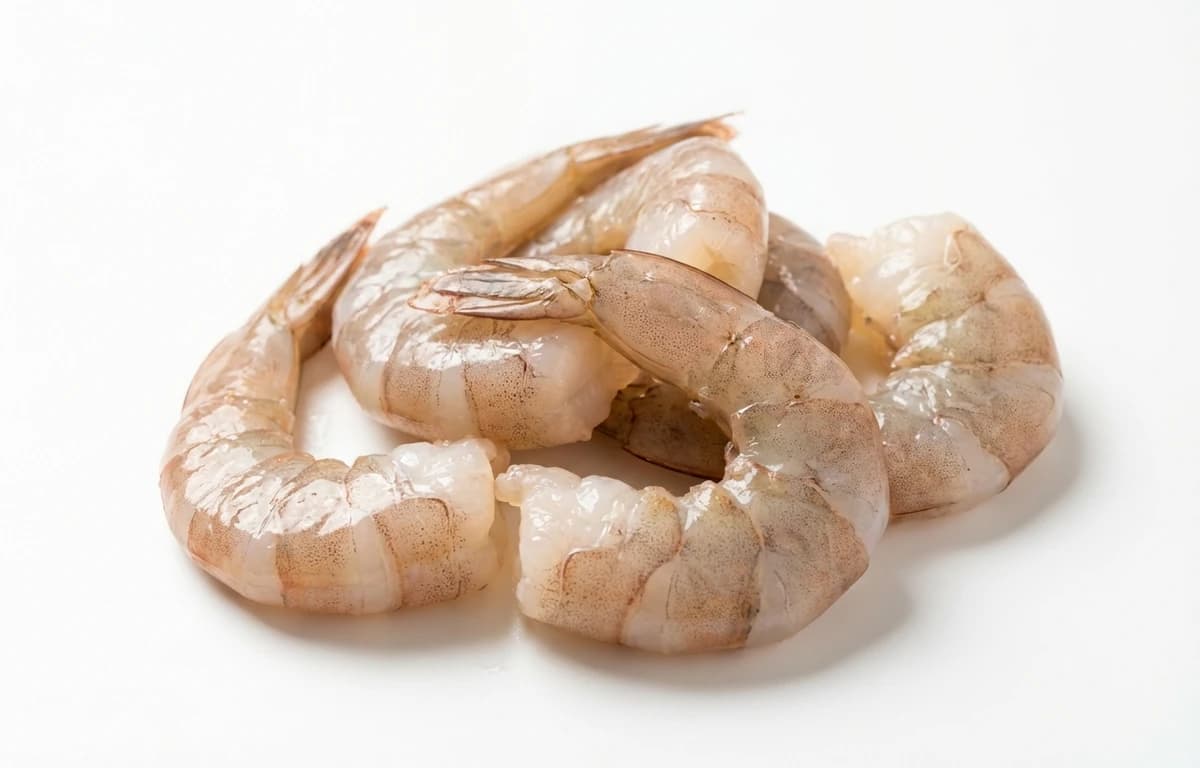
jumbo shrimp
Also known as: jumbo prawns
Loading...
Also known as: jumbo prawns
Per 100g
Nutrition data source: USDA FoodData Central
Common measurement equivalents in grams
Raw jumbo shrimp should be used within 1 to 2 days of purchase if kept refrigerated.
It refers to the size; there are approximately 16 to 20 individual shrimp per pound.
Thaw them overnight in the refrigerator or place them in a sealed bag under cold running water for 15-20 minutes.
While the vein (digestive tract) is edible, it is usually removed from jumbo shrimp for better texture and appearance.
Yes, but for the best texture and even cooking, it is highly recommended to thaw them first.
Spoiled shrimp will have a strong ammonia-like smell, a slimy texture, or visible dark spots on the flesh.
Scallops, lobster chunks, or smaller shrimp varieties are the best culinary substitutes.
Yes, shrimp are naturally high in cholesterol, but they are very low in saturated fat, making them heart-healthy for most people.
Grilling, pan-searing, and roasting are excellent methods that highlight their firm texture and sweet flavor.
jumbo shrimp is a versatile ingredient found in cuisines around the world. With 85 calories per 100g and 20.1 grams of protein, it's a nutritious addition to many dishes.
Explore more ingredients in the protein category with complete nutrition information.
View all protein →Discover 0 recipes featuring jumbo shrimp with step-by-step instructions.
Browse recipes →Leaving tails on is common for presentation and provides a 'handle' for finger foods, but they should be removed for pasta or stews.