Other6 recipes
leeks.
VegetarianVeganGluten-freeDairy-freeNut-freePeanut-freeSoy-freeEgg-freeShellfish-freeHoney-freeAlcohol-free
ALSO KNOWN AS
allium porrumporropoireauprasumleekgarden leekgandar
SERVING
CALORIES
61
PROTEIN
1.5g
CARBS
14.1g
FAT
0.30g
FIBER
1.8g
NUTRITION PROFILE · per 100 g
Everything in this ingredient.
MACRONUTRIENTS
Calories61kcal—
Protein1.5g3%
Carbohydrates14.1g5%
Fiber1.8g6%
Sugar3.9g8%
Total fat0.30g0%
Saturated fat0.04g0%
Cholesterol0mg0%
Water83.1g—
MINERALS
Sodium20mg1%
Potassium180mg4%
Calcium59mg5%
Iron2.1mg12%
Magnesium24.6mg6%
Phosphorus31.4mg3%
Zinc0.11mg1%
Copper0.11mg12%
Selenium0.85µg2%
VITAMINS
Vitamin A83µg9%
Vitamin C12mg13%
Vitamin D0µg0%
Vitamin E1.2mg8%
Vitamin K1.0µg1%
Thiamin (B1)0.05mg4%
Riboflavin (B2)0.03mg2%
Niacin (B3)0.34mg2%
Vitamin B60.20mg12%
Folate (B9)48.5µg12%
Vitamin B120µg0%
%DV based on a 2,000 cal diet. Source: USDA FoodData Central. A dash in the %DV column means there’s no established Daily Value for that nutrient.
MEASUREMENT CONVERSIONS
How much is what.
1 cup170g
1 tablespoon10.6g
1 teaspoon3.5g
1 ml0.7g
1 liter708.3g
1 piece150g
HEALTH BENEFITS
Why eat it.
- ✓Rich in antioxidants like kaempferol and polyphenols, which may protect against chronic diseases like heart disease and cancer.
- ✓A good source of vitamin K, essential for blood clotting and bone health, and vitamin A (as beta-carotene), which supports vision and immune function.
- ✓Contains soluble fiber and prebiotics, which promote healthy gut bacteria, aid digestion, and may contribute to weight management.
- ✓High in sulfur compounds like allicin, which have been shown to have anti-inflammatory, cholesterol-lowering, and blood pressure-reducing properties.
COOKING TIPS
In the kitchen.
- 1Thoroughly clean leeks before cooking as soil and grit often get trapped between their layers. The best method is to slice them lengthwise and rinse under cold running water, fanning the layers apart.
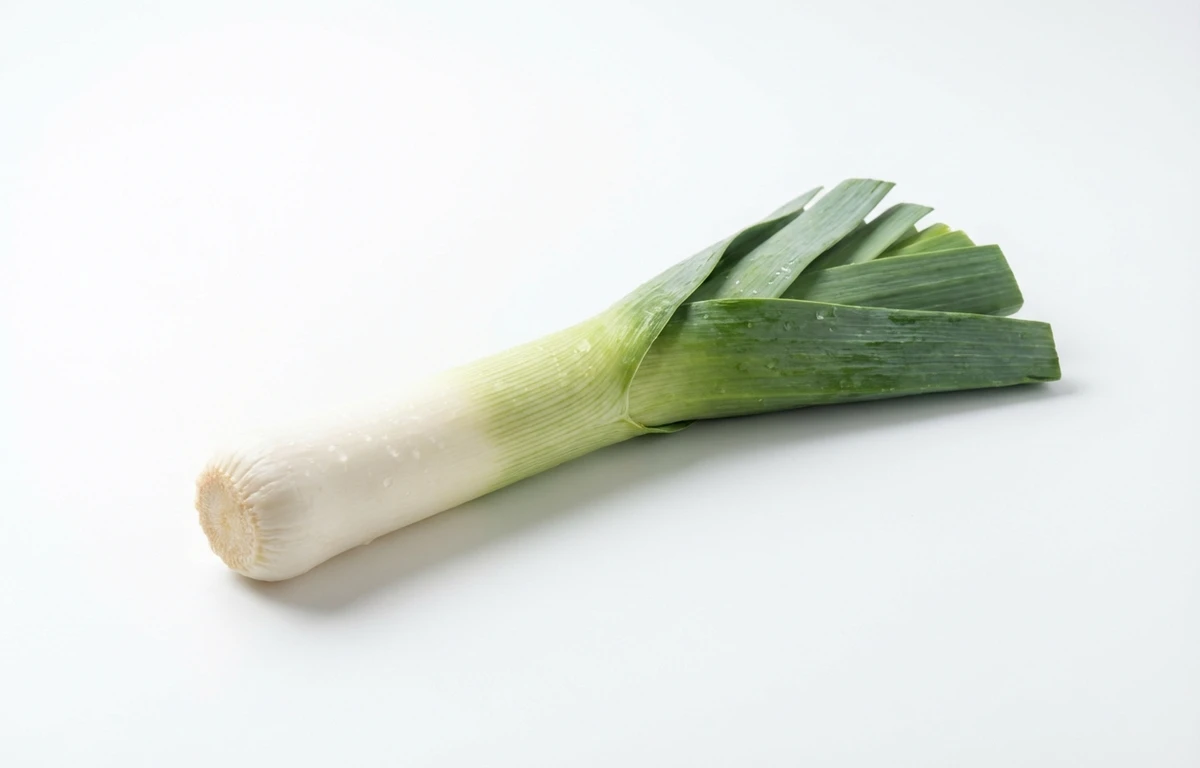
- 2The white and light green parts are the most tender and have a mild, sweet flavor, ideal for soups, stews, sautés, and gratins.
- 3The tougher, dark green tops are more fibrous but very flavorful. Do not discard them; use them to flavor stocks, broths, or in a bouquet garni.
- 4Cook leeks slowly over low to medium heat to 'sweat' them. This process softens them and brings out their natural sweetness without browning.
STORAGE
Keep it fresh.
- Store unwashed and untrimmed leeks in the crisper drawer of the refrigerator, loosely wrapped in a plastic bag, where they can last for up to two weeks.
- To prevent their odor from permeating other foods, you can wrap them in a damp paper towel before placing them in a bag.
- For longer storage, clean and slice leeks, then blanch for two minutes before freezing in an airtight container for up to 3 months.
FAQ
Frequently asked questions.
Is leek healthy?
Yes, leeks are very healthy. They are rich in antioxidants like kaempferol, vitamins K and A, and beneficial sulfur compounds. They also provide soluble fiber and prebiotics, supporting gut health and potentially protecting against chronic diseases like heart disease and cancer.
What are the nutritional benefits of leeks?
Leeks are low in calories (61 cal per 100g) and fat (0.3g), while offering a good amount of carbohydrates (14.1g) and some protein (1.5g). They are an excellent source of vitamin K, essential for blood clotting and bone health, and vitamin A (as beta-carotene), which supports vision and immune function.
Are leeks good for weight loss?
Yes, leeks can be beneficial for weight loss. They are low in calories and high in fiber, which helps promote satiety and healthy digestion. Their prebiotic content also supports a healthy gut microbiome, which can play a role in weight management.
Are leeks vegan and gluten-free?
Yes, leeks are naturally vegan and gluten-free. As a vegetable, they are suitable for plant-based diets and those avoiding gluten, making them a versatile ingredient for various dietary needs.
Are leeks keto-friendly?
Leeks contain 14.1g of carbohydrates per 100g, which is relatively high for strict ketogenic diets. While they offer good nutrients, they should be consumed in moderation if you are following a very low-carb or keto diet.
How do you clean and prepare leeks?
Leeks often trap dirt and sand between their layers. To clean, trim the root end and the tough dark green tops. Slice the leek lengthwise, then rinse thoroughly under cold running water, fanning out the layers to remove any trapped soil.
What do leeks taste like?
Leeks have a mild, sweet, and onion-like flavor, much gentler than onions or garlic. When cooked, they become very tender and develop a creamy texture, making them a versatile addition to soups, stews, and sautés.
Can leeks be eaten raw?
Yes, the tender white and light green parts of leeks can be eaten raw, often thinly sliced in salads or as a garnish. Raw leeks have a slightly pungent, peppery flavor that mellows significantly when cooked.
How do you store leeks?
Store unwashed leeks in the refrigerator, preferably in a plastic bag or wrapped loosely, to prevent them from drying out. They can last for up to 1-2 weeks when stored properly.
What part of the leek do you eat?
The white and light green parts of the leek are typically eaten, as they are the most tender and flavorful. The tough, dark green leaves are usually discarded or can be used to flavor stocks and broths.
RECIPES
Cook with leeks.
6 recipes · sorted by what’s quick