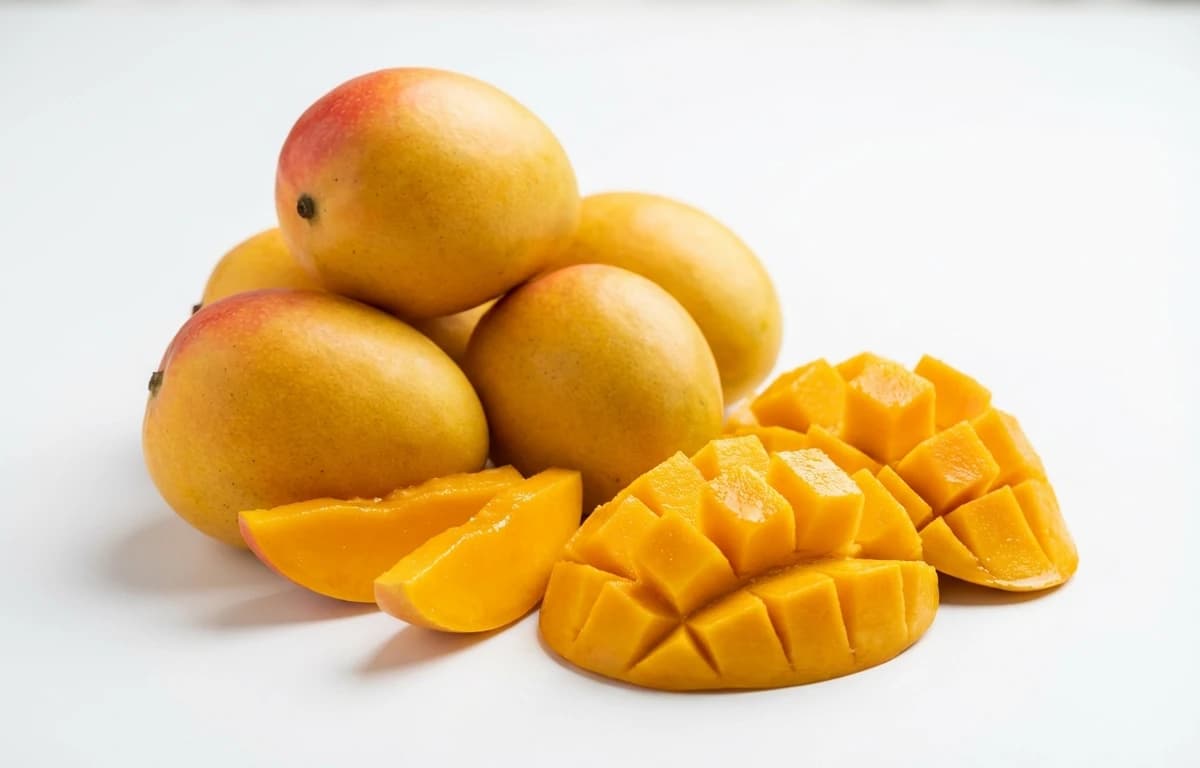
mangos
Also known as:
Loading...
Also known as:
Per 100g
Nutrition data source: USDA FoodData Central
Common measurement equivalents in grams
Yes, mangos are very healthy. They are packed with vitamins, minerals, and antioxidants, while being relatively low in calories. They support immune function, eye health, and digestion, making them a nutritious addition to any diet.
Mangos are an excellent source of Vitamin C, crucial for immunity and collagen production. They also provide Vitamin A (from beta-carotene) for vision, and antioxidants like mangiferin which protect cells. Additionally, they offer dietary fiber for digestive health.
Per 100g, mangos contain approximately 60 calories and 14.98g of carbohydrates. They are low in protein (0.82g) and fat (0.38g). A medium mango (around 200g) would therefore have roughly 120 calories and 30g of carbs.
Diabetics can eat mangos in moderation as part of a balanced diet. While mangos contain natural sugars, their fiber content helps slow sugar absorption. It's best to monitor portion sizes and consider pairing them with protein or healthy fats to manage blood sugar response.
Yes, mangos are naturally both vegan and gluten-free. As a fruit, they contain no animal products or gluten-containing grains, making them suitable for these dietary lifestyles without any special processing.
To cut a mango, stand it upright and slice down each side of the flat pit, creating two 'cheeks.' Score the flesh of each cheek in a grid pattern without cutting through the skin, then invert the cheek to pop out the cubes. You can also peel the mango and slice the flesh away from the pit.
A ripe mango has a sweet, tropical, and slightly tangy flavor with a creamy, juicy texture. Its taste can vary slightly by variety, often described as a blend of peach, pineapple, and apricot with floral notes, and a distinct fragrant aroma.
mangos is a versatile ingredient found in cuisines around the world. With 60 calories per 100g and 0.82 grams of protein, it's a nutritious addition to many dishes.
Explore more ingredients in the other category with complete nutrition information.
View all other →Store unripe mangos at room temperature until they soften and develop a fruity aroma. Once ripe, mangos can be stored in the refrigerator for up to five days to extend their freshness. A ripe mango will yield slightly to gentle pressure and often have a sweet smell near the stem.
While mango skin is technically edible, it's generally not recommended for consumption. It contains urushiol, the same compound found in poison ivy, which can cause an allergic reaction or skin irritation in some individuals. The skin also has a bitter taste and tough texture.
Yes, some people can experience an allergic reaction to mangos, particularly to the skin. This is often due to urushiol, which can cause contact dermatitis. In rare cases, consuming the fruit itself can also trigger oral allergy syndrome or other allergic symptoms.