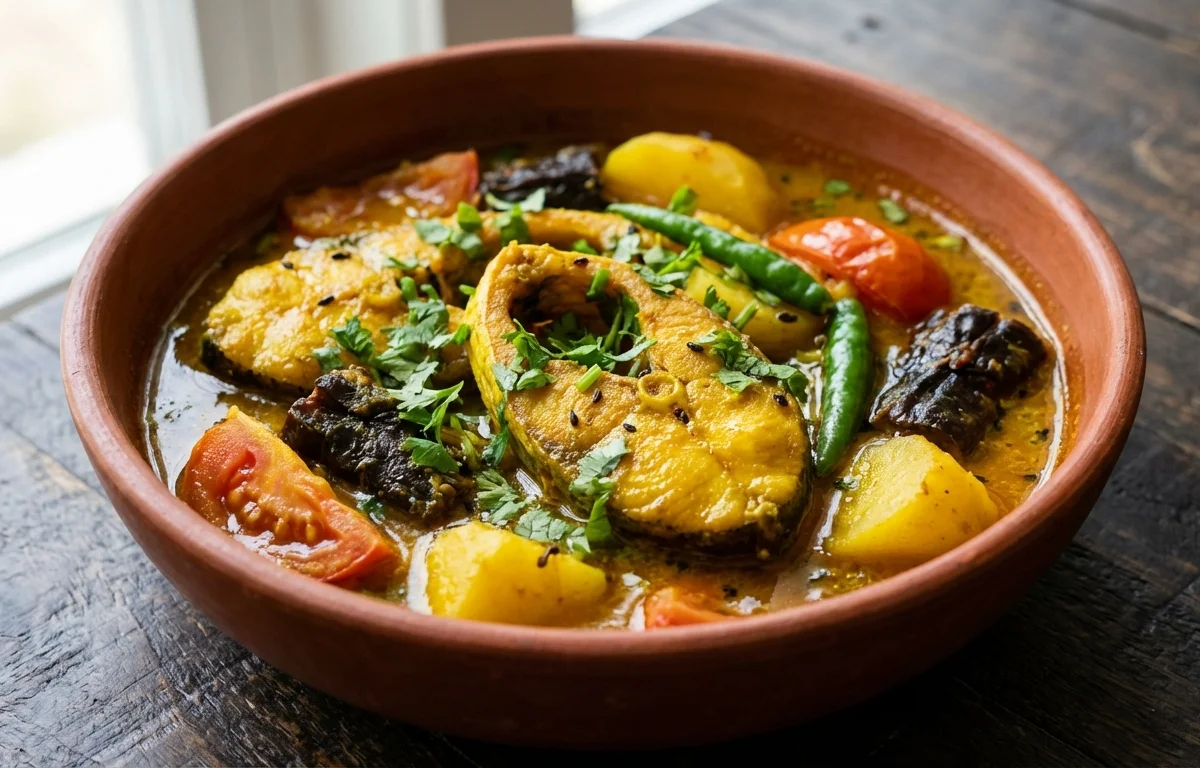
Thekera Tenga
A light, tangy Assamese fish curry made with dried thekera for its gentle sourness. The broth stays clean and delicate, letting the fish, mustard oil, and soft citrusy notes shine without feeling heavy.
For 4 servings
- prep · ~10 min
Soak the thekera and season the fish.
1.Rinse the dried thekera slices well and soak them in warm water for 10 minutes.2.Rub the fish pieces with turmeric powder and salt.3.Set the fish aside while the thekera softens.TIPA quick soak helps the thekera release its sourness evenly into the curry. - fry · ~5 min
Lightly fry the fish.
1.Heat mustard oil in a pan until it just starts to smoke lightly, then lower the heat.2.Add the fish pieces in a single layer.3.Fry them lightly on both sides for 1 to 2 minutes without fully cooking through.4.Take the fish out gently and keep aside.TIPDo not over-fry the fish or it may break apart when it simmers in the broth. - boil · ~6 min
Make the sour broth.
1.In the same pan, add water and the soaked thekera along with its soaking liquid.2.Add the slit green chili and bring the liquid to a boil.3.Let it boil for 4 to 5 minutes so the broth turns lightly tangy. - simmer · ~8 min
Simmer the fish in the broth.
Slide the fish pieces into the pan and simmer gently for 6 to 8 minutes, until the fish is cooked through and the flavors come together. The broth should stay light and clear.
TIPKeep the heat gentle and shake the pan lightly instead of stirring too much. - serve
Serve the Thekera Tenga hot.
What to keep in mind.
8 tips from the recipe — small details that make a real difference to the final dish.
- 1Pat the fish dry before rubbing with turmeric and salt so it fries lightly instead of steaming.
- 2Heat the mustard oil until it just smokes, then reduce the heat to mellow its raw sharpness before adding fish.
- 3Do only a light fry; the fish should still be undercooked when removed so it finishes gently in the broth.
- 4Use a wide pan and keep the fish in one layer to prevent the steaks from breaking while simmering.
- 5Add thekera with its soaking liquid, since that water carries much of the fruit's gentle sourness.
- 6Avoid vigorous stirring once the fish goes back in; swirl or shake the pan to keep the broth clear.
- 7If the curry turns too sour, add a little hot water and simmer briefly rather than adding more salt.
- 8This curry tastes best fresh, but leftovers can be refrigerated for a day and reheated very gently.
Adapt it for your goals.
Low-oil
Skip the pre-fry and poach the fish directly in the thekera broth for a lighter everyday version, handling the pieces very gently.
spicierSpicier
Add extra slit green chilies for more heat while keeping the curry's clean Assamese style intact.
bonelessBoneless
Use firm boneless fish fillets if you want easier serving, especially for children or guests unfamiliar with river fish bones.
mixed tengaMixed-tenga
Combine thekera with a little tomato for a slightly fuller sourness while still keeping the broth light.
Why this is on our healthy list.
Light, non-creamy curry
This dish uses a clear broth instead of cream, coconut, or heavy gravies, making it feel light and easy to enjoy.
Good source of fish protein
The fish provides satisfying protein, making the curry nourishing while still keeping the overall preparation delicate.
Minimal ingredient cooking
With just fish, thekera, mustard oil, chili, and basic seasoning, the dish relies on simple whole ingredients rather than rich additions.
Frequently asked questions
Thekera gives a gentle, clean sourness that is softer and more rounded than lemon or tamarind, which suits the light fish broth.