Loading...
Per 100g
Nutrition data source: USDA FoodData Central
Common measurement equivalents in grams

Tender pieces of mutton liver marinated in a rich, spicy yogurt blend and grilled to perfection. This smoky appetizer is a classic North Indian delight, perfect with a squeeze of lemon and mint chutney.

Tender, juicy minced mutton meatballs packed with aromatic spices and fried to golden perfection. A classic Mughlai appetizer that melts in your mouth, perfect with mint chutney.

Juicy, spiced chicken seekh kebabs, grilled to perfection and wrapped in a soft paratha with tangy mint chutney and crisp onions. A popular Indian street food that's incredibly satisfying and easy to make at home.

Crispy, warm samosas crushed and topped with tangy tamarind chutney, spicy mint chutney, creamy yogurt, and crunchy sev. A beloved Indian street food that's an explosion of flavors and textures in every bite.
Yes, mint chutney offers several health benefits. It aids digestion, is rich in antioxidants from herbs like mint and cilantro, and contains anti-inflammatory compounds from ginger and garlic. It also provides Vitamin C from lemon juice, supporting immune function.
Per 100g, mint chutney typically contains around 85 calories and 8g of carbohydrates. It also provides 3.5g of protein and 5g of fat, making it a relatively low-calorie condiment.
Yes, mint chutney is known for its digestive benefits. The mint helps soothe the stomach and relieve indigestion, while ginger can aid in nutrient absorption and reduce nausea.
Generally, yes, traditional mint chutney is vegan. It's typically made from fresh herbs, spices, ginger, garlic, and lemon juice, all plant-based ingredients. Always check the label if buying pre-made, as some might contain dairy.
Yes, homemade mint chutney is naturally gluten-free as its primary ingredients (mint, cilantro, ginger, garlic, spices, lemon juice) do not contain gluten. When purchasing store-bought versions, it's always best to check the ingredient list for any hidden gluten-containing additives.
With 8g of carbohydrates per 100g, mint chutney can be consumed in moderation on a keto diet, especially in smaller serving sizes. However, individuals strictly limiting carbs should be mindful of portion sizes, as the carb content can add up.
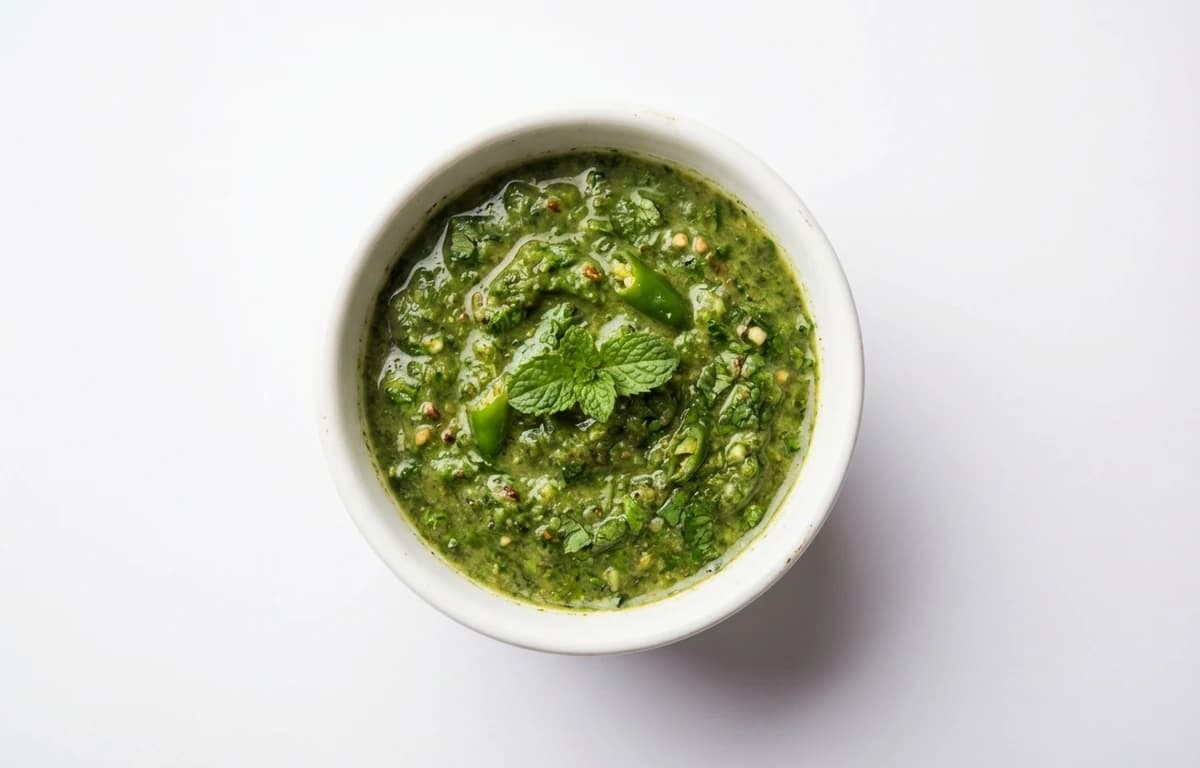
Mint chutney has a vibrant, fresh, and tangy flavor profile. It's characterized by the cooling sensation of mint, the bright notes of cilantro, a zesty kick from lemon or lime, and a subtle warmth from ginger and green chilies.
mint chutney is a versatile ingredient found in cuisines around the world. With 85 calories per 100g and 3.5 grams of protein, it's a nutritious addition to many dishes.
Explore more ingredients in the vegetable category with complete nutrition information.
View all vegetable →Discover 10 recipes featuring mint chutney with step-by-step instructions.
Browse recipes →Mint chutney is incredibly versatile. It's a popular condiment for Indian snacks like samosas and pakoras, a spread for sandwiches and wraps, a marinade for grilled meats or paneer, or a refreshing dip for vegetables.
Store homemade mint chutney in an airtight container in the refrigerator. Ensure it's tightly sealed to maintain freshness and prevent it from absorbing other odors.
Freshly made mint chutney typically lasts for about 3-5 days when stored properly in the refrigerator. For longer storage, it can be frozen in ice cube trays and then transferred to a freezer bag, lasting up to 2-3 months.