
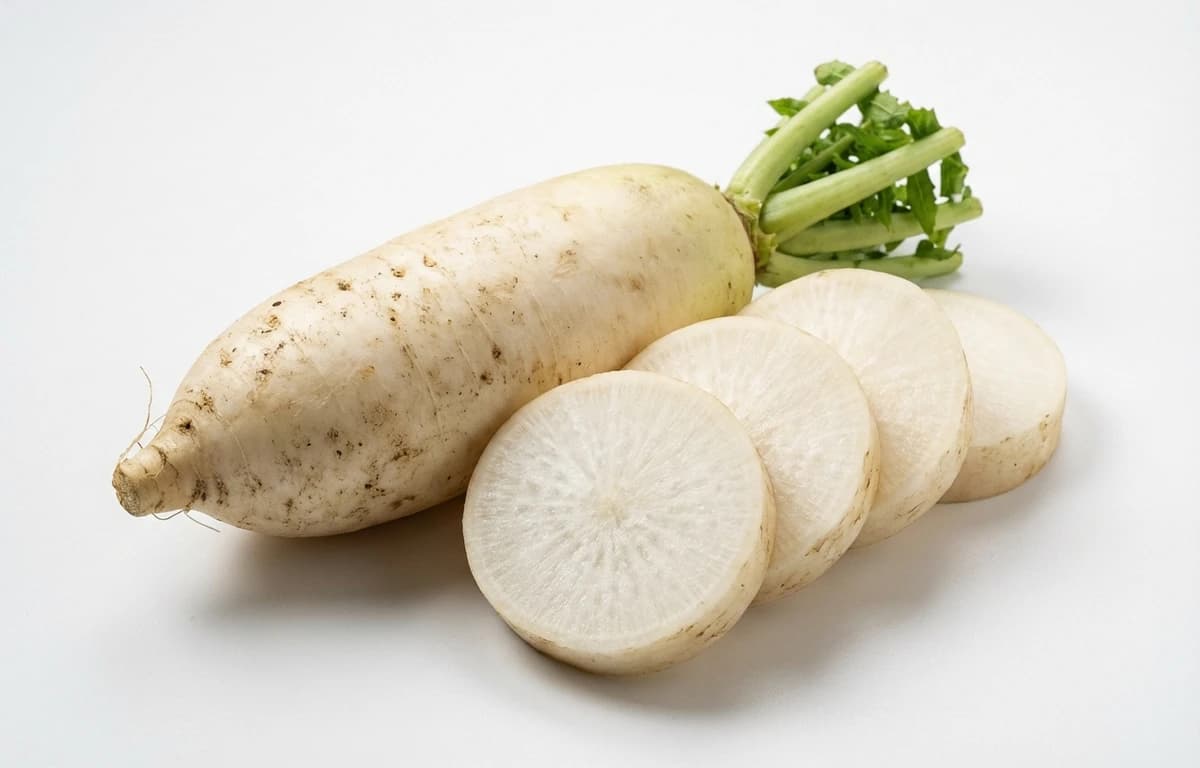
moolangi
Also known as:
Loading...
Also known as:
Per 100g
Nutrition data source: USDA FoodData Central
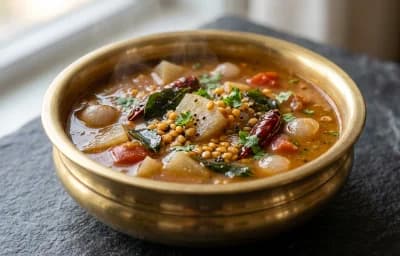
A comforting South Indian lentil stew where tender radish chunks are simmered in a tangy tamarind broth with aromatic spices. This wholesome and flavorful dish is a perfect accompaniment to steamed rice, idli, or dosa.

A simple and wholesome South Indian stir-fry made with daikon radish, crunchy lentils, and fresh coconut. This traditional Udupi-Mangalorean side dish is quick, easy, and pairs perfectly with rice and sambar.
Yes, moolangi is very healthy. It's rich in dietary fiber, Vitamin C, and beneficial enzymes, while being very low in calories. It supports digestion, boosts immunity, and contributes to overall well-being.
Moolangi is an excellent source of Vitamin C, which acts as a powerful antioxidant. It also provides dietary fiber for gut health and contains enzymes like amylase and esterase that aid digestion. Per 100g, it offers only 18 calories, 0.6g protein, 4.1g carbs, and 0.1g fat.
Yes, moolangi is beneficial for weight loss. It is very low in calories and high in water content, which helps with hydration and satiety. Its fiber content also aids digestion and can help you feel full longer, reducing overall calorie intake.
Yes, moolangi is naturally vegan as it is a plant-based vegetable. It is also inherently gluten-free, making it suitable for individuals following vegan or gluten-free diets.
Yes, moolangi is a good choice for diabetics. It has a low glycemic index and is low in carbohydrates (4.1g per 100g), which helps manage blood sugar levels. Its fiber content can also contribute to better glucose control.
Moolangi can be enjoyed in various ways. It can be eaten raw in salads, grated into raitas, or pickled. Cooked, it can be stir-fried, added to curries, soups, or stews, and even roasted to mellow its pungent flavor.
Moolangi, or radish, typically has a crisp texture and a pungent, peppery flavor when raw, which can vary in intensity depending on the variety. When cooked, its flavor becomes milder and slightly sweeter.
moolangi is a versatile ingredient found in cuisines around the world. With 18 calories per 100g and 0.6 grams of protein, it's a nutritious addition to many dishes.
Explore more ingredients in the vegetable category with complete nutrition information.
View all vegetable →To store moolangi, remove the greens (if attached) to prevent moisture loss, then place the radishes in a perforated plastic bag or a container with a damp paper towel. Store them in the refrigerator's crisper drawer, where they can last for 1-2 weeks.
Yes, moolangi is commonly eaten raw. Its crisp texture and peppery bite make it a popular addition to salads, sandwiches, and as a crunchy garnish. Eating it raw preserves its full Vitamin C content.
Glucosinolates are sulfur-containing compounds found in moolangi and other cruciferous vegetables. These compounds are responsible for the radish's pungent flavor and are being studied for their potential anti-inflammatory and anti-cancer properties, contributing to the vegetable's health benefits.