
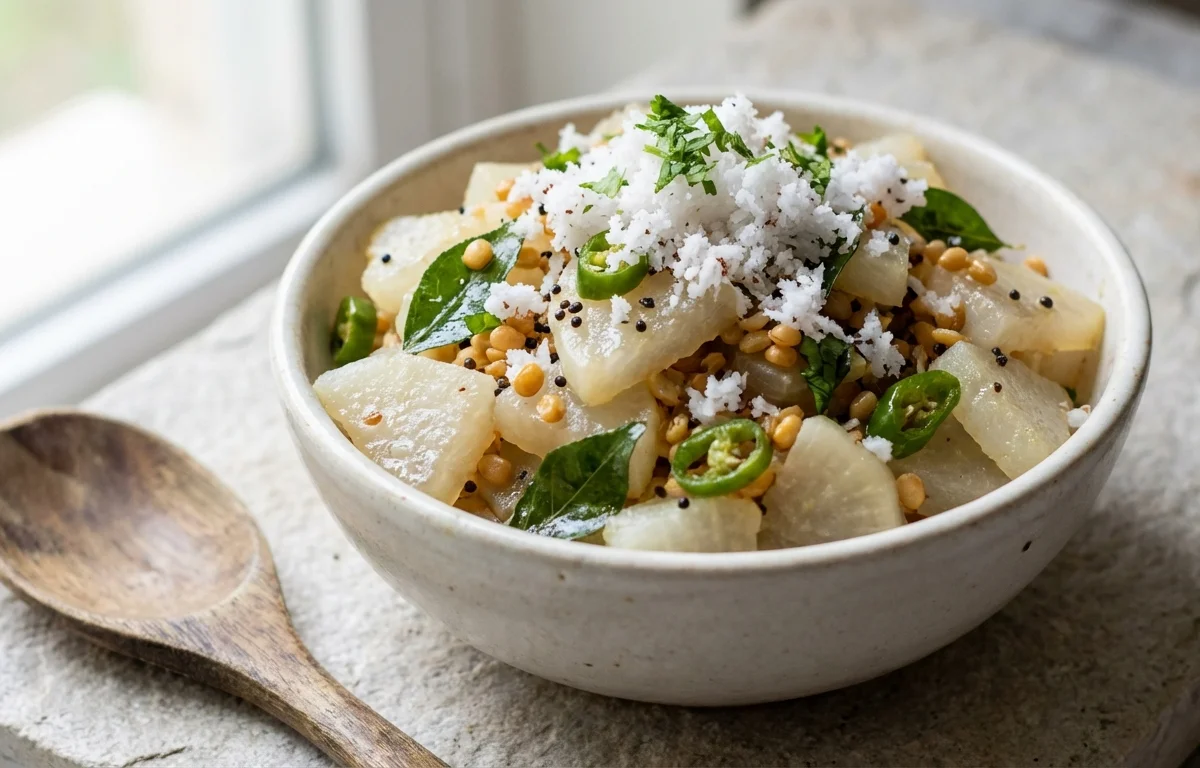
Moolangi Upkari
A simple and quick Konkani-style stir-fry made with tender white radish, delicately seasoned with a tempering of mustard seeds, curry leaves, and green chili. Lightly cooked until just soft, with a hint of jaggery to balance the natural peppery notes of the radish. This everyday side dish comes together in under 20 minutes and pairs perfectly with dal and rice.
For 4 servings
- prep · ~5 min
Peel and dice the radish.
Wash the moolangi thoroughly, peel the skin and dice into small uniform cubes. Even-sized pieces ensure they cook at the same rate.
- temper · ~2 min
Make the tempering.
1.Heat oil in a kadai over medium heat.2.Add mustard seeds and let them splutter (30 sec).3.Add urad dal and sauté until light golden (30 sec).4.Add curry leaves, broken dry red chilies, green chili, and asafoetida (10 sec). - saute · ~2 min
Sauté the radish with spices.
1.Add the diced radish and turmeric powder to the pan.2.Stir gently so the radish is coated with the tempering and turmeric.3.Sprinkle salt and grated jaggery. Mix well.TIPThe jaggery balances the sharp, peppery bite of the radish without making it sweet — don't skip it. - simmer · ~7 min
Cover and cook until tender.
1.Sprinkle 2 tablespoons of water over the radish.2.Cover the pan with a lid and cook on low heat for 5–7 minutes.3.Check halfway — the radish should steam in its own moisture.4.Uncover and cook off any remaining water until the dish is dry.TIPKeep the heat low; radish releases water and can burn if the pan dries out too fast. - garnish · ~2 min
Finish with coconut and lemon juice.
Switch off the heat. Add fresh grated coconut and lemon juice. Give a gentle mix and let it rest covered for 2 minutes so the flavors meld.
- serve
Serve hot with rice and dal.
Transfer to a serving bowl. Enjoy as a side dish with steamed rice and your favorite dal or sambar.
What to keep in mind.
6 tips from the recipe — small details that make a real difference to the final dish.
- 1Cut the radish into uniform ½-inch cubes so they cook evenly without some pieces turning mushy.
- 2Do not skip the jaggery — it counteracts the natural piquancy of the radish without making the dish sweet.
- 3If fresh coconut is unavailable, substitute with frozen grated coconut (thawed) for the same texture.
- 4Cook on low heat after adding water; radish releases its own moisture and can scorch if the pan dries out too quickly.
- 5Let the upkari rest covered for 2 minutes after adding coconut and lemon juice to meld the flavors.
- 6This dish tastes best fresh but can be refrigerated for up to 2 days; reheat gently on a skillet to avoid sogginess.
Adapt it for your goals.
No-jaggery
Omit the jaggery entirely for a more pungent, savory version of this upkari that emphasizes the natural heat of the radish — ideal for those who prefer a less sweet side dish.
coconut freeCoconut-free
Skip the fresh coconut garnish for a lighter, nut-free variation that still retains all the tempering-driven flavor. Great for those avoiding coconut or looking for a lower-fat option.
spicier upkariSpicier upkari
Add an extra slit green chili or a pinch of red chili flakes along with the tempering to amp up the heat for spice lovers.
high proteinHigh-protein
Stir in a handful of cooked chana dal or roasted peanuts in step 3 for extra protein and texture, making it a more substantial side.
south indian fusionSouth indian fusion
Add 1 tablespoon of fresh grated ginger along with the curry leaves for a zesty twist that complements the radish's flavor.
Why this is on our healthy list.
Rich in Digestive Fibre
White radish provides a good amount of dietary fibre, which aids digestion and promotes a healthy gut.
Low in Calories
This stir-fry uses minimal oil and relies on radish's natural water content, making it a light, low-calorie side dish suitable for weight management.
Packed with Antioxidants
Ingredients like curry leaves, turmeric, and asafoetida are rich in antioxidants that help combat oxidative stress and support overall well-being.
Natural Hydration
Radish has high water content, which helps keep you hydrated and supports kidney function.
Contains Essential Minerals
Radish provides small amounts of potassium and magnesium, which are important for heart health and muscle function.
Frequently asked questions
Yes, daikon (white radish) is essentially the same vegetable and works perfectly. Just ensure it is fresh and not spongy for the best texture.



.webp)
.webp)