
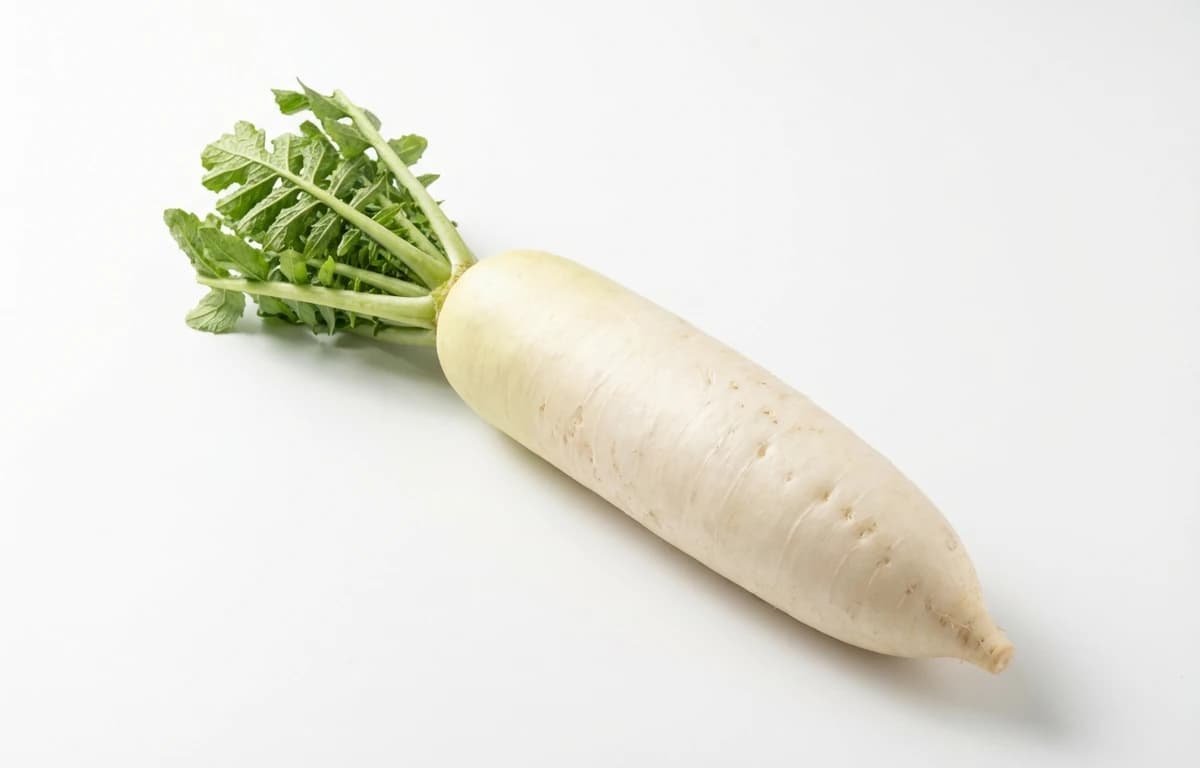
mullangi
Also known as:
Loading...
Also known as:
Per 100g
Nutrition data source: USDA FoodData Central
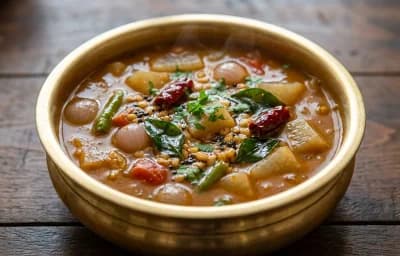
A hearty and aromatic South Indian lentil stew featuring the unique, sharp flavor of radish. This tangy and spicy sambar is a perfect comfort food, wonderful with steamed rice, idli, or dosa.
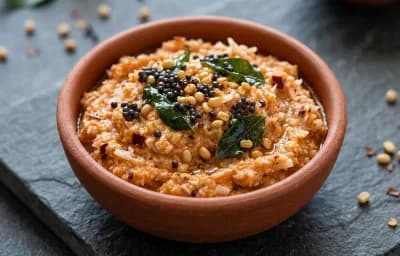
A zesty and savory South Indian condiment made from sautéed radish, lentils, and spices. This vibrant chutney, known as Mullangi Chutney, has a unique flavor that pairs perfectly with dosa, idli, or mixed with hot rice and ghee.
Yes, mullangi (radish) is very healthy. It's rich in Vitamin C, which supports immune function and skin health, and a good source of dietary fiber, aiding digestion. It's also low in calories and high in water content, making it beneficial for overall well-being.
Mullangi is low in calories, with 100g containing only 18 calories, 0.6g protein, 4.1g carbs, and 0.1g fat. It's an excellent source of Vitamin C, providing immune support, and dietary fiber, which aids digestion. It also contains beneficial enzymes and antioxidants like glucosinolates.
Yes, mullangi is excellent for weight loss. It's very low in calories and high in water content, helping you feel full without consuming many calories. Its fiber content also promotes satiety and healthy digestion, further supporting weight management.
Yes, mullangi is naturally both vegan and gluten-free. As a root vegetable, it contains no animal products or gluten-containing grains, making it suitable for a wide range of dietary preferences and restrictions.
Yes, mullangi is a good choice for diabetics. It has a low glycemic index and is low in carbohydrates (4.1g per 100g), which helps manage blood sugar levels. Its fiber content also contributes to better glucose control.
Yes, mullangi is considered keto-friendly. With only 4.1g of carbohydrates per 100g, it's a low-carb vegetable that can be incorporated into a ketogenic diet. It adds crunch and flavor without significantly impacting carb intake.
Mullangi can be enjoyed in various ways. It can be eaten raw in salads, pickled, or cooked in stir-fries, curries, and soups. Common preparations include grating it for raita, sautéing it with spices, or adding it to sambar.
mullangi is a versatile ingredient found in cuisines around the world. With 18 calories per 100g and 0.6 grams of protein, it's a nutritious addition to many dishes.
Explore more ingredients in the vegetable category with complete nutrition information.
View all vegetable →Mullangi, or radish, typically has a crisp texture and a pungent, peppery, slightly bitter taste when raw. Cooking it mellows the flavor, making it sweeter and less sharp. The intensity can vary by variety.
To store mullangi, remove the greens (if attached) as they draw moisture from the root. Place the radishes in a perforated plastic bag or a container with a damp paper towel in the refrigerator. They can last for 1-2 weeks.
Yes, mullangi can be eaten raw and is a popular addition to salads, slaws, and as a crunchy snack. Eating it raw preserves its crisp texture and pungent flavor, along with its full vitamin C content.