
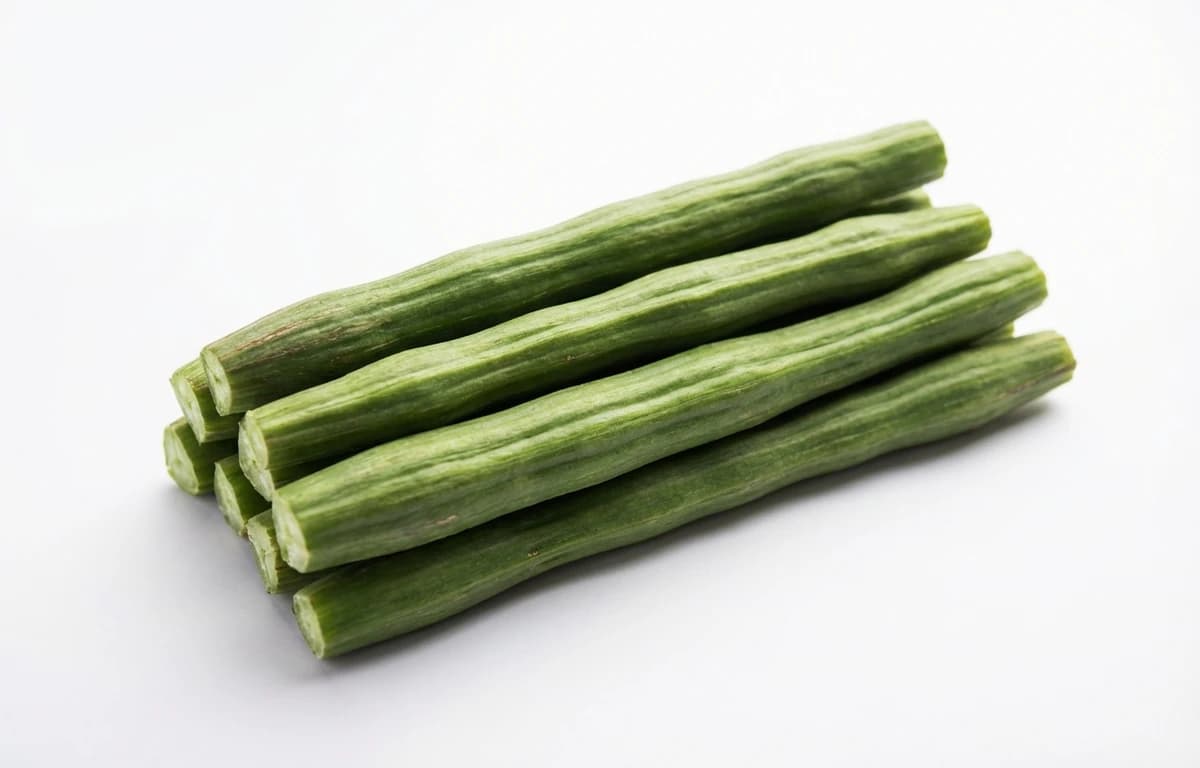
munakkaya
Also known as:
Loading...
Also known as:
Per 100g
Nutrition data source: USDA FoodData Central
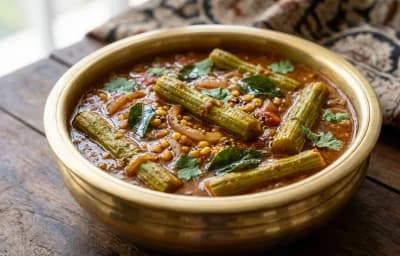
A classic Andhra-style curry featuring tender drumsticks simmered in a spicy and tangy onion-tomato gravy. This flavorful dish is a staple in South Indian homes and pairs perfectly with hot steamed rice.
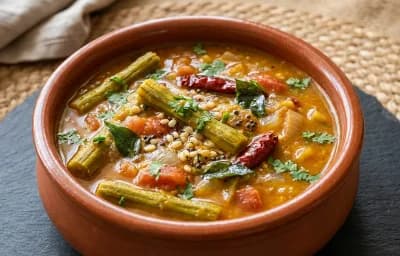
A tangy and spicy lentil stew from Andhra Pradesh, featuring tender drumstick pieces simmered with toor dal and a special blend of spices. This classic South Indian dish is a perfect accompaniment to steamed rice, idli, or dosa.
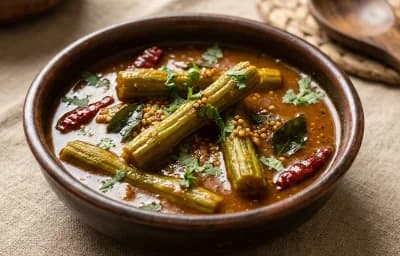
A classic Andhra stew featuring tender drumsticks simmered in a tangy tamarind broth, balanced with a hint of jaggery and spices. This pulusu is a comforting and flavorful dish, perfect with hot rice.
Yes, munakkaya (moringa drumstick) is highly nutritious. It's packed with Vitamin C, calcium, iron, and phosphorus, supporting immunity and bone health. Its high fiber content also aids digestion and promotes gut health.
Per 100g, munakkaya contains only 37 calories, 2.1g protein, 8.53g carbs, and 0.2g fat. It's an excellent source of Vitamin C, calcium, iron, and phosphorus, contributing to overall well-being and strong bones. It also possesses antioxidant and anti-inflammatory properties.
Yes, munakkaya can be beneficial for weight loss. It is very low in calories and fat, while being high in dietary fiber. Fiber helps promote satiety, reducing overall calorie intake and supporting digestive health.
Yes, munakkaya is a vegetable derived from the moringa tree, making it naturally vegan and suitable for vegetarian diets. It is a plant-based ingredient.
Yes, munakkaya is naturally gluten-free. As a fresh vegetable, it does not contain any gluten-containing grains or ingredients, making it safe for individuals with gluten sensitivities or celiac disease.
Yes, munakkaya can be a good addition to a diabetic diet. Its high fiber content helps regulate blood sugar levels, and it has a relatively low glycemic index. Always consult a doctor or dietitian for personalized dietary advice.
Munakkaya is commonly used in curries, sambar, and stews, especially in South Indian cuisine. It can be boiled, steamed, or added directly to dishes to absorb flavors. The pods are typically cut into smaller pieces before cooking.
munakkaya is a versatile ingredient found in cuisines around the world. With 37 calories per 100g and 2.1 grams of protein, it's a nutritious addition to many dishes.
Explore more ingredients in the vegetable category with complete nutrition information.
View all vegetable →Munakkaya has a unique, slightly bitter yet subtly sweet and earthy flavor. When cooked, it absorbs the flavors of the spices and gravies it's prepared with, offering a distinct taste and tender, fibrous texture.
Fresh munakkaya pods can be stored in the refrigerator for up to a week. Wrap them in a damp cloth or place them in a perforated plastic bag to maintain freshness and prevent drying out.
Generally, you don't need to fully peel munakkaya. The outer skin is edible, but many people scrape off the tougher, fibrous ridges with a peeler or knife before cooking to improve texture and make it easier to eat.