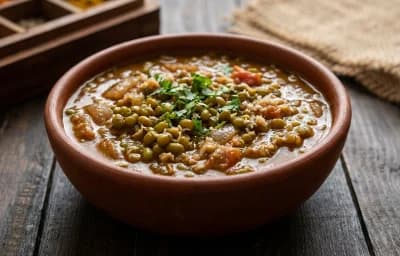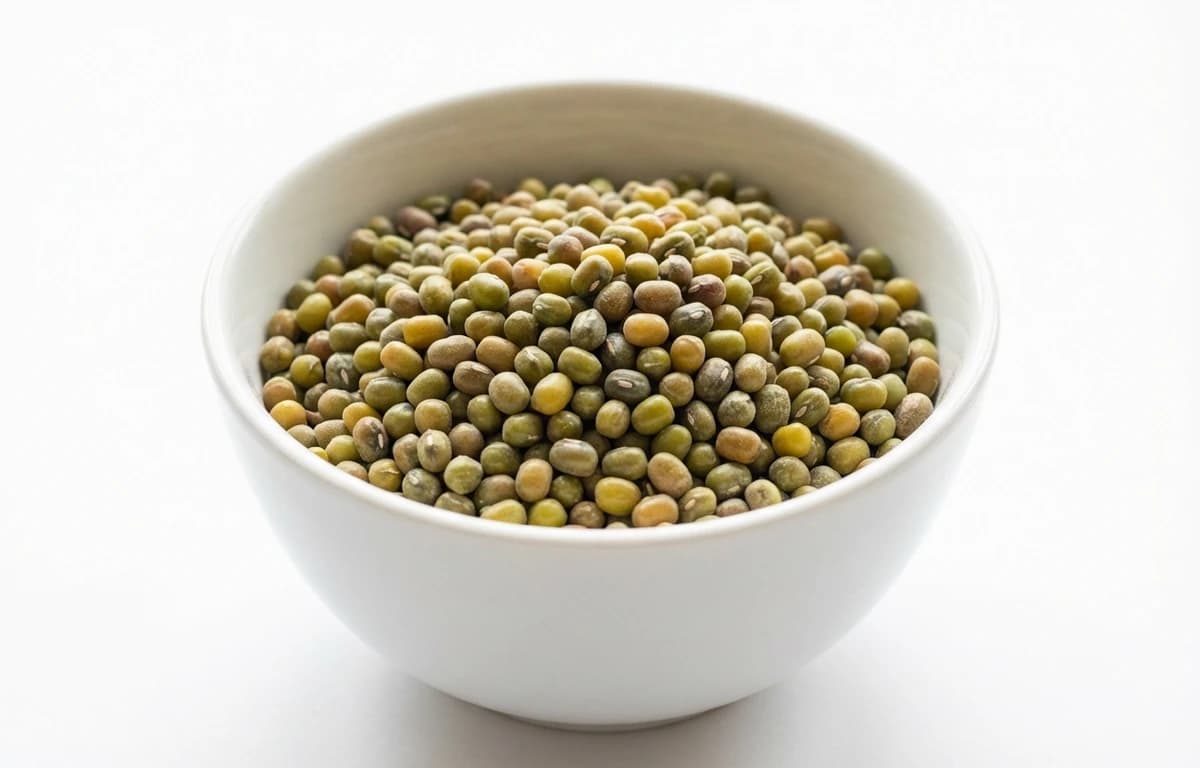
mung beans
Also known as: whole green gram, green gram
Loading...
Also known as: whole green gram, green gram
Per 100g
Nutrition data source: USDA FoodData Central
Common measurement equivalents in grams
A refreshing, tangy, and crunchy salad made with sprouted mung beans, cucumber, and puffed rice. This renal-friendly version is completely salt-free, getting its zesty flavor from lemon and dry mango powder, making it a perfect light snack.
A refreshing and crunchy salad with sprouted mung beans, fresh veggies, and a zesty lime dressing. It's a light, protein-packed meal that's ready in minutes and bursting with flavor.
A refreshing and protein-packed salad with crisp sprouted mung beans, fresh vegetables, and a zesty lemon dressing. This light and healthy dish is perfect for a quick lunch or a nutritious snack, ready in just 15 minutes.
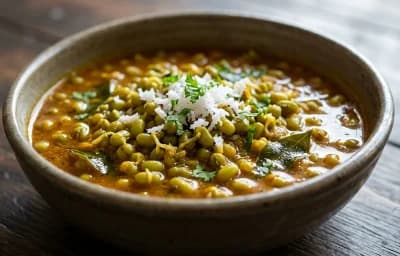
A wholesome Maharashtrian curry made with sprouted mung beans, coconut, and a special blend of spices. This rustic and flavorful dish is both nutritious and delicious, perfect with bhakri or rice.
Yes, mung beans are highly nutritious. They are rich in fiber and protein, promoting satiety and aiding digestion. They also contain antioxidants, potassium, and magnesium, which support heart health and may protect against chronic diseases.
100 grams of dry mung beans contain approximately 347 calories, 23.86 grams of protein, and 62.62 grams of carbohydrates. They are also very low in fat, with only about 1.15 grams per 100g.
Yes, mung beans can be beneficial for weight loss. Their high fiber and protein content helps you feel full longer, reducing overall calorie intake. The resistant starch and soluble fiber also support a healthy metabolism.
Yes, mung beans are naturally vegan and vegetarian. They are a plant-based legume, making them an excellent source of protein and nutrients for those following plant-based diets.
Yes, mung beans are naturally gluten-free. They are a safe and nutritious option for individuals with celiac disease or gluten sensitivity.
No, mung beans are not considered keto-friendly. While they offer good protein and fiber, their high carbohydrate content (over 60g per 100g dry) makes them unsuitable for a strict ketogenic diet.
To cook dry mung beans, rinse them thoroughly and then boil them in water (typically 1 part beans to 3 parts water) for about 20-30 minutes until tender. Soaking them for a few hours beforehand can reduce cooking time. They can be used in soups, stews, curries, or salads.
mung beans is a versatile ingredient found in cuisines around the world. With 347 calories per 100g and 23.86 grams of protein, it's a nutritious addition to many dishes.
Explore more ingredients in the protein category with complete nutrition information.
View all protein →Mung beans have a mild, slightly sweet, and earthy flavor with a soft, creamy texture when cooked. They readily absorb the flavors of spices and other ingredients, making them versatile in various cuisines.
Dry mung beans should be stored in an airtight container in a cool, dark, and dry place, where they can last for up to a year or more. Cooked mung beans can be refrigerated in an airtight container for 3-5 days or frozen for several months.
Yes, mung beans are commonly sprouted and are a popular ingredient in many dishes, especially in Asian cuisine. Sprouting enhances their nutritional value, making some nutrients more bioavailable, and gives them a crisp texture.