
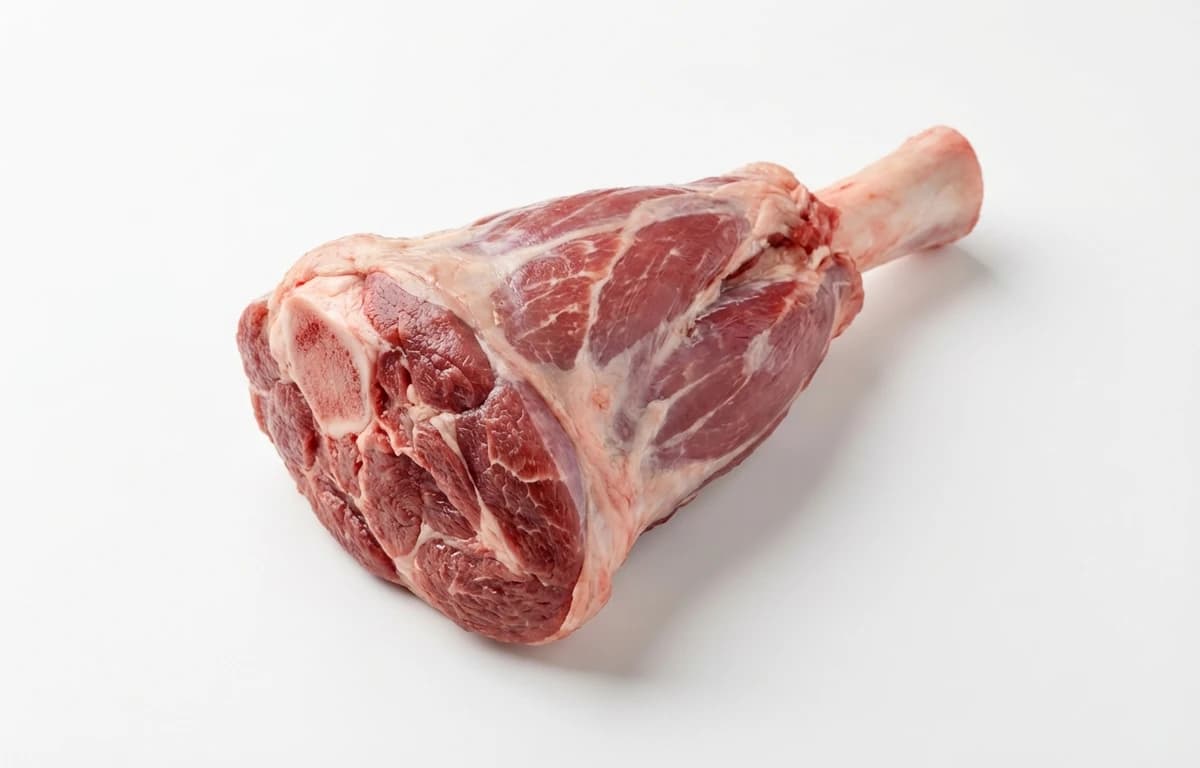
Mutton Shank
Also known as:
Loading...
Also known as:
Per 100g
Nutrition data source: USDA FoodData Central
Common measurement equivalents in grams
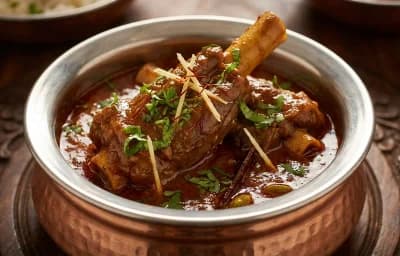
Fall-off-the-bone tender mutton shanks slow-cooked in a rich, aromatic gravy infused with saffron and whole spices. This luxurious Mughlai delicacy is a true celebration of flavor, perfect for special occasions.
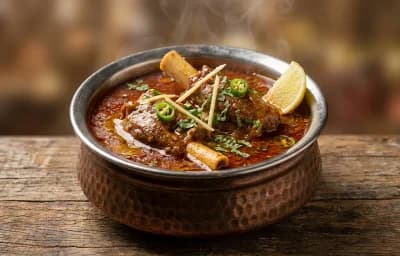
A rich, slow-cooked mutton shank curry, where the meat becomes incredibly tender and melts in your mouth. This iconic Mughlai dish is aromatic with a blend of whole spices and is traditionally enjoyed with fresh naan.
Yes, mutton shank is a nutrient-dense protein source that provides 26g of protein per 100g. It is rich in essential minerals like iron and zinc, though it should be consumed in moderation as part of a balanced diet due to its saturated fat content.
A 100g serving of mutton shank contains approximately 170 calories and 26g of high-quality protein. It contains 0g of carbohydrates and about 8g of fat, making it a high-protein, low-carb food option.
Mutton shank is an excellent source of Vitamin B12 for nerve function and iron for oxygen transport in the blood. It also provides zinc for immune support and selenium, an antioxidant that helps maintain thyroid health.
Yes, mutton shank is very keto-friendly because it contains zero carbohydrates and a moderate amount of fat. It is an ideal protein source for those following ketogenic or other low-carb lifestyles.
Naturally, mutton shank is 100% gluten-free as it is a pure animal protein. However, always check the ingredients in pre-packaged marinades or sauces, as these may contain gluten-based thickeners.
Because the shank is a hardworking muscle with significant connective tissue, it is best cooked using 'low and slow' methods like braising or stewing. Slow cooking for several hours breaks down the collagen, resulting in tender, fall-off-the-bone meat.
Mutton shank has a rich, robust, and slightly gamey flavor that is more intense than lamb. When slow-cooked, it develops a deep savory profile and a succulent, tender texture.
Mutton Shank is a versatile ingredient found in cuisines around the world. With 170 calories per 100g and 26 grams of protein, it's a nutritious addition to many dishes.
Explore more ingredients in the meat category with complete nutrition information.
View all meat →Discover 1 recipes featuring mutton shank with step-by-step instructions.
Browse recipes →Yes, lamb shank is the most common substitute for mutton shank. While lamb is milder in flavor and cooks slightly faster, both cuts have a similar bone-in structure and benefit from the same slow-cooking techniques.
Raw mutton shank can be stored in the refrigerator for 3 to 5 days if kept in its original packaging or an airtight container. Once cooked, it should be consumed within 3 to 4 days for optimal safety and flavor.
Fresh mutton shank should be deep red with a neutral scent. If the meat develops a greyish or brownish tint, feels slimy or sticky to the touch, or emits a sour, pungent odor, it has spoiled and should be discarded.