Nalli Nihari
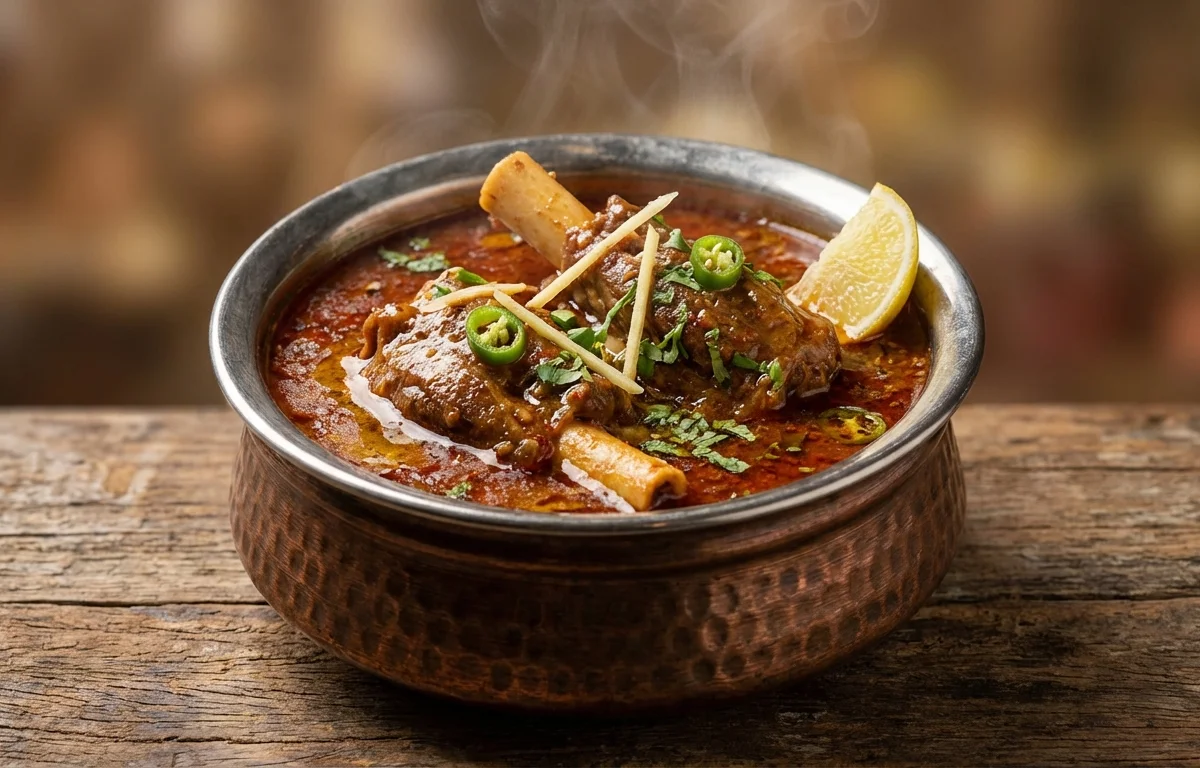
Slow-cooked mutton shanks simmered with browned onions, warm spices, and a light flour-thickened gravy until the marrow turns silky and rich. This old Delhi style curry is deeply savory and best enjoyed with naan or kulcha.
For 4 servings
- prep · ~10 min
Prep the meat and slurry.
1.Pat the mutton shanks dry so they brown better.2.Whisk the yogurt until smooth.3.Mix the whole wheat flour with 3 tbsp water to make a lump-free slurry.4.Keep the hot water ready for cooking.TIPA smooth slurry thickens the gravy evenly and keeps lumps out. - saute · ~13 min
Brown the onions and whole spices.
1.Heat ghee and oil in a heavy pot over medium heat.2.Add bay leaf, green cardamom, cloves, and cinnamon and cook until fragrant (30 seconds).3.Add the sliced onions and cook until deep golden brown (10-12 minutes).TIPTake the onions to a rich brown, not dark brown, or the gravy can taste bitter. - saute · ~6 min
Build the masala base.
1.Add ginger-garlic paste and cook until the raw smell goes away (1 minute).2.Lower the heat and stir in yogurt a little at a time.3.Add red chili powder, turmeric powder, coriander powder, and cumin powder.4.Cook until the masala looks glossy and lightly leaves the fat (3-4 minutes). - saute · ~10 min
Sear the mutton shanks.
Add the mutton shanks and turn them in the masala until well coated. Cook over medium heat for 8 to 10 minutes so the meat picks up color and the spices cling to the bones.
TIPGood searing deepens the final flavor and keeps the gravy from tasting flat. - simmer · ~150 min
Add water and cook the nihari slowly.
1.Pour in the hot water and add salt, black peppercorns, fennel powder, and dry ginger powder.2.Bring the pot to a gentle boil, then lower the heat.3.Cover and cook on very low heat until the mutton is very tender and the marrow softens (2 to 2 1/2 hours).4.Stir once in a while so the bottom does not catch.TIPLow heat is the key here; a hard boil makes the meat tight instead of silky. - mix · ~10 min
Thicken the gravy.
Stir the flour slurry again, then pour it in slowly while stirring the pot. Add garam masala, nutmeg powder, and mace powder, and cook 8 to 10 minutes until the gravy lightly coats the spoon.
- rest · ~10 min
Let the nihari rest off the heat.
Turn off the heat and let the pot sit for 10 minutes so the flavors settle and the fat rises gently over the top.
- garnish
Finish with ginger, cilantro, and lemon juice.
- serve
Serve the nalli nihari hot.
Spoon one marrow-rich shank and gravy into each serving bowl. Serve hot with naan, kulcha, or sheermal.
What to keep in mind.
7 tips from the recipe — small details that make a real difference to the final dish.
- 1Use a heavy-bottomed pot so the long-simmering gravy does not catch under the shanks.
- 2Add the whisked yogurt on low heat, a little at a time, to keep the masala from splitting.
- 3Brown the onions to a deep golden stage only; very dark onions will make nihari bitter.
- 4Keep the simmer very gentle after adding water; rapid boiling can toughen the shanks.
- 5Stir around the sides and bottom every 25 to 30 minutes because the flour and onion base can stick.
- 6The shanks are ready when a knife slides in easily and the marrow looks soft and buttery.
- 7Nihari tastes even better the next day; chill overnight and reheat slowly for a deeper, settled flavor.
Adapt it for your goals.
Beef-shank
Use beef shanks instead of mutton for a more traditional nihari-style richness and larger marrow bones.
bonelessBoneless
Make it with boneless mutton for easier serving, though you will lose some marrow depth and natural body in the gravy.
spicierSpicier
Increase red chili powder slightly and add a pinch of black pepper for a hotter, more assertive old-city style bowl.
pressure cookerPressure-cooker
Pressure-cook the shanks until tender, then finish uncovered with the slurry and warm spices for a faster weekday version.
Why this is on our healthy list.
Protein-Rich Main Dish
Mutton shanks provide substantial protein, making this curry filling and satisfying when served as a main.
Collagen and Marrow Richness
Bone-in shanks and marrow contribute natural gelatin and richness that give the gravy body and a luxurious mouthfeel.
Digestive Warming Spices
Ginger, fennel, cumin, black pepper, and cardamom add aromatic warmth and are traditionally used to support digestion.
Frequently asked questions
They should be very tender, with the meat loosening around the bone and the marrow soft and creamy rather than firm.